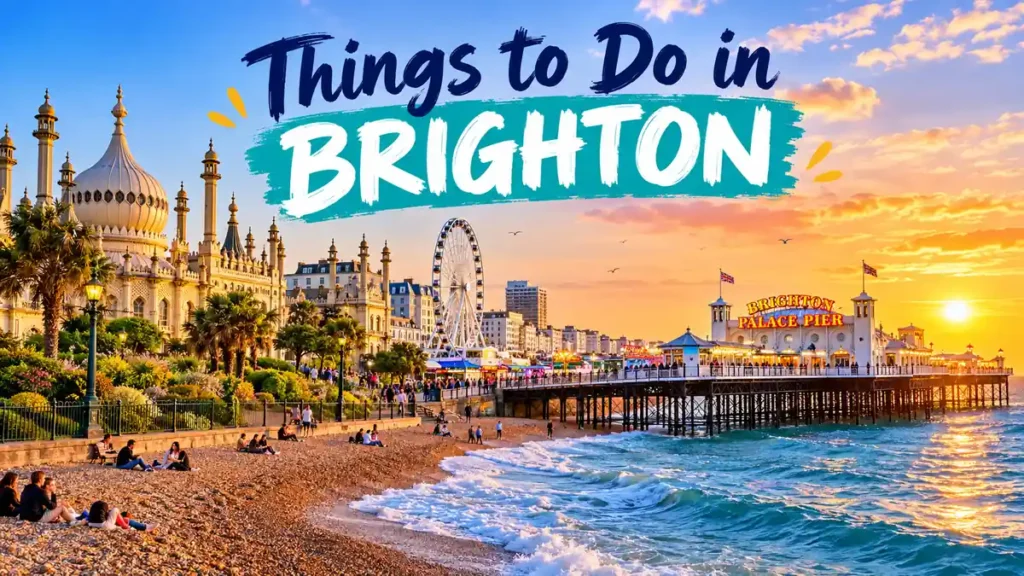
Brighton packs a surprising amount into a compact stretch of England’s south coast. You can tour a flamboyant royal palace in the morning, browse independent shops before lunch, spend the afternoon beside the sea and finish the day watching the sunset from a Victorian pier.
The best things to do in brighton include exploring the Royal Pavilion, walking Brighton Palace Pier, relaxing on Brighton Beach, shopping in The Lanes and North Laine, visiting SEA LIFE Brighton, discovering local museums and enjoying panoramic coastal views. The city is also an excellent base for exploring the South Downs and Seven Sisters.
Brighton works equally well as a quick day trip or a longer weekend. Most of its central attractions are close enough to combine on foot, while buses and trains make it straightforward to explore farther along the Sussex coast.
Best Things to Do in Brighton for First-Time Visitors
First-time visitors do not need to chase every attraction. Brighton is at its best when you mix a few landmarks with time simply wandering around.
The essential combination is the Royal Pavilion, The Lanes, Brighton Beach and Brighton Palace Pier. Together, these places capture the city’s unusual mixture of Regency history, independent culture and classic British seaside atmosphere.
Official tourism information similarly identifies the Royal Pavilion, Brighton Palace Pier, the seafront, The Lanes and North Laine among Brighton’s best-known highlights.
1. Explore the Royal Pavilion
Nothing else in Brighton looks quite like the Royal Pavilion.
Its domes and minarets make the building appear almost surreal among the surrounding streets. The palace is closely associated with George IV, who used Brighton as a fashionable seaside retreat while he was Prince Regent.
The interiors are even more extravagant. Visitors encounter richly decorated rooms, elaborate furnishings and dramatic chinoiserie-inspired design.
The building was transformed by architect John Nash between 1815 and 1823, although its history stretches back further.
Allow roughly one to two hours if you want to explore without rushing.
Practical tip: Combine your visit with Brighton Museum & Art Gallery next door rather than making two separate journeys across the city.
2. Walk Along Brighton Palace Pier
Brighton Palace Pier is the city’s classic seaside landmark.
Stretching 1,722 feet, or roughly 525 metres, into the sea, the Victorian pier combines amusement rides, arcade machines, traditional fairground games, food and uninterrupted coastal views.
You do not have to go on any rides to enjoy it.
Walking to the end and looking back toward Brighton gives you a completely different perspective of the seafront. Late afternoon and sunset are particularly atmospheric.
Families will find plenty to do, while photographers can get excellent views of the coastline.
The pier can become extremely busy on warm weekends, so morning visits generally feel more relaxed.
3. Spend Time on Brighton Beach
Brighton’s beach is made of pebbles rather than sand, and that is part of its identity.
On warm days, the seafront becomes one of the liveliest parts of the city. People swim, sunbathe, meet friends, eat beside the water or try activities such as paddleboarding.
Lonely Planet recommends the beach as one of Brighton’s essential experiences and notes that visitors seeking fewer crowds can walk farther along the coast rather than staying around the busiest central section.
Bring suitable footwear because walking across pebbles is considerably less comfortable barefoot than walking on sand.
Brighton Beach is also one of the easiest free things to do in the city. Even in winter, a long seafront walk can be worth the trip.
4. Get Lost in The Lanes
The Lanes are a maze of narrow streets and passages close to the seafront.
This historic part of central Brighton is known for jewellery shops, independent businesses, cafés, pubs and small boutiques. Wandering without a strict route is usually the best way to experience it.
Look beyond the main shopping streets. Tiny passages can lead to courtyards and shops that are easy to miss if you are simply walking between major attractions.
The area is particularly useful for filling the gap between the Royal Pavilion and the seafront because all three can easily form part of the same walking route.
5. Browse North Laine
The Lanes and North Laine are often confused, but they offer noticeably different experiences.
The historic Lanes are compact and twisting, whereas North Laine has a more alternative, colourful and independent character.
Expect vintage clothes, records, books, street art, cafés and unusual shops rather than a conventional high-street shopping experience.
Brighton’s independent shopping culture is one of the reasons the city feels different from many other British seaside destinations. Both VisitBrighton and current travel guides highlight North Laine as a core part of that experience.
If shopping is one of your priorities, leave at least an hour for this area.
Things to Do in Brighton Along the Seafront
You could spend most of a day around Brighton’s waterfront without running out of things to see.
The useful thing about the seafront is that many attractions naturally connect. Rather than treating each one as a separate destination, walk between them.
6. See the West Pier
Brighton’s West Pier tells a very different story from Palace Pier.
Instead of arcades and rides, visitors see the skeletal remains of a historic pier standing offshore.
Storms and fires left the structure isolated in the sea, but its silhouette has become one of Brighton’s most recognisable views.
You cannot walk onto the pier. Instead, view it from the promenade or beach.
Sunset is especially striking when the remaining iron structure becomes silhouetted against the sky.
During the colder months, the surrounding area can also be a good place to watch large groups of starlings gathering around the seafront.
7. Ride Brighton i360
For a completely different perspective, head upward.
Brighton i360 uses a large glass viewing pod that rises above the seafront, providing 360-degree views across Brighton, the English Channel and the surrounding landscape.
The pod rises to around 138 metres, according to current VisitBrighton information.
On a clear day, the views can extend toward the South Downs.
It is particularly worthwhile for visitors who enjoy photography or want to understand Brighton’s geography from above.
Weather matters, though. If visibility is poor, consider leaving this attraction until conditions improve.
8. Visit SEA LIFE Brighton
A rainy day does not have to ruin a Brighton itinerary.
SEA LIFE Brighton is one of the city’s most established indoor family attractions and is described by VisitBrighton as the world’s oldest operating aquarium. Its displays include marine life such as sharks and turtles, with an underwater viewing tunnel among its notable features.
Its location near Brighton Palace Pier also makes it convenient.
Families can visit the aquarium in the morning and move onto the pier or beach if the weather improves later.
9. Ride Volk’s Electric Railway
Volk’s Electric Railway provides a more unusual way to travel along the seafront.
Created by inventor Magnus Volk in 1883, it is described by Brighton’s official tourism site as the world’s oldest continuously operating electric railway.
The railway follows the coastline toward Black Rock and Brighton Marina.
That makes the experience useful as well as historic: instead of simply riding it and returning immediately, you can incorporate the railway into a longer seafront itinerary.
Services are seasonal, so check operating information before making it an essential part of your day.
10. Continue to Brighton Marina
Walk or travel east along the coast and you eventually reach Brighton Marina.
The area offers restaurants and entertainment alongside views of boats in the harbour.
It feels noticeably different from the historic centre and can be a useful destination for families or anyone spending more than one day in Brighton.
VisitBrighton highlights entertainment around the marina including bowling, cinema and mini-golf.
If you only have a few hours in Brighton, prioritise the central attractions. If you have a full weekend, the marina becomes easier to fit into your plans.
Cultural and Historic Things to Do in Brighton
Brighton’s beach often receives the attention, but the city’s museums and cultural attractions reveal a much deeper history.
They are also useful when the famously unpredictable British weather turns against you.
11. Visit Brighton Museum & Art Gallery
Brighton Museum & Art Gallery sits beside the Royal Pavilion, making the two attractions natural companions.
Its collections cover art, design and Brighton’s local history, including the city’s development from a fishing settlement into a fashionable seaside destination.
Temporary and changing exhibitions can add another reason to visit, so check what is showing during your trip.
The location is especially convenient because Pavilion Gardens, the museum, the Royal Pavilion and The Lanes can all be explored without lengthy journeys between them.
12. Discover Brighton Toy and Model Museum
Visitors interested in nostalgia may prefer something smaller and more specialised.
Brighton Toy and Model Museum contains historic toys, model railways and related collections and offers an alternative to Brighton’s larger attractions.
It is particularly convenient for railway travellers because of its location near Brighton station.
VisitBrighton’s attraction guide includes it among the city’s more unusual cultural experiences.
It can also work well as a rainy-day stop before exploring North Laine.
13. Explore Brighton’s Art Scene
Art in Brighton is not limited to conventional museums.
Independent galleries, studios, public artwork and colourful street art appear across the city. North Laine is particularly rewarding if you enjoy discovering murals while walking rather than following a formal gallery itinerary.
Tripadvisor’s current Brighton attraction listings include dozens of art galleries, reflecting how substantial the local art scene has become.
Give yourself permission to wander. Some of Brighton’s most memorable details are found between the named attractions rather than inside them.
Free Things to Do in Brighton
Brighton can become expensive if every hour involves a ticketed attraction, but many of its defining experiences cost nothing.
Walking the beach and seafront is the obvious starting point.
You can also explore The Lanes, browse North Laine, photograph the West Pier, visit parks and gardens or simply walk through different neighbourhoods.
VisitBrighton specifically recommends the seafront, beach, The Lanes, parks and public art among the city’s free experiences.
14. Walk From Brighton to Hove
One of the easiest free activities is simply following the promenade west.
As you move away from central Brighton toward Hove, the atmosphere becomes calmer.
Look for the colourful beach huts along the seafront, then continue as far as your schedule allows.
The route is flat and easy to adapt. You can walk for 20 minutes and return, or make it a much longer coastal stroll.
For visitors overwhelmed by the crowds around Palace Pier, this is one of the simplest ways to experience another side of the city.
15. Relax in Pavilion Gardens
Pavilion Gardens surrounds the Royal Pavilion and provides a convenient green space in the middle of Brighton.
It works particularly well as a pause between sightseeing stops.
Pick up something to eat, find a place to sit and enjoy the contrast between the garden and the dramatic Pavilion architecture behind it.
Because of its central location, you do not need to build a separate itinerary around the gardens. Simply include them while moving between the Pavilion, museum and The Lanes.
Fun Things to Do in Brighton for Families
Brighton is easy to adapt for children because its major attractions are relatively close together.
The pier gives families rides and arcade games, SEA LIFE provides an indoor option, and the beach requires no complicated planning.
Brighton Marina adds further entertainment for longer stays.
16. Enjoy the Fairground Rides and Arcades
Brighton Palace Pier is particularly appealing to families because there is no need to commit to a full theme-park day.
Walk along the pier, play a few arcade games, try a traditional fairground attraction and stop for seaside food.
Children who are less interested in museums may find this the most memorable part of Brighton.
The important practical point is budgeting. Small rides, games, snacks and treats can add up quickly, even though simply walking the pier costs little or nothing depending on seasonal admission arrangements.
17. Try an Outdoor Activity
Brighton’s relationship with the sea goes beyond sitting on the beach.
Depending on the weather and season, visitors can try paddleboarding and other water-based activities.
There are also cycling and walking opportunities around the city and surrounding countryside.
If you are planning something weather-dependent, avoid building your entire itinerary around it. Keep an indoor attraction available as a backup.
Things to Do in Brighton When It Rains
Rain is common enough that having a backup plan makes sense.
The Royal Pavilion is arguably the strongest rainy-day choice because it is both historically significant and distinctly Brighton.
Brighton Museum & Art Gallery and SEA LIFE Brighton are other obvious options.
You can also spend time browsing shops around North Laine and The Lanes, stop at cafés or explore indoor entertainment around Brighton Marina.
The official tourism guide similarly recommends museums, galleries, theatres, attractions, shopping areas and covered venues when the weather is poor.
A useful strategy is to keep outdoor and indoor attractions geographically close.
For example, combine:
Royal Pavilion → Brighton Museum → The Lanes → SEA LIFE → Palace Pier.
If rain stops unexpectedly, you can immediately return to the outdoor parts of the route.
Unique Things to Do in Brighton
After seeing the major landmarks, explore some experiences that show why Brighton has developed such a distinctive reputation.
18. Explore Kemptown
Head east from the centre toward Kemptown for independent businesses, cafés, pubs and a different neighbourhood atmosphere.
Brighton has a long-established LGBTQ+ community, and Kemptown forms an important part of that cultural identity.
It is a good choice for repeat visitors who have already covered the Pavilion, pier and central shopping streets.
Walking rather than rushing between individual venues allows you to appreciate how Brighton’s neighbourhoods change within a relatively small area.
19. Experience Brighton After Dark
Brighton does not shut down when the beach empties.
The city has a substantial nightlife, music and pub scene, ranging from traditional pubs to clubs and live-performance venues.
Current travel guides continue to highlight nightlife, independent food and music as important parts of Brighton beyond its conventional seaside attractions.
If nightlife is not your thing, an evening walk along the illuminated seafront provides a quieter alternative.
The pier looks particularly striking after dark.
20. Watch the Sunset by the Sea
This may be one of the simplest activities on the list, but it is also one of the easiest to remember.
Choose Brighton Palace Pier, the beach near the West Pier or somewhere farther west toward Hove.
Then stop moving.
Brighton is a city where constantly racing between attractions can actually make the experience worse. Leaving half an hour unplanned at the end of the day gives you time to enjoy the reason Brighton became a seaside destination in the first place.
Day Trips From Brighton
If you have more than a weekend, Brighton makes a useful base for exploring East Sussex and the South Downs.
Seven Sisters
The Seven Sisters are dramatic white chalk cliffs along the Sussex coast and one of the most impressive natural landscapes within reach of Brighton.
Walking routes provide expansive views over the English Channel, although cliff-edge safety deserves serious attention. Keep well away from cliff edges because erosion can make apparently solid ground unstable.
Transport options vary by route and season. One current local guide places Brighton roughly 17 miles from Seven Sisters and describes Seaford and seasonal bus connections as options for reaching the area.
Good walking shoes and weatherproof clothing are sensible even when conditions look promising in Brighton.
South Downs National Park
Brighton’s position between the sea and countryside is one of its major advantages.
The South Downs National Park offers rolling hills, walking trails and rural landscapes remarkably close to the city.
VisitBrighton specifically recommends using Brighton as a base for discovering the South Downs and wider Sussex countryside.
A countryside trip makes an excellent contrast to a day spent around busy central Brighton.
Best Things to Do in Brighton for One Day
Brighton is one of the UK’s classic day-trip destinations, particularly because the centre is compact enough to explore without a car.
A practical one-day itinerary could look like this:
Morning: Arrive at Brighton station and walk through North Laine toward the Royal Pavilion. Tour the Pavilion and, if time permits, Brighton Museum.
Late morning: Explore The Lanes and stop for coffee or an early lunch.
Afternoon: Walk toward the sea, visit Brighton Beach and continue onto Brighton Palace Pier.
Late afternoon: Walk west along the promenade toward the West Pier. Add Brighton i360 if you want panoramic views.
Evening: Watch the sunset before eating in the centre or returning to the station.
This route avoids unnecessary backtracking and covers most of the attractions that repeatedly appear in current Brighton travel recommendations.
How Many Days Do You Need in Brighton?
One day is enough for Brighton’s headline attractions.
Two days is better if you want to explore neighbourhoods, museums and the seafront without constantly watching the clock.
Three days gives you enough flexibility to add the South Downs, Seven Sisters or another Sussex destination.
For most first-time visitors, a weekend offers the best balance.
You can spend the first day around the Royal Pavilion, shopping districts and central seafront, then use the second for Hove, Kemptown, Brighton Marina or the surrounding countryside.
What Is the Best Time to Visit Brighton?
Brighton changes considerably with the seasons.
Summer offers the warmest conditions for the beach and outdoor activities, but sunny weekends can bring substantial crowds. Lonely Planet specifically notes that the beach becomes busy during warm weekends and holidays.
Spring and early autumn can provide an appealing compromise: milder weather with fewer peak-summer crowds.
Winter is quieter and can be atmospheric for seafront walks, although daylight is shorter and some seasonal activities may not operate.
Weather can change quickly at any time of year, so layers and a lightweight waterproof are useful.
How to Get Around Brighton
Walking is the best option for most first-time visitors.
Brighton station, North Laine, the Royal Pavilion, The Lanes, beach and Palace Pier are all concentrated within a relatively compact central area.
For longer journeys, local buses connect neighbourhoods and destinations outside the centre.
Volk’s Electric Railway can also form part of a seasonal seafront journey, while cycling is another option.
A car is rarely necessary for sightseeing in central Brighton and can create more problems than it solves when parking and busy streets are taken into account.
If you arrive by train, consider exploring entirely on foot unless your itinerary includes destinations farther outside the centre.
Practical Tips for Visiting Brighton
A few simple choices can make the city considerably easier to enjoy.
Wear comfortable shoes. Brighton encourages walking, and the pebble beach adds another challenging surface.
Check attraction information before travelling. Opening hours, admission arrangements and seasonal services can change.
Start early on sunny weekends. The beach, pier and central streets become noticeably busier later in the day.
Do not confuse The Lanes with North Laine. Both are worth visiting, but they are different districts with different characters.
Prepare for changing weather. Keep an indoor attraction such as the Royal Pavilion, Brighton Museum or SEA LIFE available as a backup.
Allow unplanned time. Brighton rewards wandering. Filling every 30 minutes with a named attraction can mean missing the independent shops, street art and small cafés that give the city much of its personality.
Are There Enough Things to Do in Brighton for a Weekend?
Absolutely.
The biggest challenge is usually deciding what to leave out.
For a first visit, concentrate on the Royal Pavilion, Brighton Palace Pier, Brighton Beach, The Lanes and North Laine. Add Brighton Museum, SEA LIFE or Brighton i360 according to your interests and the weather.
On a second day, walk toward Hove, explore Kemptown, continue to Brighton Marina or escape into the South Downs.
And if you have another day available, Seven Sisters gives you an entirely different coastal experience.
Ultimately, the best things to do in brighton are not limited to ticketed attractions. Brighton’s appeal comes from the combination of its eccentric royal history, pebble beach, Victorian seaside heritage, independent shopping, creative neighbourhoods and easy access to the Sussex countryside.
See the major landmarks, but leave enough time to walk without a destination. In Brighton, that is often when you discover the most interesting part of the trip.