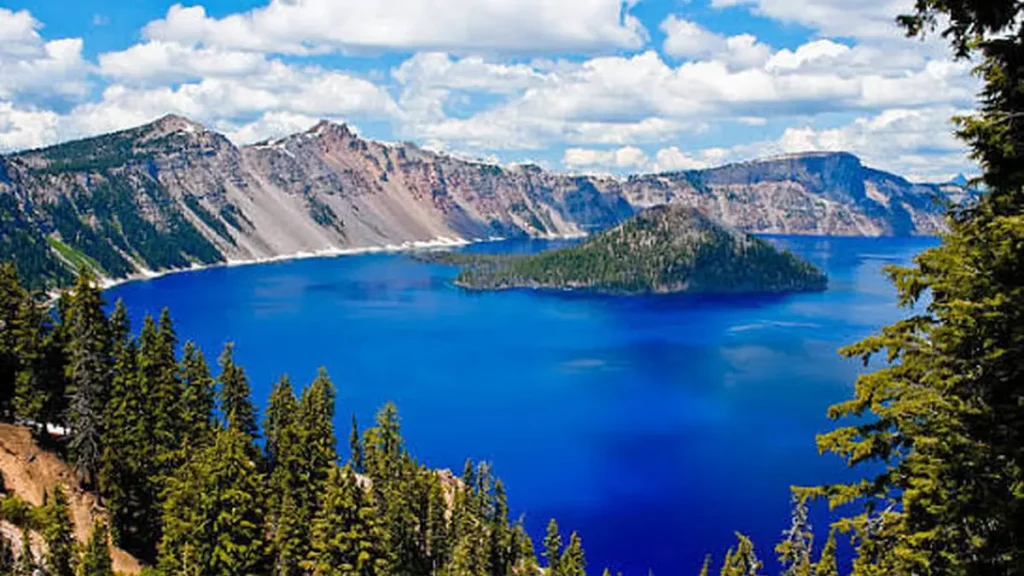
If you’re searching for the best activities at Crater Lake, you’re probably picturing a quick photo stop. That’s a mistake. The activities at Crater Lake National Park — hiking, biking, snowshoeing, stargazing, and a boat-access history worth knowing about — are enough to fill two or three full days if you let them.
Quick answer: Crater Lake National Park’s top activities include driving the 33-mile Rim Drive, hiking trails like Garfield Peak and Watchman Peak, ranger-led talks, the Crater Lake Trolley tour, winter snowshoeing, and stargazing. Note: Cleetwood Cove Trail and all boat tours to Wizard Island are closed for rehabilitation through the 2026, 2027, and 2028 summer seasons.
Driving Rim Drive: The Best Way to See It All
Rim Drive is the spine of any list of activities at Crater Lake. The full loop runs about 33 miles around the caldera and passes roughly 30 named overlooks, each one giving a slightly different angle on the lake’s impossible blue.
The road is split into East Rim Drive and West Rim Drive. West Rim tends to open first, sometimes as early as mid-May depending on snowpack, while the full loop is usually drivable from July through mid-October. Outside that window, expect gates, snow closures, and single-lane sections.
Don’t rush it. Pull off at Discovery Point for your first real view, stop at the overlook facing Phantom Ship — a jagged little island of ancient lava rock — and save time near sunset for the viewpoints on the west side, where the light hits the water differently than it does at midday.
Quick takeaway: Budget at least 2–3 hours for the drive alone if you plan to stop at even half the overlooks. Rushing the loop in under an hour is the single most common regret visitors mention.
Hiking the Trails, From Easy Strolls to Summit Pushes
Hiking is one of the most rewarding activities at Crater Lake, with roughly 60 miles of trail in total and a range in difficulty bigger than most people expect.
- Pinnacles Trail — an easy, mostly flat 0.8-mile round trip past eroded volcanic spires. Good for families or anyone short on time.
- Sinnott Memorial Overlook — a short paved walk near the visitor center, one of the fastest ways to get a real lake view without a full hike.
- Garfield Peak Trail — a steeper, more demanding climb with some of the best panoramic views in the park. Go early to beat both the crowds and the afternoon heat.
- Watchman Peak — moderate effort, big payoff, especially for sunset and for spotting Wizard Island from above.
- Mount Scott — the park’s highest point and its toughest maintained trail, best saved for hikers who want a real workout with a fire-lookout reward at the top.
If you only have an hour, Pinnacles or Sinnott Memorial will do it. If you’ve got half a day and decent fitness, pair Garfield Peak or Watchman with a slower lap of Rim Drive.
Boat Tours to Wizard Island — And Why They’re Paused Through 2028
Here’s the update most older guides haven’t caught up on yet: Cleetwood Cove Trail, the only legal route down to the lakeshore, is closed for trail rehabilitation and dock reconstruction through the 2026, 2027, and 2028 summer seasons, with a reopening targeted for 2029. Because that trail is also the only access point to the boat dock, boat tours to Wizard Island — and the swimming and fishing access that came with them — are unavailable for the duration of the project.
That’s a real loss if a boat tour to Wizard Island was the centerpiece of your plan. The upside: the vast majority of the park’s overlooks, trails, and programs remain fully open, and the new dock and trail are being built to be safer and more durable than what’s there now. If lakeshore access is non-negotiable for your trip, this is worth checking directly on the park’s current conditions page before you finalize plans, since these timelines can shift with funding and weather.
Ranger Programs and the Crater Lake Trolley
Rangers run short talks at Sinnott Memorial Overlook and on the Crater Lake Lodge patio through the summer season, plus evening programs and guided hikes on the more popular trails. These are free, drop-in, and genuinely worth building into a day’s schedule — the trivia and geology context change how you see the rest of the park.
For a lower-effort option, the Crater Lake Trolley runs a roughly two-hour narrated loop of Rim Drive between July and mid-September, departing from Rim Village on the hour and making five to seven stops at key viewpoints. Tickets run in the neighborhood of $35–$40 for adults, less for kids, on top of the standard park entrance fee. Trolleys are fully enclosed and wheelchair-accessible, which makes this one of the few ways to see the whole rim without driving or hiking. Book ahead in peak summer; seats are limited and tours do sell out.
Kids can also pick up a Junior Ranger booklet at the visitor center — a nice way to keep younger visitors engaged between overlooks.
Winter at Crater Lake: Snowshoeing and Skiing
Winter activities at Crater Lake look completely different from summer ones. The park averages more than 40 feet of snow a year, turning it into a genuinely different destination once the cold sets in. Munson Valley Road is only kept open as far as the Steel Visitor Center in the coldest months, since maintaining more of the road isn’t practical.
Ranger-led snowshoe walks run on weekends through late April, snow conditions permitting, and are one of the most popular cold-season activities in the park. The Raven Trail — an out-and-back route from Steel Visitor Center to the rim near Garfield Peak — is the go-to winter route and works well for cross-country skiing too.
Before making the drive in winter, check the park’s live webcams. Even the NPS notes that clear views of the lake happen only about half the time during winter months, so a flexible schedule pays off.
Swimming, Fishing, and Wildlife Watching
Under normal conditions, Cleetwood Cove is the only legal swimming and fishing access point on the lake — which, given the current closure, means both activities are effectively paused at the lakeshore until the trail reopens. No permit is required for fishing elsewhere in the park where legal access exists, and there’s no daily limit on most species since they’re non-native to the lake.
Wildlife sightings tend to happen away from the water: black-tailed deer, elk, and the occasional black bear show up along quieter forest trails, and Clark’s nutcrackers are a near-constant presence around the rim overlooks.
Stargazing Under an Official Dark Sky
Crater Lake is recognized by the National Park Service’s Dark Sky team as one of the top ten dark-sky locations in the park system. On clear, moonless nights, the Milky Way is visible with the naked eye from several rim overlooks, and rangers occasionally run astronomy programs with telescopes during summer.
If you’re staying overnight at Crater Lake Lodge or one of the park campgrounds, it’s worth stepping outside after the day-trippers leave. Rim Village overlooks, away from the lodge’s exterior lighting, tend to offer the darkest, clearest views.
Cycling the Rim
Rim Drive doubles as a serious road-cycling route: the full 33-mile loop climbs steadily and passes the same 30 overlooks drivers get, minus the windshield. It’s a demanding ride at elevation, and steep pitches near several of the pullouts will test even fit riders.
Twice each summer, the park closes East Rim Drive to vehicle traffic for two dedicated Saturdays, opening about 24 miles of road exclusively to cyclists and pedestrians — no traffic noise, no jockeying for the shoulder. If your visit lines up with one of those dates, it’s the best possible way to experience the loop on two wheels.
Planning Your Visit
Entrance fees (2026): Peak season (roughly late May through October) runs $30 per private vehicle, $25 per motorcycle, or $15 per person for those arriving on foot or by bike. Off-season rates drop to about $20 per vehicle and $15 per motorcycle or individual. A Crater Lake annual pass and the America the Beautiful annual pass are both accepted if you plan multiple visits.
Best time to visit: Mid-July through September gives you the best odds of a fully open Rim Drive and running trolley tours. Late September into early October thins the crowds while most trails and the full loop are still accessible.
How many days do you need: One full day covers the highlights — a lap of Rim Drive, one or two hikes, and a ranger talk. Two days lets you add a sunrise or sunset session at a quieter overlook, a longer hike like Mount Scott, and more time at the visitor center without feeling rushed.
With kids: Pinnacles Trail, the Junior Ranger program, and the trolley tour are the easiest wins for families — short distances, built-in narration, and minimal elevation gain.
The Bottom Line on Activities at Crater Lake
The activities at Crater Lake go well beyond the classic overlook photo — a scenic drive around the rim, a real hike, a ranger talk, and, depending on the season, snowshoeing or stargazing under one of the darkest skies in the park system. The one exception right now is lakeshore access: with Cleetwood Cove and its boat tours closed through 2028, plan your visit around the rim, the trails, and the programs that remain open, and check current conditions before you go.
Before you finalize your trip, browse our Oregon and Northwest travel guides for additional tips and destinations.
FAQ Section
Is the Crater Lake boat tour open in 2026?
No. Cleetwood Cove Trail, the only access route to the boat dock, is closed for rehabilitation through the 2026, 2027, and 2028 summer seasons, with a planned reopening in 2029.
Can you swim in Crater Lake?
Normally yes, at Cleetwood Cove, the lake’s only legal swimming access point. That access is currently unavailable during the trail closure.
What is the easiest hike at Crater Lake?
Pinnacles Trail and the short walk to Sinnott Memorial Overlook are the two easiest options, both under a mile round trip with minimal elevation gain.
How long does it take to drive Rim Drive?
The 33-mile loop takes about 1.5 hours without stops, but plan on 2–3 hours if you want to pull off at overlooks along the way.
Is Crater Lake worth visiting in winter?
Yes, especially for ranger-led snowshoe walks and cross-country skiing on the Raven Trail, though only Munson Valley Road to Steel Visitor Center stays reliably open.
How much does the Crater Lake Trolley cost?
Tickets run roughly $35–$40 for adults, with lower rates for children, on top of the park’s standard entrance fee. Tours run July through mid-September.
What is the entrance fee for Crater Lake in 2026?
Peak season is $30 per vehicle, $25 per motorcycle, or $15 per person; off-season drops to about $20 per vehicle and $15 per motorcycle or individual.
How many days should I spend at Crater Lake?
One day covers the essentials; two days allows for a longer hike, a sunrise or sunset overlook session, and more flexibility around weather.