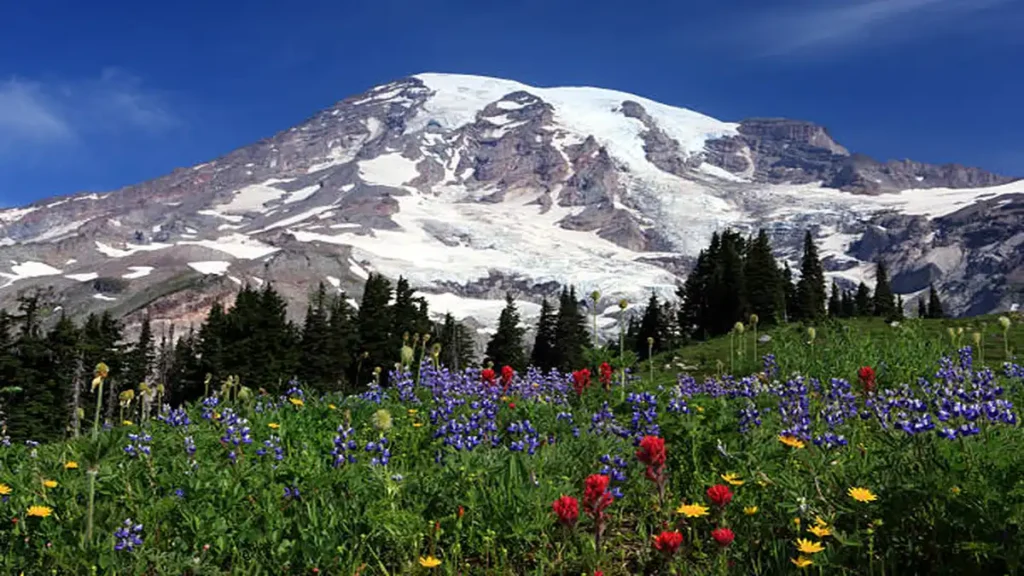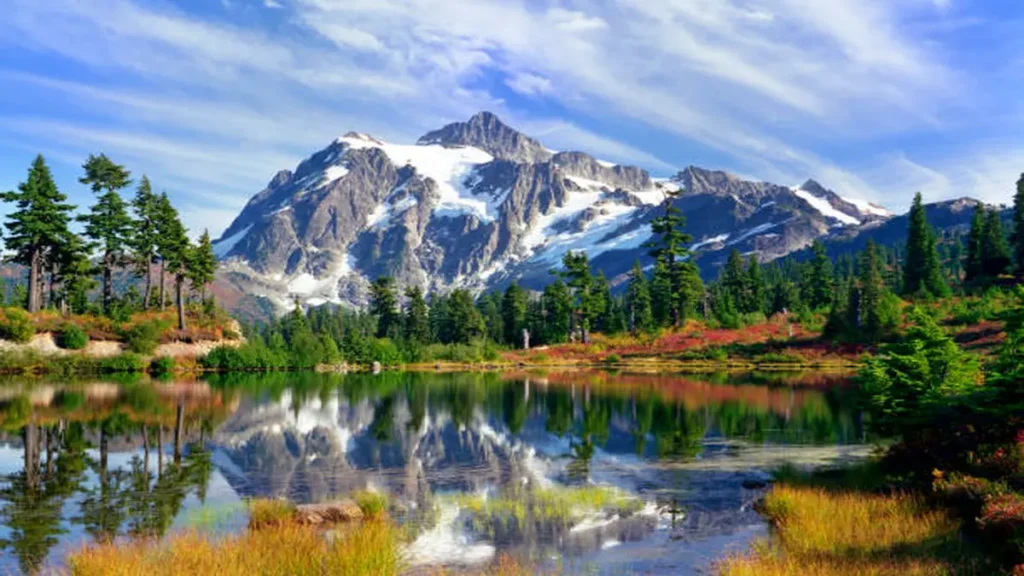
The first time I saw Cutthroat Pass in late September, the larches were only half-turned — patches of green still clinging to branches that were mostly gold. I remember thinking the trail had undersold itself. Every blog post calls it “scenic.” None of them prepared me for standing on a windswept ridge with Silver Star Mountain punching into the sky on one side and a valley of glowing needles on the other.
Cutthroat Pass in the North Cascades is a 10-mile round-trip hike in Washington State, reached via the Pacific Crest Trail from Rainy Pass, gaining about 2,000 feet to a 6,800-foot summit. It’s best known for golden larch displays in early October, wide-open ridge views, and a moderate grade that rewards effort without requiring technical skill. If you’re planning a cutthroat pass north cascades trip, this guide covers both trailheads, permits, camping, and the best time to go.
Quick Facts Before You Go
| Detail | Info |
|---|---|
| Distance (PCT/Rainy Pass route) | ~10 miles round trip |
| Elevation gain | ~2,000 ft |
| High point | 6,800–6,900 ft |
| Difficulty | Moderate to challenging (long, not technical) |
| Average time | 5–5.5 hours |
| Best season | July through October |
| Peak larch color | Late September to mid-October |
| Permit needed | Northwest Forest Pass (parking only) |
| Dogs | Allowed, leash required near trailhead areas |
| Land manager | Okanogan-Wenatchee National Forest (USFS) |
Quick takeaway: this is a long day hike, not a stroll. Budget a full morning or afternoon, and don’t underestimate the drive.
Choosing Your Trailhead: PCT/Rainy Pass vs. Cutthroat Lake
This is the one decision most guides gloss over, and it matters more than people think.
Option 1: Rainy Pass Trailhead (via the Pacific Crest Trail). This is the classic, most popular approach. You park at Rainy Pass on Highway 20, join the PCT, and climb steadily north for about 5 miles to the pass. The grade is gentle and consistent — well-graded switchbacks the whole way, no scrambling. Bikes are not allowed on this stretch of the PCT.
Option 2: Cutthroat Lake Trailhead (via Cutthroat Creek Trail). This route approaches from the east, passing beautiful Cutthroat Lake before climbing roughly 1,800 feet over the final 3.7 miles to meet the PCT at the pass. It’s marginally longer overall but splits the climbing more unevenly — flatter at first, steeper at the end. Mountain bikes are permitted here, which the PCT side doesn’t allow.
So which one should you pick? If you want a steady, predictable climb and don’t mind slightly more trailhead crowding (it shares parking with the popular Maple Pass Loop), take the Rainy Pass/PCT side. If you’d rather see an alpine lake along the way, don’t mind a steeper final push, or you’re on a mountain bike, start from Cutthroat Lake.
Quick takeaway: neither route is objectively better — pick based on whether you want a lake view or a bike-friendly path.
Getting There and Permits
Getting to cutthroat pass north cascades trailheads starts on Highway 20. From Seattle, the drive to the Rainy Pass trailhead is roughly 3.5 hours via Highway 20 (the North Cascades Highway). From Newhalem, it’s about 37 miles east on Highway 20. From the Methow Valley side (Winthrop), it’s closer, following Highway 20 west over Washington Pass.
Highway 20 closes seasonally in winter, so this hike is only accessible roughly May/June through the first snowfall, depending on conditions.
You’ll need a Northwest Forest Pass to park at either trailhead — a day pass or annual pass works, and there’s no separate hiking permit required for a day trip. Restrooms are available at the Rainy Pass trailhead.
Quick takeaway: bring a Northwest Forest Pass or be ready to pay the day-use fee; there’s no getting around Highway 20’s seasonal closure.
The Trail, Mile by Mile
Starting from Rainy Pass, the first mile climbs gently through forest, crossing a couple of small creeks. The next stretch levels out through flat timber before you cross Porcupine Creek, the largest water source on the route — a good spot to filter water if you’re staying overnight.
Past Porcupine Creek, the trail settles into a steady, moderate climb that doesn’t let up until the pass. Around the 3-mile mark, you leave the evergreen forest behind and get your first real views of Cutthroat Peak across the valley. This is also where the larches start showing up.
The final mile is switchback country — views open up in every direction, with Porcupine Peak and, eventually, Silver Star Mountain and Vasiliki Ridge dominating the skyline. At the pass itself, you’re standing at one of only four points in Washington where the PCT crosses 7,000 feet — three of the other three are further north toward the Canadian border.
From the pass, a trail junction lets you continue north on the PCT, or drop down the far side toward Cutthroat Lake if you started from Rainy Pass and want a one-way trip with a shuttle.
When to Go: Larch Season and Weather
Cutthroat Pass has two seasonally distinct personalities. In July and August, it’s a green, wildflower-dotted ridge hike with long daylight and reliable trail conditions. By late September, the subalpine larches (Larix lyallii) that line the upper mile begin turning gold, peaking in the first two weeks of October.
That peak window is also the most crowded time to hike here — parking at Rainy Pass fills before sunrise on fall weekends. If you want the larches without the crowd crush, aim for a weekday, or hike the Cutthroat Lake side instead of the more popular PCT trailhead.
Temperatures at the pass drop fast once the sun dips — even summer nights can hover in the mid-to-upper 30s, and the exposed ridge catches wind that the forested lower trail doesn’t. Layer accordingly, even on a warm-looking day.
Quick takeaway: come in July or August for solitude and wildflowers, or the first two weeks of October for larches — just expect company either way if you go in fall.
Camping at Cutthroat Pass
This is where most guides go thin, and it’s one of the best reasons to turn this into an overnight trip.
No backcountry permit is required for dispersed camping around Cutthroat Pass — it sits within national forest land, not North Cascades National Park, so the park’s permit system doesn’t apply here. You will still need to leave your Northwest Forest Pass visible on your dashboard at the trailhead.
There’s no reliable water source at the pass itself. Fill up at Porcupine Creek, around the 2.5-mile mark, before you make the final climb — a gravity filter or a large reservoir bladder makes this easier if you’re carrying enough for camp and the hike out.
Wind is the other consideration. Camping directly at the pass can be brutally exposed; many backpackers instead camp about a mile below the summit, where trees offer real shelter. Look for durable, already-impacted campsites rather than creating new ones, hang food or use a bear-resistant canister, and skip campfires — this alpine terrain doesn’t recover from them quickly.
Quick takeaway: no permit needed, but plan your water and windbreak strategy before you commit to camping at the top.
Extending the Hike: Granite Pass, Snowy Lakes, and Point-to-Point Options
If 10 miles isn’t enough, Cutthroat Pass is a gateway rather than an endpoint.
Granite Pass is one mile further north on the PCT, adding modest distance for another round of ridge views — a common add-on for day hikers who aren’t ready to turn around yet.
Snowy Lakes (Upper and Lower) sit about 20.6 miles round trip from Rainy Pass with roughly 4,100 feet of cumulative gain, making them a serious overnight backpacking target rather than a day-trip extension. The lakes sit beneath Golden Horn and Tower Mountain and offer some of the best camping in the area.
Point-to-point hiking is an underused option here. If you can arrange a car shuttle between the Rainy Pass and Cutthroat Lake trailheads, you can hike roughly 11 miles one-way, descending past Cutthroat Lake instead of retracing your steps — less elevation loss on the return and a completely different scenic half of the trip.
Quick takeaway: don’t assume Cutthroat Pass is a dead end — a shuttle hike or an extension to Snowy Lakes turns this into a multi-day itinerary.
Cutthroat Pass vs. Maple Pass: Which Should You Hike?
Cutthroat Pass shares its trailhead area with the far more famous Heather-Maple Pass Loop, and it’s worth knowing the difference before you commit a whole day.
| Cutthroat Pass | Maple Pass Loop | |
|---|---|---|
| Distance | ~10 miles | ~7.4 miles |
| Crowds | Moderate | Heavy, especially in fall |
| Trail type | Out-and-back (or shuttle) | Loop |
| Larches | Yes, upper mile | Yes, throughout |
| Parking | Shared lot fills fast in fall | Same lot |
If solitude matters more than convenience, Cutthroat Pass is the better bet — it draws noticeably fewer people than Maple Pass despite sitting minutes away. If you want a shorter loop with guaranteed lake views, Maple Pass wins, but expect a packed parking lot by mid-morning in October.
Gear and Safety Notes
- Trekking poles help on the sustained switchback sections, loaded pack or not.
- Layers — the ridge is windy and noticeably colder than the trailhead.
- Water filter or purification — Porcupine Creek is your last reliable source before the pass.
- Northwest Forest Pass, displayed on your dashboard.
- Bear-resistant canister if camping overnight; food storage rules apply throughout this forest.
- Start early in larch season — parking lots at Rainy Pass are often full before 8 a.m. on fall weekends.
Conclusion
Any cutthroat pass north cascades trip earns its reputation the honest way: a well-graded trail, real elevation payoff, and a view that doesn’t require technical skill or a permit lottery to reach. Whether you go for a summer day hike, chase the larches in October, or turn it into an overnight with a shuttle to Cutthroat Lake, this is one of the most efficient scenic-mile-per-effort-mile hikes in the North Cascades. Pick your trailhead, grab your Northwest Forest Pass, and get there early if you’re chasing fall color.
For more inspiration like this, take a look at our Washington State hiking guides.
FAQ Section
Is Cutthroat Pass a hard hike?
It’s moderate to challenging mainly due to length and sustained elevation gain (~2,000 ft over 5 miles), not technical difficulty. The trail is well-graded with no scrambling, making it accessible to most hikers in reasonable shape.
Which trailhead should I use for Cutthroat Pass?
Use the Rainy Pass/PCT trailhead for a steady, predictable climb with no bikes allowed. Use the Cutthroat Lake trailhead if you want lake views along the way or plan to mountain bike part of the route.
Do I need a permit to hike Cutthroat Pass?
You need a Northwest Forest Pass for parking at either trailhead, but no separate hiking or backcountry permit is required for day hiking or dispersed camping, since the trail sits in national forest, not national park, land.
When do the larches turn gold at Cutthroat Pass?
Peak color typically hits in the last two weeks of September through the first two weeks of October, varying slightly year to year with weather. Weekday visits during this window avoid the worst crowds.
Can you camp overnight at Cutthroat Pass?
Yes, dispersed camping is allowed with no permit required. There’s no water at the pass itself, so fill up at Porcupine Creek beforehand, and consider camping slightly below the summit for wind shelter.
Is Cutthroat Pass dog-friendly?
Yes, dogs are permitted on leash. Since the trail doesn’t enter North Cascades National Park, park-specific pet restrictions don’t apply here.
How does Cutthroat Pass compare to Maple Pass Loop?
Cutthroat Pass is longer (10 vs. 7.4 miles), less crowded, and an out-and-back rather than a loop. Maple Pass offers guaranteed lake views in a shorter loop but draws heavier crowds, especially during larch season.
Can I turn Cutthroat Pass into a longer backpacking trip?
Yes. Extend one mile to Granite Pass for more views, or continue about 20.6 miles round trip to Upper and Lower Snowy Lakes for a proper overnight destination beneath Golden Horn and Tower Mountain.