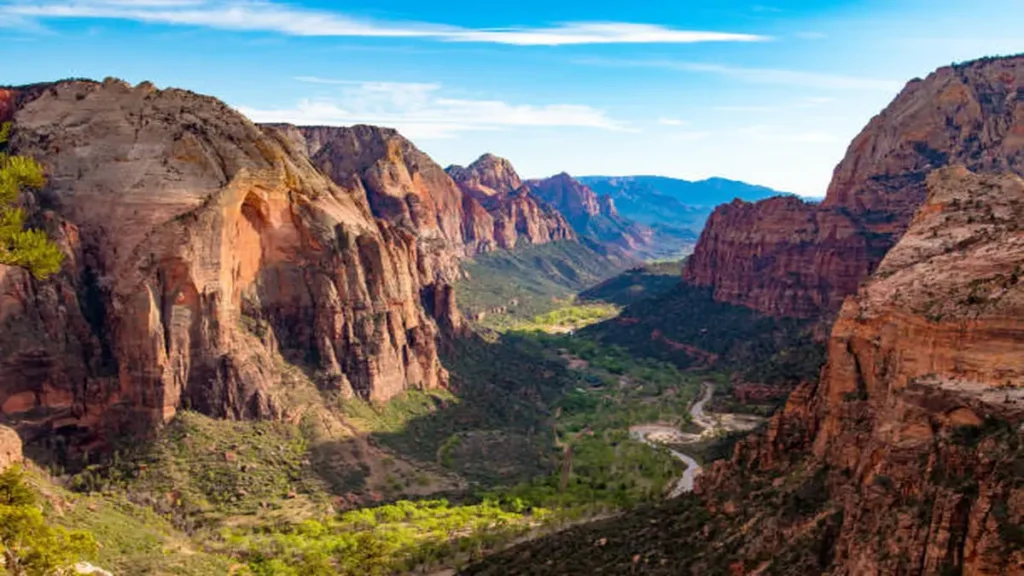
The first time I typed “Zion to Horseshoe Bend” into a map app, it told me 22 hours. That’s because there’s a tiny town called Horseshoe Bend in Arkansas, and half the internet’s travel calculators can’t tell the difference. The real answer, the one that matters if you’re standing in Springdale with a rental car, is a lot friendlier.
Zion National Park to Horseshoe Bend is about 118–121 miles, a drive of roughly 2 to 2.5 hours via US Highway 89 through Mount Carmel Junction and Kanab. It’s one of the most scenic short drives in the Southwest, and it’s easy enough to add on as a day trip or a relaxed overnight from Zion.
How Far Is Horseshoe Bend From Zion National Park?
Here’s where a lot of trip planning goes sideways. Search “Horseshoe Bend” and you might get results for towns in Arkansas or Idaho, which is how some route calculators spit out numbers like 675 miles or even 1,430 miles. Ignore those. If you mean the famous bend in the Colorado River near Page, Arizona — the one every Instagram feed has shown you — the real distance from Zion’s main visitor center in Springdale is 118 to 121 miles, depending on which route you take.
Driving it non-stop takes about 2 hours and 20 minutes to 2.5 hours. That’s short enough to knock out as a same-day trip if you get an early start, though I’d argue it deserves more time than that.
Quick Takeaway: If your map app gives you a number over 5 hours, it found the wrong Horseshoe Bend. Double-check it’s pointing you toward Page, Arizona.
The Best Route: Turn-by-Turn Directions
The most direct and most scenic path runs almost entirely along US-89, and it’s the same route nearly every guide, tour operator, and park ranger will point you toward.
- Leave Zion Canyon and head east from the Zion Canyon Visitor Center in Springdale.
- Pass through the Zion–Mount Carmel Tunnel, a historic 1.1-mile tunnel that’s an attraction in its own right — oversized vehicles need a traffic-control escort here, so check the timing if you’re in an RV.
- Continue to Mount Carmel Junction, about 23 miles from the visitor center, where you’ll turn onto US Highway 89 heading southeast.
- Drive through Kanab, Utah, a good spot to fill up on gas and grab lunch before the final stretch.
- Follow US-89 into Arizona, watching for the Horseshoe Bend parking lot on the west side of the road near mile marker 545, just before you reach Page.
There’s no toll road shortcut and no faster back route — this is the way locals and tour buses go, and for good reason: the desert scenery along the way is part of the trip, not just a means to an end.
Scenic Stops Worth the Detour
Most people treat this as a straight shot, but the corridor between Zion and Page is loaded with stops that rarely make it onto a first-timer’s radar.
- Coral Pink Sand Dunes State Park — a short detour off the main route, with rolling pink dunes that are popular with hikers and ATV riders alike.
- Peek-a-Boo Slot Canyon and the Sand Caves — quick, easy-access stops along US-89 near Kanab that reward a 15-minute pause.
- Toadstool Hoodoos — an easy 1.8-mile out-and-back hike through sandstone formations that feel like another planet; you don’t need to finish the full loop to get great photos.
- Kanarra Falls — worth adding only if you have a permit and an extra day, since the hike itself takes about two hours.
- Belly of the Dragon — a short, kid-friendly slot canyon walkthrough near Kanab that most people drive right past.
Quick Takeaway: If you only have time for one detour, make it the Toadstool Hoodoos or Peek-a-Boo Slot Canyon — both sit almost directly on US-89 and add less than 30 minutes total.
Visiting Horseshoe Bend: Fees, Hours & the Hike
Horseshoe Bend sits inside Glen Canyon National Recreation Area, but the parking lot itself is managed by the City of Page, not the National Park Service. That distinction matters for your wallet.
| Detail | What to Know |
|---|---|
| Parking fee | $10 per car/RV, $5 per motorcycle, $35–$140 for commercial vehicles |
| Park passes | Not accepted — an America the Beautiful Annual Pass won’t waive this fee |
| Hours | Sunrise to sunset, 365 days a year |
| Hike distance | About 0.6–0.7 miles one-way from the lot to the rim, hard-packed sand, ADA-accessible path |
| Time needed | 60–90 minutes round trip including parking and photos |
| Facilities | Restrooms and $1 bottled water at the lot; none on the trail itself |
| Reservation | None required — it’s a self-guided walk-up |
Bring water and sun protection regardless of season; there’s minimal shade on the trail. The overlook itself has limited guardrails, so keep a close eye on kids and watch your footing near the rim edge — the drop is real and the wind can gust unexpectedly.
Should You Add Antelope Canyon?
This is the question almost everyone ends up asking once they realize how close the two spots sit. Antelope Canyon is only about 5–10 minutes from Horseshoe Bend, but it works completely differently.
Antelope Canyon sits on Navajo Nation land, and you cannot walk in on your own. A guided tour through a licensed Navajo Nation operator is mandatory, tours often book out weeks in advance, and prices typically start around $80 per person on top of a $15 per-person entry fee. If seeing the famous light beams inside the slot canyon is on your list, book that tour before you leave home, not the morning of.
Most people who combine the two spend the morning in Antelope Canyon (tour slots are usually assigned) and the late afternoon at Horseshoe Bend, when the light hits the canyon walls best.
One Day or Two? Sample Itineraries
The One-Day Version
If you’re tight on time, this is doable, but it’s a full day:
- Early morning in Zion (arrive before 8am to beat crowds and parking issues).
- Depart by early afternoon, driving the 2.5-hour route through Kanab.
- Arrive at Horseshoe Bend in the late afternoon for the best light and shorter lines.
- Drive back to Springdale or continue on toward the Grand Canyon.
The Two-Day Version
This is the version most travel bloggers and tour guides actually recommend, and it’s the one I’d push for if your schedule allows it.
- Day 1: Full day in Zion Canyon, overnight in Springdale.
- Day 2: Drive to Page (2.5 hours), spend the morning at Antelope Canyon (if booked), visit Horseshoe Bend in the afternoon, overnight in Page.
Splitting it over two days means you’re not rushing either park, and it leaves room for at least one of the roadside detours along US-89.
Costs, Timing & Safety Tips
A realistic budget for the drive itself: expect to spend roughly $20–$30 in gas each way for an average car, plus the $10 Horseshoe Bend parking fee. If you’re adding Antelope Canyon, budget $80–$150+ per person for the tour.
Best time of day to shoot Horseshoe Bend is late afternoon into early evening, when the canyon walls pick up warm light — the lot is also noticeably less crowded before 9am if photography without a crowd matters more to you than golden light.
Best season is spring or fall, avoiding both summer heat (it regularly tops 100°F in Page) and winter ice on the trail.
One safety note that rarely makes it into trip guides: US-89 and the surrounding highways have no streetlights, and deer, elk, feral horses, and free-range cattle cross the road frequently after dark. If any part of your drive happens near dusk or later, slow down and stay alert.
Zion’s own shuttle system only covers travel inside the canyon — once you’re heading toward Page, you’ll need your own vehicle or a booked tour; there’s no public shuttle running this route.
The drive from Zion to Horseshoe Bend is short enough to feel like an afterthought and scenic enough to deserve its own day. Whether you squeeze it into one long day or split it across two, the route through Kanab gives you a real taste of the Southwest’s back roads — not just the two headline stops everyone photographs. If your schedule allows even one extra night in Page, take it; you’ll get better light at the bend and time to add Antelope Canyon without rushing either park.
If you’re planning another destination too, check out our Southwest USA travel guides for more trip ideas.
FAQ Section
How far is Zion National Park from Horseshoe Bend?
About 118–121 miles by road, roughly a 2 to 2.5-hour drive via US Highway 89 through Kanab. Some map tools return much longer numbers if they mistakenly match a different town also named Horseshoe Bend.
Can you visit Zion and Horseshoe Bend in one day?
Yes, if you start early in Zion and leave by early afternoon. It’s a tight but doable day trip; a two-day version with an overnight in Page gives you more breathing room.
Do you need a permit or reservation for Horseshoe Bend?
No reservation is needed — it’s a self-guided, walk-up hike. You do pay a $10 per-vehicle parking fee to the City of Page, which is separate from any National Park Service pass.
Is Horseshoe Bend part of Zion National Park?
No. Horseshoe Bend sits within Glen Canyon National Recreation Area near Page, Arizona, about two hours from Zion, and is managed separately by the NPS and the City of Page.
What’s the best time of day to visit Horseshoe Bend?
Late afternoon into early evening gives the best light on the canyon walls. Early morning (before 9am) has noticeably smaller crowds if you’d rather trade lighting for elbow room.
Can I combine Horseshoe Bend with Antelope Canyon on the same trip?
Yes, they’re just 5–10 minutes apart. Antelope Canyon requires a licensed Navajo Nation guided tour booked in advance, while Horseshoe Bend is open to walk up any time during daylight hours.
How long is the hike to Horseshoe Bend?
About 0.6–0.7 miles one-way on a hard-packed, ADA-accessible path. Most visitors budget 60–90 minutes total for parking, walking, and photos.
Is the drive from Zion to Horseshoe Bend safe at night?
The road is well-maintained but unlit, and wildlife like deer, elk, and free-range cattle cross frequently after dark. Daytime driving is strongly preferred if you have the flexibility.