Pick the wrong town and you’ll spend half your trip driving instead of hiking. Joshua Tree National Park has three entrances, no lodging inside its boundaries except camping, and five very different nearby towns — so choosing the right places to stay in Joshua Tree is really the first decision that shapes everything else about your trip.
Quick answer: For most first-time visitors, the town of Joshua Tree is the best base — it sits right at the West Entrance, has the largest concentration of restaurants and shops in the area, and puts you 10–20 minutes from the park’s most popular trails. Budget travelers should look at Yucca Valley instead, and campers can book a site inside the park itself through Recreation.gov.
Which Area Should You Base Yourself In?
Joshua Tree National Park is roughly two and a half hours east of Los Angeles, in the Mojave Desert, and most of its best-known hikes and rock formations sit in the northern half of the park. That means the towns worth considering are all clustered along Highway 62, north and northwest of the park boundary.
Town of Joshua Tree
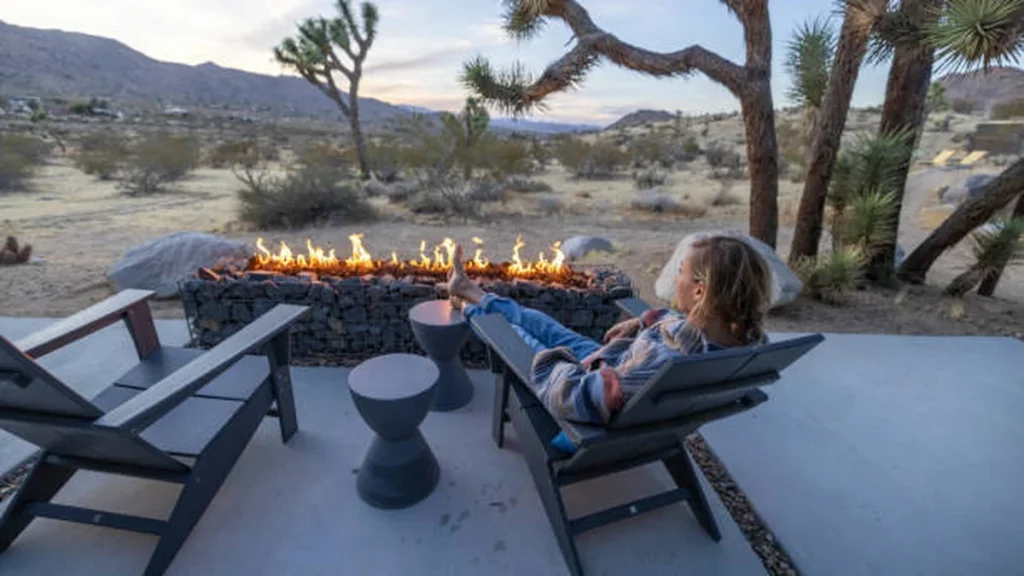
This is the closest, liveliest option, and it’s where most travelers end up. You get quick access to the West Entrance, plus the biggest cluster of cafes, boutiques, and bars in the region. It’s also home to some of the most photographed Airbnbs in the desert — midcentury-modern houses tucked among boulders that look like they belong in a design magazine.
Yucca Valley
A few minutes further from the park, Yucca Valley trades a bit of atmosphere for lower rates and more everyday conveniences — grocery stores, chain restaurants, and larger vacation rentals that work well for families. It’s a smart pick if you want easy hiking access without downtown Joshua Tree’s prices.
Twentynine Palms
Home to the North Entrance, Twentynine Palms is quieter and generally more affordable than the town of Joshua Tree, with a more spread-out, small-town feel. It’s a solid choice if your route through the park runs north-to-south rather than starting at the West Entrance.
Pioneertown
An old 1880s-style movie-set town about 25 minutes from the park entrance, Pioneertown leans into Wild West character — most famous for Pappy & Harriet’s, a legendary live-music venue and restaurant. Staying here means more driving to reach the park, but it’s worth it if the frontier-town vibe and nightlife matter to your trip.
Palm Springs (as a day-trip base)
Palm Springs is roughly 50 minutes from the park entrance, which makes it the least convenient option on this list purely for park access. What it offers instead is a full resort scene — pools, nightlife, and dining that Joshua Tree’s smaller towns don’t have. It works if you’re splitting a longer trip between desert hiking and a couple of resort days, but it’s a poor choice if the park is your main focus.
Quick Takeaway: Town of Joshua Tree = best all-around base. Yucca Valley = budget-friendly and family-practical. Pioneertown = character over convenience. Palm Springs = only if you want a resort trip with a day-trip detour to the park.
Hotels, Motels, and Boutique Stays
Hotel rates around the park vary a lot by star rating and season. Based on recent Booking.com data for the park area, 3-star hotels average around $144 a night, 4-star hotels around $218, and 5-star properties closer to $414. Weekend rates run higher across the board — Saturday is consistently the most expensive night to book, and Tuesday the cheapest.
A few names come up repeatedly across guides and traveler reviews:
- Joshua Tree Inn — a historic, pool-equipped hotel a few minutes from the park entrance, popular with families for its courtyard and laid-back feel.
- Harmony Motel — a small, retro-styled motel with a pool, well liked for its simple rooms and central location.
- Field Station Joshua Tree (Yucca Valley) — a design-forward hotel with a pool and garden, aimed at travelers who want boutique styling without full Airbnb privacy.
Motels in this category tend to book out fast on spring weekends, so treat any of these as “reserve as soon as your dates are set,” not “decide when you land.”
Airbnbs, Vacation Rentals, and Glamping
The vacation-rental scene is arguably Joshua Tree’s biggest draw at this point — the sheer variety of architecturally distinct desert homes has become a destination in its own right, separate from the park.
Expect three broad categories:
- Design-forward houses — vintage-furnished homes with hot tubs, fire pits, and boulder-adjacent lots. These are usually small (1–2 bedrooms) and book out months ahead for peak season.
- Larger family rentals — more common around Yucca Valley, with multiple bedrooms and practical amenities like full kitchens and yards.
- Glamping — AutoCamp Joshua Tree is the standout name here, offering furnished Airstream trailers with a shared pool and lounge less than a 10-minute drive from the park, which suits travelers who want the outdoor feel without pitching a tent.
For a more secluded, adults-only feel, properties like Sacred Sands near the West Entrance pair private patios and outdoor soaking tubs with unobstructed desert views — frequently cited as one of the more romantic options in the area.
Quick Takeaway: If you want a design-magazine desert stay, book a private rental in the town of Joshua Tree early. If you want space and practicality, look toward Yucca Valley. If you want the outdoors without giving up a real bed, AutoCamp splits the difference.
Camping Inside Joshua Tree National Park
Camping is the only way to actually sleep inside the park’s boundaries — there are no hotels or cabins within the park itself. Joshua Tree has nine campgrounds total, split between reservable sites and first-come, first-served sites.
Reservable campgrounds
Jumbo Rocks, Hidden Valley, Ryan, and Cottonwood are among the campgrounds that require reservations year-round through Recreation.gov, and the booking window typically opens six months in advance. Popular spring weekend sites can fill within minutes of that window opening, so it pays to be logged in and ready right when reservations release rather than checking back later. None of the park’s campgrounds have RV hookups, and most have only pit toilets with no drinking water on site — Cottonwood and Black Rock are the exceptions, with flush toilets, water, and dump stations.
First-come, first-served campgrounds
Belle and White Tank are the park’s smallest and most primitive first-come, first-served campgrounds — no water, no trash service, pack-everything-out sites. These fill last, generally only once every reservable site nearby is gone, and they’re best suited to self-sufficient campers rather than a first Joshua Tree trip.
A practical tip that most guides skip: if you’re chasing a first-come site during a busy weekend, the best odds are in the morning between roughly 9 a.m. and noon, right as the previous night’s campers are packing up.
Quick Takeaway: Book reservable campgrounds the moment the six-month window opens. Treat first-come sites as a backup plan, not a primary strategy, during November–May peak season.
Best Places to Stay by Trip Type
| Trip Type | Best Pick | Why |
|---|---|---|
| First-time visitor | Town of Joshua Tree | Closest to West Entrance, most restaurants and shops |
| Budget trip | Yucca Valley | Lower nightly rates, still close to trailheads |
| Family with kids | Joshua Tree Inn or a Yucca Valley rental | Pool access, extra space, practical amenities |
| Romantic getaway | Sacred Sands | Private patios, soaking tubs, desert views |
| Glamping without a tent | AutoCamp Joshua Tree | Airstreams, pool, under 10 minutes from the park |
| Nightlife / character | Pioneertown | Pappy & Harriet’s and Old West atmosphere |
| Camping purists | Jumbo Rocks or Ryan Campground | Boulder-field sites, reservable, strong stargazing |
| Combining with a resort trip | Palm Springs | Resort pools and dining, roughly 50 minutes from the park |
When to Book and What It Costs
Peak season runs October through May, when daytime temperatures sit in a comfortable hiking range; spring adds wildflower blooms, and fall/winter bring crisp nights better suited to stargazing. Summer is the off-season — hot, cheap, and quiet, with July through September typically the least expensive months for hotels in the area.
Book lodging and campsites as early as your dates allow if you’re traveling on a weekend or holiday between November and May. For hotels, Tuesday nights are consistently the cheapest; for camping, the six-month Recreation.gov window is the real deadline, not a suggestion.
READ MORE: Family Friendly Hotels in Palm Springs: A Parent’s Real-World Guide
Conclusion
If you only remember one thing from this guide: the town of Joshua Tree is the safest default base for a first visit, Yucca Valley is the smarter budget move, and camping inside the park requires booking on Recreation.gov the moment the six-month window opens — not the week before you leave. Once your area is picked, everything else — which trail to hike first, where to eat, when to catch sunset — gets a lot easier to plan.
Ready to explore more? Visit more travel guides on Vucrex for our full collection of travel guides.
FAQ Section
Where is the best place to stay to visit Joshua Tree?
The town of Joshua Tree itself is the best all-around choice for most visitors — it sits right at the West Entrance and has the largest concentration of restaurants, shops, and lodging options in the area, cutting down on drive time to the park’s most popular trails.
Is it better to stay in Joshua Tree or Palm Springs?
Stay in the town of Joshua Tree if the park is your main focus — it’s far closer to the entrances. Palm Springs, about 50 minutes from the park, makes more sense if you’re combining a couple of resort days with a shorter park visit.
Can you stay inside Joshua Tree National Park?
Only by camping. There are no hotels, cabins, or vacation rentals within the park’s boundaries — nine campgrounds are the only overnight option inside the park itself.
How far in advance should you book a Joshua Tree campsite?
Reservable campgrounds open their booking window six months in advance on Recreation.gov, and popular spring weekend sites can sell out within minutes. Book the moment the window opens if you have specific dates.
Is Yucca Valley or the town of Joshua Tree better to stay in?
Yucca Valley is generally cheaper and more practical, with more grocery stores and larger rentals for families. The town of Joshua Tree is closer to the park and has more restaurants and nightlife, at a higher price point.
What’s the closest town to the West Entrance?
The town of Joshua Tree sits closest to the West Entrance, generally putting visitors within 10–20 minutes of the park’s most-visited areas.
Are there hotels with pools near Joshua Tree National Park?
Yes — the Joshua Tree Inn, Harmony Motel, and Field Station Joshua Tree in Yucca Valley all have pools, and AutoCamp Joshua Tree offers a shared pool alongside its Airstream accommodations.
Do Joshua Tree campgrounds have drinking water or hookups?
Most don’t. Cottonwood and Black Rock are the exceptions, offering water, flush toilets, and dump stations. The rest have pit toilets only and no RV hookups, so campers need to bring all their own water.