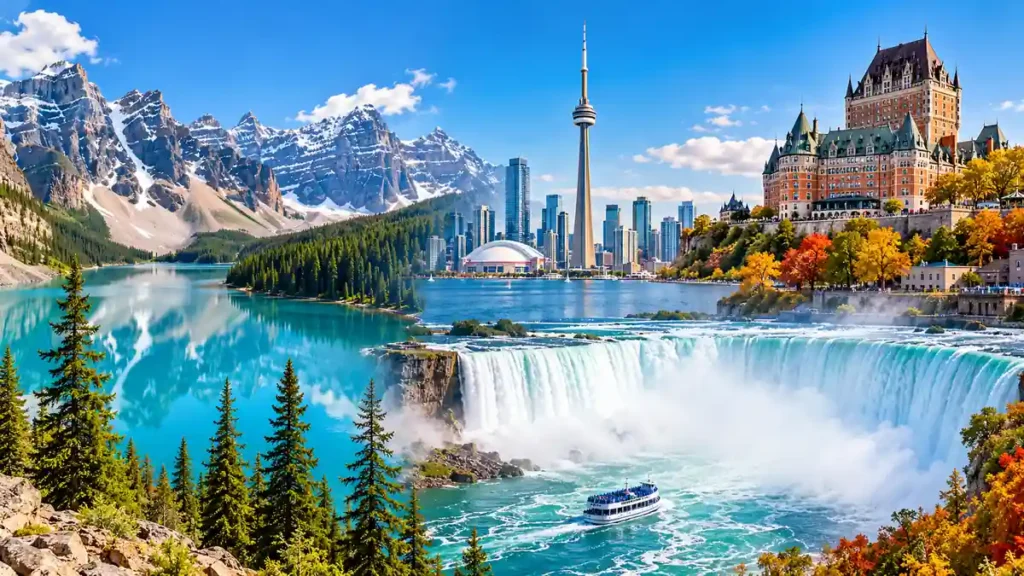
Canada is a country where you can explore turquoise mountain lakes, dramatic waterfalls, historic cities, rugged coastlines, and vast wilderness on the same vacation. The challenge isn’t finding somewhere beautiful to visit. It’s deciding which destinations deserve a place on your itinerary.
The best places to visit in canada include Banff National Park, Vancouver, Toronto, Niagara Falls, Québec City, Montréal, Jasper National Park, and Prince Edward Island. Banff is famous for its Rocky Mountain scenery, Vancouver combines ocean and mountain experiences, and Québec City offers historic architecture. The ideal destination depends on your interests, season, and travel time.
From iconic landmarks to quieter natural escapes, these 20 destinations showcase the country’s remarkable diversity.
Best Places to Visit in Canada at a Glance
| Destination | Province or territory | Best for | Ideal season |
|---|---|---|---|
| Banff National Park | Alberta | Mountains and alpine lakes | June–September |
| Vancouver | British Columbia | City life and outdoor adventures | May–September |
| Toronto | Ontario | Culture, dining and attractions | May–October |
| Niagara Falls | Ontario | Waterfalls and sightseeing | May–October |
| Québec City | Québec | History and architecture | June–October, December–February |
| Montréal | Québec | Festivals and food | May–October |
| Jasper National Park | Alberta | Wildlife and wilderness | June–September |
| Prince Edward Island | PEI | Beaches and coastal villages | June–September |
| Whistler | British Columbia | Skiing and mountain activities | December–March, June–September |
| Ottawa | Ontario | Museums and national landmarks | May–October |
| Nova Scotia’s Cabot Trail | Nova Scotia | Coastal road trips | June–October |
| Victoria | British Columbia | Gardens and waterfront scenery | May–September |
| Newfoundland and Labrador | Newfoundland and Labrador | Icebergs and rugged coastline | May–September |
| Tofino | British Columbia | Surfing and rainforest | May–October |
| Yoho National Park | British Columbia | Waterfalls and hiking | June–September |
| Calgary | Alberta | Western culture and city attractions | June–September |
| Churchill | Manitoba | Polar bears and northern wildlife | October–November |
| Whitehorse | Yukon | Northern lights and wilderness | September–March |
| Gros Morne National Park | Newfoundland and Labrador | Geology and dramatic landscapes | June–September |
| Thousand Islands | Ontario | Boat tours and scenic waterways | May–October |
These seasonal recommendations are general planning guidelines. Mountain access, wildlife viewing, and northern lights conditions vary considerably by year.
1. Banff National Park, Alberta – Best for Mountain Scenery


Banff National Park is one of Canada’s most recognizable natural destinations. Located in the Canadian Rockies, the park features glacier-fed lakes, towering peaks, alpine forests, and abundant wildlife.
Lake Louise is especially famous for its brilliant blue-green water and mountain backdrop. Moraine Lake offers equally spectacular scenery, while the town of Banff provides restaurants, accommodations, and access to outdoor activities.
Top things to do in Banff
- Visit Lake Louise and Moraine Lake.
- Explore Johnston Canyon and its waterfalls.
- Ride the Banff Gondola for views from Sulphur Mountain.
- Drive scenic sections of the Icefields Parkway.
- Enjoy hiking, canoeing, skiing, or snowshoeing.
Best time to visit: June through September for hiking and lakes; December through March for winter sports.
Suggested stay: 3–5 days.
A practical detail many first-time visitors miss is that Moraine Lake Road is closed to personal vehicles year-round. Parks Canada shuttle reservations are required for its shuttle service, and operating dates are seasonal.
Banff National Park
+1
2. Vancouver, British Columbia – Best for City and Nature Experiences


7
Few Canadian cities combine urban attractions and outdoor recreation as effectively as Vancouver.
Situated between the Pacific Ocean and the Coast Mountains, Vancouver offers beaches, forest trails, waterfront neighborhoods, and an impressive dining scene.
Stanley Park is a major highlight. Its seawall provides scenic views of the harbor, mountains, and downtown skyline.
Top attractions in Vancouver
- Stanley Park and the Seawall
- Granville Island Public Market
- Capilano Suspension Bridge Park
- Grouse Mountain
- Gastown and its historic streets
- English Bay Beach
Best time to visit: May through September.
Suggested stay: 3–4 days.
Vancouver is particularly suitable for travelers who want the convenience of a large city without giving up easy access to nature. Public transportation makes many central attractions accessible without a rental car.
3. Toronto, Ontario – Best for Culture and Urban Attractions


5
Toronto is Canada’s largest city and one of its leading cultural destinations.
Its neighborhoods reflect the city’s multicultural population, with restaurants, museums, markets, entertainment venues, and festivals offering something for almost every interest.
The CN Tower dominates the skyline and provides panoramic views of Lake Ontario and the surrounding city.
Top things to do in Toronto
- Visit the CN Tower.
- Explore the Royal Ontario Museum.
- Walk through the Distillery Historic District.
- Take a ferry to the Toronto Islands.
- Discover Kensington Market and St. Lawrence Market.
- Enjoy waterfront parks and cultural festivals.
Best time to visit: May through October.
Suggested stay: 3–4 days.
Toronto is also a convenient starting point for exploring southern Ontario. Niagara Falls is close enough for a day trip, although spending a night in the Niagara region allows a more relaxed visit.
4. Niagara Falls, Ontario – Best for Spectacular Waterfalls


7
Niagara Falls is among North America’s most famous natural attractions.
The waterfalls consist of Horseshoe Falls, American Falls, and Bridal Veil Falls. The Canadian side provides particularly expansive views of Horseshoe Falls, the largest of the three.
Visitors can admire the waterfalls from observation areas, experience the mist on a boat excursion, or explore the surrounding parks.
Best experiences at Niagara Falls
- Walk along the Niagara Parkway.
- Experience a waterfall boat tour.
- Visit Journey Behind the Falls.
- Explore nearby Niagara-on-the-Lake.
- See the illuminated falls after dark.
Best time to visit: May through October, although the falls are impressive year-round.
Suggested stay: 1–2 days.
Summer brings pleasant conditions for boat tours and outdoor activities, but it is also the busiest period. Spring and autumn can provide a more comfortable sightseeing experience.
5. Québec City, Québec – Best for History and European-Style Charm


8
Québec City is known for its French-speaking culture, centuries-old buildings, fortified historic center, and picturesque streets.
Old Québec is a UNESCO World Heritage Site and one of the most atmospheric urban destinations in North America.
The famous Château Frontenac overlooks the St. Lawrence River, while Petit-Champlain offers boutiques, restaurants, and narrow cobblestone streets.
Must-see attractions
- Château Frontenac
- Old Québec and its fortifications
- Quartier Petit-Champlain
- Montmorency Falls
- Plains of Abraham
- Place Royale
Best time to visit: June through October for comfortable walking weather; winter for snow-covered scenery and seasonal celebrations.
Suggested stay: 2–3 days.
Québec City is particularly rewarding for visitors interested in Canadian history, architecture, French-Canadian cuisine, and cultural heritage.
6. Montréal, Québec – Best for Festivals, Food and Arts


5
Montréal combines French and English influences with a lively cultural atmosphere.
The city is famous for its music festivals, distinctive neighborhoods, historic architecture, and food scene. Visitors can spend the morning exploring Old Montréal, enjoy local specialties at lunch, and finish the day at a concert or waterfront attraction.
Top places to explore
- Old Montréal and the Old Port
- Notre-Dame Basilica
- Mount Royal Park
- Jean-Talon Market
- Montréal Botanical Garden
- Plateau-Mont-Royal
Best time to visit: May through October.
Suggested stay: 3–4 days.
Food is a major part of the Montréal experience. Popular local specialties include Montréal-style bagels, smoked meat sandwiches, and poutine.
For travelers who enjoy festivals, summer is especially appealing, although exact event dates change each year.
7. Jasper National Park, Alberta – Best for Wildlife and Wilderness


Jasper National Park offers vast mountain landscapes, forests, waterfalls, lakes, and wildlife habitats.
Compared with Banff’s most popular sightseeing areas, Jasper can feel more spacious and wilderness-focused.
Maligne Lake is one of its best-known attractions, while Athabasca Falls demonstrates the power of the region’s glacial rivers.
Popular Jasper experiences
- Visit Maligne Lake and Maligne Canyon.
- Explore Athabasca Falls.
- Travel along the Icefields Parkway.
- Look for elk, mountain goats, and other wildlife from safe distances.
- Experience stargazing in the Jasper Dark Sky Preserve.
Best time to visit: June through September.
Suggested stay: 2–4 days.
Jasper was significantly affected by wildfires in 2024. Visitors should check current Parks Canada notices because restoration work, trail closures, and access restrictions can affect specific areas.
8. Prince Edward Island – Best for Beaches and Coastal Villages


9
Prince Edward Island is one of Canada’s most charming coastal destinations.
The province is famous for its red-sand beaches, rolling farmland, fishing villages, lighthouses, and literary connections to Anne of Green Gables.
Charlottetown, the provincial capital, offers historic buildings and cultural attractions.
Things to do on Prince Edward Island
- Explore Prince Edward Island National Park.
- Visit Green Gables Heritage Place.
- Walk along Cavendish Beach.
- Discover Charlottetown’s historic waterfront.
- Drive scenic coastal routes.
- Sample locally caught seafood.
Best time to visit: June through September.
Suggested stay: 3–5 days.
A rental car is useful because many beaches, small communities, and scenic viewpoints are spread across the island.
9. Whistler, British Columbia – Best for Skiing and Adventure


9
Whistler is internationally known for skiing and snowboarding, but it also offers plenty of summer recreation.
The resort town lies north of Vancouver along the scenic Sea-to-Sky Highway.
Whistler Blackcomb attracts winter sports enthusiasts, while warmer months bring hiking, mountain biking, and lake activities.
Best things to do
- Ski or snowboard at Whistler Blackcomb.
- Ride the PEAK 2 PEAK Gondola.
- Explore Whistler Village.
- Hike alpine trails in summer.
- Visit Lost Lake.
- Experience mountain biking trails.
Best time to visit: December through March for winter sports; June through September for hiking and biking.
Suggested stay: 2–4 days.
Whistler is an excellent addition to a Vancouver itinerary, particularly for travelers interested in mountain scenery without traveling all the way to Alberta.
10. Ottawa, Ontario – Best for Museums and Canadian History


6
Canada’s capital, Ottawa, offers a combination of national landmarks, museums, historic architecture, and outdoor recreation.
Parliament Hill is the city’s most recognizable attraction, while the Rideau Canal is a UNESCO World Heritage Site.
Top Ottawa attractions
- Parliament Hill
- Canadian Museum of History in nearby Gatineau
- National Gallery of Canada
- Rideau Canal
- ByWard Market
- Canadian War Museum
Best time to visit: May through October, with winter offering a different experience.
Suggested stay: 2–3 days.
In winter, parts of the Rideau Canal may operate as a skating rink when ice conditions permit. Its opening and closing dates depend on weather and ice safety.
Ottawa works especially well as part of an eastern Canada itinerary connecting Toronto, Montréal, and Québec City.
11. Cabot Trail, Nova Scotia – Best for Coastal Road Trips


8
The Cabot Trail is a scenic driving route around northern Cape Breton Island.
The approximately 300-kilometer route passes coastal cliffs, fishing communities, forested highlands, and ocean viewpoints.
Cape Breton Highlands National Park is a major highlight, especially for visitors who enjoy hiking and landscape photography.
Top experiences along the Cabot Trail
- Hike the Skyline Trail.
- Explore Cape Breton Highlands National Park.
- Stop at coastal viewpoints.
- Visit Chéticamp and Ingonish.
- Discover local Acadian and Gaelic cultural traditions.
- Enjoy fall foliage in September and October.
Best time to visit: June through October.
Suggested stay: 2–4 days.
Although the Cabot Trail can technically be driven in a day, spending several days allows time for hiking, coastal stops, and exploring small communities.
12. Victoria, British Columbia – Best for Gardens and Waterfront Beauty


6
Located on Vancouver Island, Victoria is known for its attractive waterfront, historic architecture, gardens, and relatively mild coastal climate.
The Inner Harbour is the city’s central attraction, surrounded by landmark buildings and walking areas.
Must-visit places in Victoria
- Inner Harbour
- Royal BC Museum
- Butchart Gardens
- Beacon Hill Park
- Fisherman’s Wharf
- Craigdarroch Castle
Best time to visit: May through September.
Suggested stay: 2–3 days.
Victoria is accessible from mainland British Columbia by ferry or air. Ferry travel can be particularly enjoyable because the journey passes islands and coastal scenery.
Spring is an excellent time for gardens, while summer offers longer days for exploring the waterfront.
13. Newfoundland and Labrador – Best for Icebergs and Rugged Coastlines


9
Newfoundland and Labrador offers some of Canada’s most distinctive coastal landscapes.
Colorful fishing communities, rocky cliffs, historic lighthouses, and Atlantic Ocean scenery give the province a character unlike many other Canadian destinations.
St. John’s, the provincial capital, is known for its colorful row houses and coastal setting.
Top places and experiences
- Signal Hill in St. John’s
- Cape Spear Lighthouse National Historic Site
- Twillingate and Iceberg Alley
- Bonavista Peninsula
- Whale-watching excursions
- Historic fishing villages
Best time to visit: May through September.
Suggested stay: 5–7 days or longer.
Iceberg sightings are generally most promising in spring and early summer, although their timing and location vary with ocean and weather conditions.
Newfoundland is particularly appealing to travelers who prefer quieter destinations, coastal photography, and nature-focused road trips.
14. Tofino, British Columbia – Best for Surfing and Rainforests


10
Tofino is a small coastal community on the western side of Vancouver Island.
Known for its surf beaches, temperate rainforests, and dramatic Pacific Ocean scenery, Tofino provides a very different experience from Canada’s mountain and city destinations.
Nearby Pacific Rim National Park Reserve protects beaches, rainforest ecosystems, and culturally significant landscapes.
Things to do in Tofino
- Walk along Long Beach.
- Explore Pacific Rim National Park Reserve.
- Take surfing lessons.
- Visit rainforest trails.
- Join a guided wildlife-viewing excursion.
- Enjoy oceanfront sunsets.
Best time to visit: May through October for many outdoor activities, although experienced surfers and storm watchers also visit during cooler months.
Suggested stay: 2–4 days.
Travelers should respect ocean safety warnings. Pacific surf conditions, cold water, tides, and unexpected waves can make apparently calm beaches hazardous.
15. Yoho National Park, British Columbia – Best for Waterfalls and Alpine Lakes


8
Yoho National Park lies in the Canadian Rockies, west of Banff National Park.
Its scenery includes towering waterfalls, glacier-carved valleys, forests, and striking mountain lakes.
Emerald Lake is particularly popular for photography, while Takakkaw Falls is among the park’s most impressive natural attractions.
Best places to explore
- Emerald Lake
- Takakkaw Falls
- Natural Bridge
- Lake O’Hara, subject to access arrangements
- Iceline Trail
- Burgess Shale fossil sites through authorized guided experiences
Best time to visit: June through September.
Suggested stay: 1–3 days.
Yoho is a strong choice for visitors who want to explore more of the Rockies beyond Banff. Some high-elevation areas and access roads have short operating seasons, so advance planning is essential.
16. Calgary, Alberta – Best for Western Culture


9
Calgary combines modern urban attractions with Alberta’s western heritage.
The city is especially famous for the Calgary Stampede, a major annual celebration of rodeo, agricultural traditions, and western culture.
Calgary also serves as a convenient gateway to Banff and the Rocky Mountains.
Top attractions in Calgary
- Calgary Tower
- Calgary Stampede grounds and events
- Heritage Park Historical Village
- Calgary Zoo
- Studio Bell, home of the National Music Centre
- Peace Bridge and Bow River pathways
Best time to visit: June through September.
Suggested stay: 1–3 days.
Travelers planning to attend the Calgary Stampede should verify the annual dates and expect higher accommodation demand during the event.
17. Churchill, Manitoba – Best for Polar Bears and Arctic Wildlife


9
Churchill is one of the world’s best-known destinations for observing polar bears in their natural environment.
Located on the shore of Hudson Bay, Churchill also attracts visitors interested in beluga whales, northern landscapes, and Indigenous cultural experiences.
Best wildlife experiences
- Polar bear viewing with qualified guides
- Beluga whale watching in summer
- Northern lights observation
- Tundra excursions
- Learning about subarctic ecosystems and local cultures
Best time to visit: October through November for polar bear viewing; July through August for beluga whales.
Suggested stay: 3–5 days.
Churchill cannot be reached by a conventional road trip from southern Manitoba. Visitors generally arrive by plane or train.
Polar bears are dangerous wild animals. Guided excursions and adherence to local safety rules are essential.
18. Whitehorse, Yukon – Best for Northern Lights and Wilderness


10
Whitehorse is the capital of Yukon and an excellent base for exploring Canada’s north.
The region is known for expansive wilderness, mountain landscapes, historic gold-rush routes, and opportunities to see the aurora borealis.
Top experiences in Whitehorse
- Watch for the northern lights.
- Visit the Yukon Wildlife Preserve.
- Explore Miles Canyon.
- Learn about the Klondike Gold Rush.
- Visit the SS Klondike National Historic Site.
- Take scenic excursions into the surrounding wilderness.
Best time to visit: September through March for northern lights; June through August for hiking and long daylight hours.
Suggested stay: 3–5 days.
Northern lights sightings are never guaranteed. Dark skies, clear weather, and geomagnetic activity all influence visibility.
Staying several nights improves the chance of experiencing favorable conditions.
19. Gros Morne National Park – Best for Geological Wonders


8
Gros Morne National Park is a UNESCO World Heritage Site celebrated for its geological significance and dramatic landscapes.
The park contains fjord-like valleys, coastal lowlands, mountains, and unusual exposed rock formations.
The Tablelands are especially remarkable because they expose rocks originating from Earth’s mantle, providing a rare opportunity to observe geological processes.
Highlights of Gros Morne
- Western Brook Pond
- The Tablelands
- Gros Morne Mountain
- Green Gardens Trail
- Coastal villages and viewpoints
- Guided geological interpretation
Best time to visit: June through September.
Suggested stay: 3–5 days.
Gros Morne is an outstanding destination for hikers, photographers, geology enthusiasts, and visitors seeking less crowded natural landscapes.
20. Thousand Islands, Ontario – Best for Scenic Boat Tours


7
The Thousand Islands region lies along the St. Lawrence River near the Canada–United States border.
The area is famous for its many small islands, wooded shorelines, waterfront cottages, and scenic boat excursions.
Gananoque is a popular gateway for exploring the region.
Things to do in the Thousand Islands
- Take a sightseeing boat cruise.
- Explore Thousand Islands National Park.
- Visit Gananoque.
- Enjoy kayaking and paddling.
- Photograph historic waterfront properties.
- Discover scenic cycling routes.
Best time to visit: May through October.
Suggested stay: 1–2 days.
Some cruises pass international landmarks such as Boldt Castle, which is located in the United States. Travelers planning to disembark across the border must meet applicable immigration requirements.
Best Places to Visit in Canada by Travel Interest
Choosing a destination becomes easier when you identify what matters most to your trip.
| Travel interest | Recommended destinations |
|---|---|
| First-time visitors | Banff, Vancouver, Toronto, Niagara Falls |
| Nature lovers | Jasper, Yoho, Gros Morne |
| Couples | Québec City, Victoria, Banff |
| Families | Toronto, Ottawa, Prince Edward Island |
| Winter sports | Whistler, Banff |
| Beaches | Prince Edward Island, Tofino |
| Food and culture | Montréal, Toronto, Québec City |
| Wildlife | Churchill, Jasper, Newfoundland |
| Road trips | Cabot Trail, Icefields Parkway |
| Northern lights | Whitehorse, Churchill |
| Photography | Banff, Newfoundland, Gros Morne |
| History | Ottawa, Québec City, Halifax and surrounding historic sites |
For a first visit lasting one week, choosing one region is generally more enjoyable than attempting to cross the entire country.
Best Places to Visit in Canada During Different Seasons
Canada’s seasons can dramatically change the travel experience. The best time to visit depends on whether your priorities are hiking, skiing, sightseeing, wildlife, or autumn foliage.
Spring: March to May
Spring is an attractive time for urban sightseeing and gardens, particularly in southern British Columbia and Ontario.
Victoria becomes especially colorful as flowers bloom, while Vancouver’s parks and waterfront areas are enjoyable during milder weather.
In the Rockies, however, many high-elevation hiking trails remain snow-covered well into spring.
Summer: June to August
Summer is the most versatile season for exploring much of Canada.
Longer daylight hours, warmer temperatures, and seasonal attractions make it ideal for mountain hiking, coastal road trips, national parks, and festivals.
Popular summer destinations include Banff, Jasper, Vancouver Island, Prince Edward Island, and Nova Scotia.
However, travelers should account for crowds, higher accommodation demand, wildfire smoke, and possible trail restrictions.
Autumn: September to November
Autumn is particularly appealing for colorful foliage, scenic drives, and cooler sightseeing temperatures.
Québec, Ontario, and Cape Breton Island are well known for fall colors.
September can also be a rewarding month in the Canadian Rockies, although early snowfall is possible.
Churchill’s polar bear viewing season generally becomes a major attraction in October and November.
Winter: December to February
Winter transforms Canada into a destination for skiing, snowboarding, snowshoeing, and seasonal festivals.
Whistler and Banff are popular winter sports destinations, while Québec City is known for its atmospheric snowy streets.
Whitehorse offers opportunities to observe the northern lights during long, dark nights.
Visitors should prepare for extreme cold in northern and inland regions and recognize that winter road conditions can affect travel plans.
How to Plan a Canada Trip Based on Your Time
Canada is the world’s second-largest country by total area. Distances between major attractions can be enormous, and traveling between provinces often requires flights or long drives.
A practical itinerary focuses on destinations that connect geographically.
5-day itinerary: Toronto and Niagara Falls
- Day 1: Explore downtown Toronto and the CN Tower.
- Day 2: Visit museums, markets, and the Toronto Islands.
- Day 3: Travel to Niagara Falls and explore the waterfront.
- Day 4: Visit Niagara-on-the-Lake and nearby attractions.
- Day 5: Return to Toronto for departure.
This itinerary works well for travelers who prefer a mix of city experiences and natural landmarks.
7-day itinerary: Vancouver and the Canadian Rockies
- Days 1–2: Explore Vancouver, Stanley Park, and Granville Island.
- Day 3: Fly to Calgary and transfer to Banff.
- Days 4–5: Visit Lake Louise, Moraine Lake when accessible, and Banff’s mountain attractions.
- Day 6: Explore additional Banff viewpoints or take a scenic drive.
- Day 7: Return to Calgary for departure.
This route combines a major Canadian city with the country’s most famous mountain scenery. Flights and transfers should be arranged to avoid losing excessive sightseeing time.
10-day itinerary: Eastern Canada highlights
- Days 1–3: Toronto and Niagara Falls.
- Days 4–5: Ottawa and its museums.
- Days 6–7: Montréal’s neighborhoods, markets, and historic sites.
- Days 8–10: Québec City, Old Québec, and Montmorency Falls.
Train and road connections make this eastern corridor relatively practical compared with a cross-country itinerary.
Essential Travel Tips for Visiting Canada
1. Understand the distances
Canada is enormous. Vancouver and Toronto are separated by thousands of kilometers, making a casual day trip between them impossible.
Choose a region before deciding on individual attractions. This approach saves transportation costs and creates more time for sightseeing.
2. Check entry requirements
International visitors may need a visitor visa or an Electronic Travel Authorization (eTA), depending on their nationality and travel documents.
Consult the official Government of Canada visitor information before making arrangements.
3. Prepare for changing weather
Weather conditions vary significantly across Canada.
A summer day in Vancouver can feel very different from an evening in the Rocky Mountains. Bring layers, waterproof clothing, and appropriate footwear when visiting outdoor destinations.
4. Reserve popular national park activities
Some of Canada’s most famous attractions require advance reservations or have controlled access.
For example, Parks Canada uses reservation-based shuttles for Lake Louise and Moraine Lake. Checking official park information before your trip can prevent disappointment.
Banff National Park
+1
5. Respect wildlife and natural environments
Canada is home to bears, moose, elk, wolves, and many other wild animals.
Never approach or feed wildlife. Follow posted instructions, carry appropriate safety equipment where recommended, and maintain safe viewing distances.
6. Consider transportation carefully
Major Canadian cities generally offer public transit, but remote destinations often require a rental car, guided excursion, ferry, or domestic flight.
Research transportation options before choosing accommodation, particularly in Atlantic Canada and northern regions.
7. Learn about Indigenous cultures respectfully
First Nations, Inuit, and Métis communities have rich histories and living cultural traditions throughout Canada.
Indigenous-led tours, cultural centers, museums, and educational experiences can provide meaningful perspectives on the places visitors explore.
Choose experiences developed and operated with the involvement of the communities whose cultures are being presented.
Which Canadian Destination Should You Visit First?
For many first-time visitors, three destinations stand out.
Banff National Park is an excellent starting point for travelers whose priority is spectacular natural scenery. Its mountain landscapes and famous lakes represent some of Canada’s most recognizable attractions.
Vancouver is a strong choice for travelers seeking a combination of urban culture, beaches, parks, and nearby mountains.
Québec City offers a different experience through its historic architecture, French-speaking heritage, and distinctive atmosphere.
Travelers with a particular interest in wildlife, remote wilderness, or coastal landscapes may prefer Churchill, Yukon, Newfoundland, or Nova Scotia.
There is no single destination that suits everyone. The best choice is the one that matches your interests, available time, and preferred season.
Final Thoughts on the Best Places to Visit in Canada
The best places to visit in canada reveal how varied the country truly is. From the turquoise lakes of Banff and the dramatic waterfalls of Niagara to Montréal’s cultural neighborhoods and Newfoundland’s rugged coastline, each region offers a different experience.
For a first trip, Banff, Vancouver, Toronto, and Québec City provide an excellent introduction to Canada’s landscapes and culture. Travelers seeking quieter adventures can explore Gros Morne National Park, Prince Edward Island, the Cabot Trail, or the northern wilderness around Whitehorse.
Rather than trying to visit everything at once, select a few destinations within one region and give yourself enough time to enjoy them. Check seasonal conditions, transportation connections, and park access before departure.
A thoughtfully planned journey will offer a much richer experience than an itinerary built around covering as many places as possible.