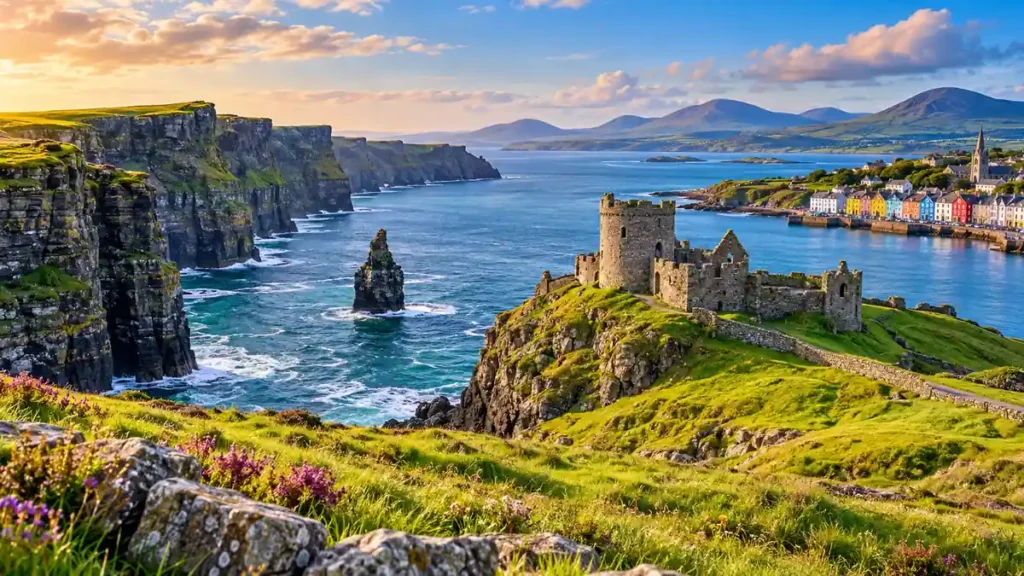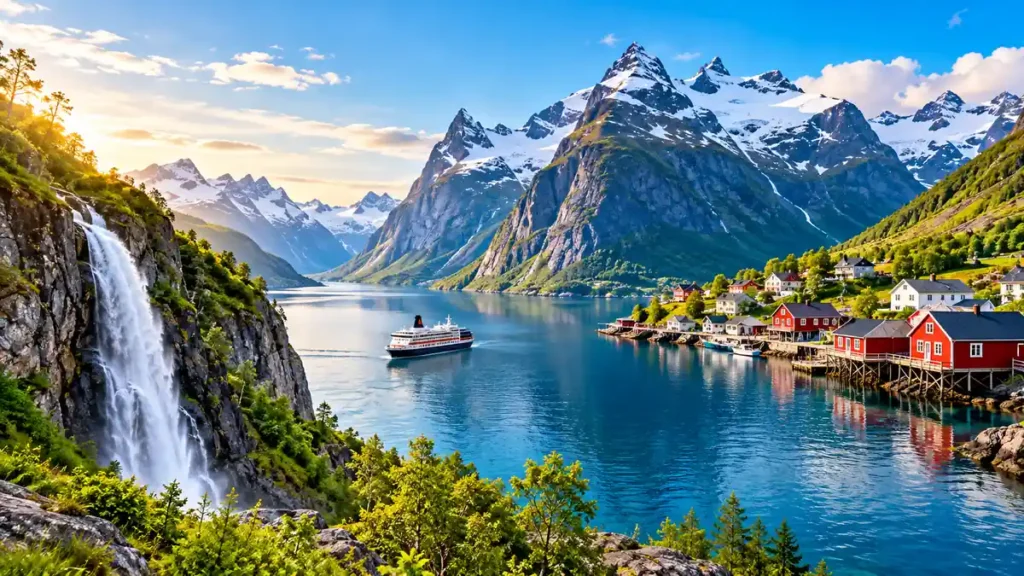
Norway is a country where mountains rise straight from the sea, waterfalls tumble into deep fjords, and colorful fishing villages sit beneath snow-covered Arctic peaks. But with so many extraordinary destinations spread across such a large country, deciding where to go can be surprisingly difficult.
The best places to visit in norway include Oslo, Bergen, Geirangerfjord, the Lofoten Islands, Tromsø, Flåm, Stavanger, Ålesund, and Svalbard. Each offers a different experience, from UNESCO-listed fjords and scenic railway journeys to northern lights, dramatic hiking trails, and fascinating Viking history. The ideal destinations depend on your interests, travel season, and available time.
Norway rewards travelers who explore a region thoroughly rather than rushing between distant attractions. Its western coastline is famous for fjords, the Arctic north offers exceptional natural phenomena, and its cities combine Scandinavian design with centuries of maritime heritage.
This guide explores 15 outstanding destinations, explains what makes each special, and helps you decide when and how to visit.
1. Best places to visit in norway for first-time travelers
If you are visiting Norway for the first time, start with destinations that combine iconic scenery, cultural attractions, and relatively convenient transportation.

Bergen
Best for colorful waterfront architecture, cultural heritage, and exploring the western fjords.

Geirangerfjord
Best for spectacular fjord scenery, waterfalls, boat trips, and mountain viewpoints.

Oslo
Best for museums, Norwegian history, contemporary architecture, and urban culture.

Lofoten Islands
Best for dramatic Arctic landscapes, traditional fishing villages, photography, and outdoor adventures.
Norway’s official tourism organization recommends concentrating on one or two regions because the distances between attractions are substantial.
Most popular destinations
+1
Quick comparison of Norway’s top destinations
| Destination | Best experience | Suggested stay |
|---|---|---|
| Oslo | Museums and city life | 2–3 days |
| Bergen | Historic harbor and fjords | 2–3 days |
| Geirangerfjord | Waterfalls and fjord cruises | 1–2 days |
| Lofoten Islands | Coastal scenery and hiking | 4–6 days |
| Tromsø | Northern lights and Arctic activities | 3–5 days |
| Flåm | Scenic railway and fjord cruises | 1–2 days |
| Stavanger | Preikestolen and Lysefjord | 2–3 days |
| Ålesund | Architecture and coastal viewpoints | 1–2 days |
| Trondheim | Medieval heritage | 1–2 days |
| Svalbard | High-Arctic wilderness | 3–5 days |
These are suggested minimum stays rather than fixed requirements. Travelers interested in photography, long hikes, or remote landscapes may prefer more time.
2. Norway’s most beautiful cities and cultural destinations
Norwegian cities are compact, walkable, and closely connected to the surrounding natural landscape. Several are excellent starting points for exploring the countryside.
Oslo: Norway’s capital of culture and design


Oslo is the country’s capital and largest city. Located beside the Oslofjord and surrounded by forests, it offers an unusual combination of metropolitan culture and outdoor recreation.
One of Oslo’s most recognizable landmarks is the Norwegian National Opera & Ballet building. Its sloping marble roof allows visitors to walk above the waterfront and enjoy views across the harbor.
The city also has an exceptional museum scene.
Highlights include:
- MUNCH Museum: Dedicated to the works of Norwegian expressionist painter Edvard Munch, including versions of The Scream.
- Vigeland Sculpture Park: An extensive outdoor collection of sculptures by Gustav Vigeland in Frogner Park.
- Fram Museum: Explores Norwegian polar expeditions and the historic exploration vessel Fram.
- Akershus Fortress: A medieval fortress overlooking Oslo’s harbor.
- Holmenkollen: A famous ski-jumping landmark with panoramic views over the capital.
The Bygdøy peninsula is especially interesting for maritime history, while the Aker Brygge and Tjuvholmen waterfront districts are pleasant places for walking.
Oslo is also a useful starting point for exploring Eastern Norway. The nearby Kistefos Museum, known for its sculptural exhibition building called The Twist, offers a distinctive combination of art, architecture, and landscape.
Best time to visit: May through September for comfortable sightseeing, or December through March for winter atmosphere and skiing.
Practical tip: Many of Oslo’s central attractions can be reached on foot or by public transportation, making a rental car unnecessary for most city visits.
Bergen: The gateway to Norway’s famous fjords


Bergen is one of Norway’s most atmospheric cities. Surrounded by seven mountains and located near some of the country’s most impressive fjords, it has long served as an important maritime trading center.
Its most famous attraction is Bryggen, a historic waterfront district featuring rows of colorful wooden buildings. The area reflects Bergen’s role in the Hanseatic trading network and is recognized as a UNESCO World Heritage Site.
Visitors can wander through narrow wooden passageways, explore small museums, and learn about the city’s trading history.
Another highlight is the Fløibanen funicular, which climbs Mount Fløyen and provides expansive views of Bergen and its surrounding islands.
Other worthwhile experiences include visiting the Fish Market, exploring the KODE art museums, and taking a boat trip through nearby coastal waterways.
Bergen is particularly useful as a base for visiting Hardangerfjord and Sognefjord, Norway’s longest and deepest fjord.
Most popular destinations
+1
Best time to visit: May through September.
Practical tip: Bergen receives frequent rainfall throughout the year. Waterproof clothing and flexible outdoor plans are more useful than relying on a sunny forecast.
Ålesund: A beautiful coastal city with Art Nouveau architecture

Ålesund stands out for its distinctive architecture and dramatic coastal setting.
Much of the town center was rebuilt in the Art Nouveau style after a devastating fire in 1904. Decorative building facades, towers, and colorful details give the city a different appearance from other Norwegian towns.
The most famous viewpoint is Mount Aksla, reached by a staircase from the town park or by road. From the top, visitors can see the city’s islands, surrounding mountains, and Atlantic coastline.
Ålesund also provides access to the Sunnmøre Alps and the wider fjord region.
Best time to visit: May through September.
Practical tip: Allow at least one overnight stay if you want to explore the town without rushing. Ålesund can also be combined with a visit to Geirangerfjord.
Trondheim: Medieval history and Norway’s spiritual heritage

Trondheim was once Norway’s capital and remains an important center of history, education, and culture.
Its most significant landmark is Nidaros Cathedral, an impressive Gothic building associated with Saint Olav and centuries of pilgrimage.
Nearby, the Archbishop’s Palace provides additional insight into medieval Norwegian history.
The colorful wooden warehouses along the Nidelva River are another recognizable feature of the city. The historic Bakklandet neighborhood is especially pleasant for walking, with cobbled streets, traditional houses, and small cafés.
Trondheim is an excellent destination for travelers who want to understand Norway beyond its famous natural attractions.
Best time to visit: May through September, although the city is accessible throughout the year.
3. Best places to visit in norway for fjords and natural scenery
The Norwegian fjords are among Europe’s most spectacular landscapes. Formed by glaciers over thousands of years, these deep coastal valleys are characterized by steep mountainsides, waterfalls, and narrow waterways.
Western Norway contains several of the most famous examples.
Geirangerfjord: Norway’s iconic UNESCO-listed fjord


6
Geirangerfjord is one of Norway’s most recognizable natural landmarks. Its steep cliffs, cascading waterfalls, and deep blue water create a landscape that appears almost unreal.
Together with Nærøyfjord, it forms the West Norwegian Fjords UNESCO World Heritage property.
One of the most memorable experiences is traveling by boat through the fjord. From the water, visitors can see the famous Seven Sisters waterfall and the opposing Suitor waterfall.
For panoramic views, head to Flydalsjuvet or Ørnesvingen, also known as Eagle Bend.
The scenic Ørnevegen road features a series of dramatic hairpin bends descending toward Geiranger village. Dalsnibba, reached by a separate mountain road when conditions permit, offers an even higher perspective.
The ferry journey between Geiranger and Hellesylt is particularly scenic.
Lonely Planet
+1
Best time to visit: June through August for the broadest range of sightseeing opportunities.
Practical tip: Summer is the busiest period, especially when cruise ships arrive. Early mornings and evenings can provide a quieter experience.
Flåm and Nærøyfjord: Scenic trains and unforgettable boat journeys

Flåm is a small village located at the end of Aurlandsfjord, a branch of Sognefjord.
Despite its modest size, it is one of Norway’s best-known destinations because of the Flåm Railway, or Flåmsbana.
The railway connects Flåm with the mountain station at Myrdal, climbing through steep valleys and passing waterfalls, tunnels, and dramatic mountain scenery.
Nearby Nærøyfjord is one of Norway’s narrowest and most visually striking fjords. Its towering mountains create an especially dramatic setting for a boat journey between Flåm and Gudvangen.
The Stegastein viewpoint, above Aurlandsfjord, is another highlight. Its viewing platform extends outward over the mountainside, providing a spectacular view of the fjord below.
Best time to visit: May through September, although railway journeys and some fjord excursions operate in other seasons.
Practical tip: The Flåm Railway and Nærøyfjord cruise are separate experiences. Allow enough time to enjoy both rather than treating Flåm as a brief photo stop.
Hardangerfjord: Waterfalls, orchards, and mountain landscapes

Hardangerfjord is known for its combination of fjord scenery, fruit-growing villages, waterfalls, and mountain landscapes.
During spring, flowering apple and cherry orchards create a striking contrast against the surrounding mountains.
One of the region’s most famous natural attractions is Vøringsfossen, a powerful waterfall near Eidfjord.
Hardanger is also associated with Trolltunga, the dramatic rock formation extending horizontally above Ringedalsvatnet lake.
The hike to Trolltunga is challenging and requires suitable weather, preparation, and physical fitness. It should not be treated as a casual sightseeing walk.
Other highlights include the Folgefonna glacier region and the scenic Hardangervidda mountain plateau.
Best time to visit: May for orchard blossoms; June through September for hiking and general sightseeing.
Practical tip: Choose between a relaxed fjord-and-waterfall itinerary and a demanding mountain hike. Combining both in one day is often unrealistic.
Stavanger and Lysefjord: Home of the famous Pulpit Rock

Stavanger is a coastal city known for its charming old town, maritime heritage, and proximity to Lysefjord.
Its biggest attraction is Preikestolen, commonly called Pulpit Rock, a flat-topped cliff rising approximately 604 meters above Lysefjord.
The hike to Preikestolen is one of Norway’s most popular outdoor experiences. The standard trail is approximately 8 kilometers round trip, with substantial elevation gain and uneven terrain.
Most hikers need around four to five hours, although conditions and individual fitness can change the duration considerably.
For those who prefer to experience the landscape without hiking, fjord cruises offer views of Lysefjord from the water.
Stavanger itself deserves attention. Gamle Stavanger features historic white wooden houses, while the Norwegian Petroleum Museum explores the country’s modern offshore energy industry.
Best time to visit: May through September for generally favorable hiking conditions.
Practical tip: Avoid approaching exposed cliff edges, especially during strong winds or wet weather. The trail may require additional equipment or a guide outside the main hiking season.
4. Best Arctic destinations in Norway for northern lights and midnight sun
Northern Norway offers a different kind of beauty from the western fjords. Here, mountains meet the Arctic Ocean, traditional fishing communities survive along rugged coastlines, and the changing seasons dramatically transform the landscape.
Lofoten Islands: Norway’s most photogenic archipelago


7
The Lofoten Islands are among the most beautiful places in Scandinavia. Located above the Arctic Circle, this archipelago features sharp mountain peaks, sheltered bays, turquoise beaches, and picturesque fishing villages.
Unlike many mountain destinations, Lofoten’s peaks rise directly from the ocean, creating extraordinary scenery.
Some of the best places to explore include:
- Reine: A famous fishing village surrounded by towering mountains and deep fjords.
- Hamnøy: Known for traditional red fishermen’s cabins, called rorbuer.
- Henningsvær: A charming coastal village with galleries, fishing heritage, and dramatic island scenery.
- Haukland Beach: A white-sand beach surrounded by mountains.
- Nusfjord: A historic fishing village with well-preserved traditional buildings.
- Å: A small village at the southwestern end of the E10 road.
Hiking is one of the main attractions. The Reinebringen trail provides sweeping views of Reine and the surrounding islands, but its steep stone steps require caution.
Lofoten also offers kayaking, surfing at Unstad, wildlife watching, and opportunities to learn about the region’s cod-fishing traditions.
The Norwegian Scenic Route through Lofoten extends approximately 230 kilometers, with additional detours to villages and viewpoints.
Visit Norway
+1
Best time to visit: June through August for hiking and the midnight sun; September through March for possible northern lights sightings.
Practical tip: Allow at least four days. Distances may look short on a map, but winding roads, changing weather, and frequent photo stops make travel slower than expected.
Tromsø: One of the best places to see the northern lights


7
Tromsø is often called the Gateway to the Arctic. Situated in Northern Norway, it combines a lively cultural scene with easy access to dramatic wilderness.
Its greatest attraction is the aurora borealis, or northern lights.
Tromsø lies beneath the auroral oval, making it one of the world’s notable locations for observing this natural phenomenon.
The northern lights are generally visible from late August to early April when skies are sufficiently dark and clear. However, sightings depend on solar activity, weather, and cloud cover; they are never guaranteed.
Norway
+1
Beyond aurora viewing, Tromsø offers:
- The Arctic Cathedral, famous for its distinctive triangular design.
- Fjellheisen cable car, providing views over the city and surrounding mountains.
- Polaria, an Arctic experience and education center.
- Winter dog sledding and snowshoeing.
- Whale-watching excursions during the appropriate season.
- Opportunities to learn about Sámi culture and reindeer herding.
Tromsø is also an excellent summer destination. From approximately late May to late July, the midnight sun keeps the landscape illuminated throughout the night.
Best time to visit: September through March for aurora-focused trips; June and July for midnight sun experiences.
Practical tip: Spend at least three nights if seeing the northern lights is a priority. Multiple evenings improve your chances of encountering suitable weather.
Senja: A quieter alternative to the Lofoten Islands

Senja is Norway’s second-largest island and one of the country’s most rewarding destinations for travelers seeking dramatic scenery without the same concentration of visitors found in Lofoten.
Its landscape includes steep mountains, narrow fjords, fishing villages, and exposed coastal viewpoints.
The Norwegian Scenic Route Senja passes several outstanding locations, including Tungeneset, Bergsbotn, and Ersfjordstranda.
Tungeneset offers a particularly striking view of the jagged Okshornan mountain range.
Senja is also a good destination for hiking, photography, and exploring small coastal communities.
Best time to visit: June through September for driving and hiking; winter for snowy scenery and possible northern lights.
Practical tip: A rental car is particularly useful because public transportation is limited in many rural areas.
Svalbard: A true High-Arctic wilderness experience

Svalbard is a remote Arctic archipelago located far north of mainland Norway.
Its largest settlement, Longyearbyen, is one of the world’s northernmost permanently inhabited communities.
The region is known for glaciers, tundra, polar wildlife, and extraordinary seasonal light conditions.
Summer brings continuous daylight, while winter includes a long period of polar night when the sun remains below the horizon.
According to official tourism information, Svalbard’s polar night extends roughly from mid-November to late January.
Noctourism
+1
Popular experiences include guided glacier excursions, snowmobile trips, boat journeys, and wildlife observation.
Polar bears inhabit the archipelago, but seeing one is neither guaranteed nor something visitors should attempt independently.
Travel beyond designated settlement areas requires appropriate polar bear safety precautions and local expertise. Guided excursions are the sensible option for most visitors.
Best time to visit: March through May for snowy Arctic activities; June through August for boat excursions and summer landscapes.
Practical tip: Svalbard is not a convenient extension of a typical western Norway itinerary. It deserves a separate trip or several dedicated days.
5. Best mountain destinations and scenic road trips in Norway
Norway’s interior offers a different landscape of alpine peaks, glacial valleys, mountain plateaus, and scenic roads.
Jotunheimen National Park: Norway’s mountain wilderness

Jotunheimen National Park is one of the country’s premier hiking destinations.
The name Jotunheimen means “Home of the Giants,” an appropriate description for a region containing many of Norway’s highest mountains.
Galdhøpiggen, Norway’s highest mountain at approximately 2,469 meters above sea level, is located in this region.
Another famous attraction is the Besseggen ridge, a demanding hiking route overlooking the contrasting waters of Gjende and Bessvatnet.
The park offers a range of trails, from relatively gentle valley walks to challenging alpine routes.
Mountain lodges and marked trails make parts of the region accessible to prepared hikers, although weather can change rapidly.
Best time to visit: July through September for the main hiking season.
Practical tip: High-altitude routes may retain snow well into summer. Check trail conditions and avoid glacier travel without the necessary equipment and expertise.
Trollstigen and Åndalsnes: Dramatic mountain roads

Trollstigen, meaning “The Troll’s Ladder,” is one of Norway’s most famous mountain roads.
Its series of 11 hairpin bends winds through steep terrain near Åndalsnes, offering spectacular views of mountains and waterfalls.
The surrounding Romsdalen valley is equally impressive.
Nearby attractions include Trollveggen, a towering mountain wall, and the Romsdalseggen ridge, a challenging hiking route with expansive mountain views.
The Rauma Railway between Dombås and Åndalsnes is another excellent way to experience the scenery.
Important 2026 travel update: The official Norwegian Scenic Routes website reports that the Trollstigen road section is closed for the remainder of the year because of rockfall hazards, although certain plateau access routes and viewpoints remain accessible. Check official road updates before planning any drive through the area.
Nasjonale turistveger
+1
Best time to visit: Typically late spring through early autumn, depending on road conditions.
Atlantic Ocean Road: One of Norway’s most unusual coastal drives

The Atlantic Ocean Road, or Atlanterhavsvegen, connects a series of small islands along Norway’s western coastline.
Its most famous feature is the Storseisundet Bridge, whose curved structure creates a dramatic appearance against the sea.
The road is especially striking during rough weather, when waves crash against the rocky coastline. However, visitors should observe conditions from safe designated viewpoints.
The route can be combined with visits to Molde, Kristiansund, and other destinations in northwestern Norway.
Best time to visit: May through September for generally more comfortable driving conditions.
Practical tip: The road itself is relatively short. Its appeal comes from the coastal scenery and viewpoints rather than the distance traveled.
6. Hidden gems and less crowded places in Norway
Norway’s famous attractions deserve their reputation, but quieter destinations can provide equally memorable experiences.
Røros: A beautifully preserved historic mining town

Røros is a historic mining town recognized as a UNESCO World Heritage Site.
Its wooden buildings, traditional streets, and preserved industrial heritage offer a glimpse into Norwegian life during earlier centuries.
Røros is especially atmospheric in winter, when snow covers the rooftops and the town takes on a storybook appearance.
Visitors can explore historic mining sites, local museums, traditional architecture, and regional food culture.
Best time to visit: June through August for walking and sightseeing, or December through February for winter scenery.
Helgeland Coast: Islands, beaches, and quiet fishing communities
The Helgeland Coast, south of Bodø, is one of Norway’s most underrated coastal regions.
Its landscape contains thousands of islands, sheltered waterways, mountain formations, and small communities.
The Vega Archipelago, recognized by UNESCO for its cultural landscape and traditional eiderdown harvesting practices, is particularly noteworthy.
Travelers can explore the coast by ferry, bicycle, kayak, or car along the scenic coastal route.
Unlike Norway’s most famous fjord destinations, Helgeland encourages slower travel and exploration.
Best time to visit: June through August.
Practical tip: Ferry timetables strongly influence travel plans. Build extra time into the itinerary rather than scheduling tightly connected journeys.
Southern Norway: Coastal villages and summer beaches
Southern Norway, often called Sørlandet, offers a gentler coastal landscape than the dramatic fjords of the west.
The region is known for white wooden houses, sheltered harbors, rocky islands, and popular summer beaches.
Kristiansand is the largest city in the area and a useful base for exploring nearby coastal towns.
Grimstad, Arendal, and Mandal offer attractive waterfront settings and traditional architecture.
This region is particularly suitable for families and travelers interested in relaxed coastal holidays.
Best time to visit: June through August.
7. When is the best time to visit Norway?
The ideal time depends on what you want to experience.
Norway’s climate and daylight conditions vary significantly between its southern cities, western fjords, northern islands, and High-Arctic territories.
| Season | Best destinations | Main attractions | Main limitation |
|---|---|---|---|
| Spring (March–May) | Oslo, Bergen, Hardangerfjord | Blossoms, waterfalls, quieter cities | Snow can restrict mountain routes |
| Summer (June–August) | Lofoten, Geirangerfjord, Flåm, Jotunheimen | Hiking, fjord cruises, midnight sun | Crowds and higher accommodation demand |
| Autumn (September–November) | Bergen, Senja, Tromsø | Autumn colors, early aurora season | Shorter days and variable weather |
| Winter (December–February) | Tromsø, Alta, Svalbard, Røros | Northern lights, snow activities, polar night | Limited daylight and winter road conditions |
Best time for fjords and scenic drives
June through August is generally the most convenient period for exploring Norway’s western fjords.
Long daylight hours make sightseeing easier, and many seasonal ferries, viewpoints, and mountain roads are accessible.
May and September can also be excellent choices, particularly for travelers who prefer fewer crowds.
However, some mountain passes and seasonal services may be unavailable.
Best time for northern lights
The northern lights are most commonly sought between September and March, although the broader viewing season in northern Norway can extend from late August into early April.
Tromsø, Alta, Lofoten, and parts of Finnmark are notable viewing areas.
Clear skies and darkness are essential. Strong auroral activity does not guarantee visibility if thick clouds cover the sky.
Best time for the midnight sun
The midnight sun occurs during summer north of the Arctic Circle, when the sun remains above the horizon for 24 hours.
In Tromsø, it is generally experienced from late May to late July. Farther north, the phenomenon lasts longer.
At the North Cape, official tourism guidance gives an approximate midnight sun period from May 14 to July 29.
Norway Expert e-learning
+1
8. How to plan a Norway itinerary without rushing
One of the biggest mistakes first-time visitors make is trying to cover Oslo, Bergen, Lofoten, Tromsø, and multiple fjords in a single week.
Norway is long, mountainous, and geographically complex. Journeys often involve tunnels, ferries, winding roads, and weather-related delays.
A practical itinerary groups destinations by region.
Seven-day itinerary: Oslo, Bergen, and the western fjords
Suggested first-time route
7 days
Use two fingers to move the map
Use ctrl + scroll to zoom the map
Start with two days in Oslo, exploring museums, waterfront neighborhoods, and major landmarks.
Travel toward Flåm using the Bergen Railway and connecting Flåm Railway. Spend time experiencing the fjords and surrounding viewpoints.
Finish with several days in Bergen, allowing time for the historic city and nearby coastal scenery.
This itinerary provides a balanced introduction to Norwegian culture and landscapes without excessive travel.
Ten-day itinerary: Western Norway’s natural highlights
A longer journey can focus on Norway’s famous fjords and mountain scenery.
A reasonable sequence is Oslo, Flåm, Bergen, Hardangerfjord, Ålesund, and Geirangerfjord.
This route combines rail travel, fjord cruises, and scenic driving.
However, some connections are long, and traveling between Bergen and Ålesund may require a flight, an extended drive, or a multi-stage public transport journey.
For travelers who prefer slower travel, removing one destination can make the itinerary more enjoyable.
Seven-day itinerary: Northern Norway adventure
For Arctic scenery, choose Tromsø, Senja, or Lofoten as the main focus.
A summer itinerary could include several days in Tromsø followed by exploration of Senja.
Alternatively, spend an entire week traveling through the Lofoten Islands, stopping at fishing villages, beaches, and hiking trails.
Winter visitors should allow extra time for weather disruptions and northern lights viewing.
9. Practical travel tips for visiting Norway
Understanding a few practical details can make a significant difference to the quality of a Norwegian holiday.
Getting around Norway
Norway has a reliable transportation network, but the most suitable option depends on the region.
Trains are especially useful between major southern cities and along scenic routes such as the Bergen Railway and Rauma Railway.
Domestic flights can save substantial time when traveling between southern and northern Norway.
Buses and ferries connect many smaller communities, while rental cars offer greater flexibility in rural fjord areas and the Arctic islands.
Travelers using public transportation should pay particular attention to seasonal schedules.
Is Norway expensive to visit?
Norway is generally an expensive travel destination compared with many other European countries.
Accommodation, restaurant meals, rental cars, and organized excursions can make up a significant portion of a travel budget.
Costs vary by season, region, and travel style.
Practical ways to manage expenses include staying in accommodations with kitchen facilities, using supermarkets for some meals, taking advantage of free hiking trails, and avoiding unnecessary domestic flights.
Traveling outside the busiest summer weeks may also provide more accommodation choices.
What should you pack for Norway?
Even in summer, Norwegian weather can change quickly.
A practical packing list includes:
- Waterproof jacket and trousers.
- Comfortable walking shoes or hiking boots.
- Warm layers, including fleece or wool.
- Wind-resistant outerwear.
- Hat and gloves for mountain or Arctic travel.
- Reusable water bottle.
- Daypack for excursions.
- Sunscreen and sunglasses.
Winter travel in Northern Norway requires insulated footwear, thermal layers, and suitable cold-weather clothing.
Can you visit Norway without a car?
Yes. Oslo, Bergen, Trondheim, and Tromsø can all be explored without a rental car.
Railways, buses, ferries, and organized excursions provide access to many famous attractions.
Flåm is particularly suitable for car-free travel because it connects with Norway’s rail network.
However, remote areas such as Senja and parts of Lofoten are easier to explore independently with a vehicle.
Is Norway safe for tourists?
Norway is generally considered a safe destination, but its natural environments require preparation.
Mountain weather can change rapidly, hiking trails may be steep or exposed, and winter roads can become icy.
Visitors should check official weather forecasts, respect trail closures, and avoid attempting difficult routes beyond their experience.
In Svalbard, polar bear safety is a serious concern outside settlements.
Responsible travel also means staying on established paths where appropriate, avoiding damage to fragile vegetation, and respecting local communities.
10. Which Norwegian destination is right for you?
The best destination depends less on popularity and more on the experience you want.
| Travel interest | Recommended destination | Why it stands out |
|---|---|---|
| First visit | Oslo and Bergen | Culture, accessibility, and fjord connections |
| Dramatic landscapes | Geirangerfjord | Steep cliffs and waterfalls |
| Photography | Lofoten Islands | Mountain villages and Arctic coastline |
| Northern lights | Tromsø | Strong aurora-viewing opportunities |
| Scenic train journeys | Flåm | Famous mountain railway |
| Hiking | Jotunheimen | Alpine trails and high peaks |
| Historic architecture | Trondheim and Røros | Medieval and traditional heritage |
| Scenic driving | Atlantic Ocean Road | Coastal bridges and ocean views |
| Quiet nature | Senja and Helgeland | Remote coastal landscapes |
| Arctic wilderness | Svalbard | Glaciers, polar environments, and wildlife |
What is the single most beautiful place in Norway?
There is no objective answer, but Geirangerfjord and the Lofoten Islands are especially strong candidates.
Geirangerfjord offers the classic Norwegian landscape of towering cliffs and waterfalls, while Lofoten combines dramatic mountains with picturesque coastal villages.
For a first-time traveler seeking the quintessential fjord experience, Geirangerfjord is an excellent choice.
How many days do you need in Norway?
Seven to ten days is a practical duration for exploring one or two regions.
A five-day trip can still be rewarding if focused on Oslo and Bergen, or on a single Arctic destination.
Two weeks allows a more varied itinerary, but travelers should account for the considerable distances between northern and southern Norway.
Is Norway better in summer or winter?
Summer is better for general sightseeing, mountain hiking, scenic drives, and fjord exploration.
Winter is better for snow activities, polar landscapes, and northern lights experiences.
Neither season offers everything. Travelers hoping to experience both summer hiking and winter auroras will generally need separate visits.
Final thoughts on the best places to visit in norway
The best places to visit in norway reveal a country of remarkable contrasts. Oslo and Bergen showcase Norwegian culture and history, Geirangerfjord and Flåm offer unforgettable fjord scenery, and the Lofoten Islands and Tromsø introduce travelers to the extraordinary beauty of the Arctic.
For a first visit, combining Bergen with a western fjord journey is one of the most rewarding choices. Travelers drawn to wild landscapes should consider Lofoten or Senja, while those hoping to witness the northern lights should prioritize Tromsø during the darker months.
Norway’s greatest experiences are often found in the moments between famous attractions: a quiet village beside a fjord, an unexpected mountain viewpoint, or a peaceful coastal road.
Choose the region that matches your interests, allow time for unpredictable weather, and explore at a pace that lets you appreciate the landscape.