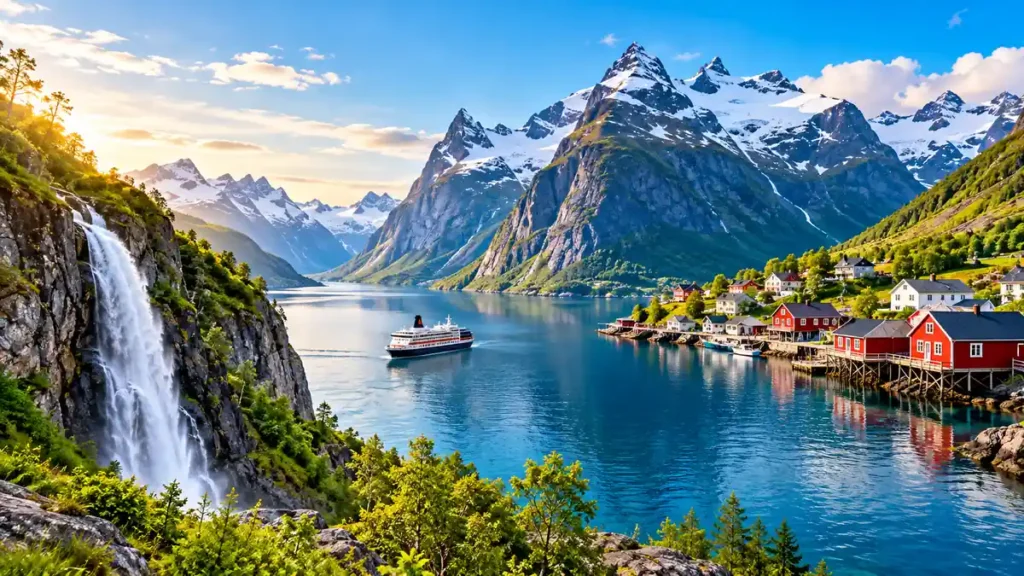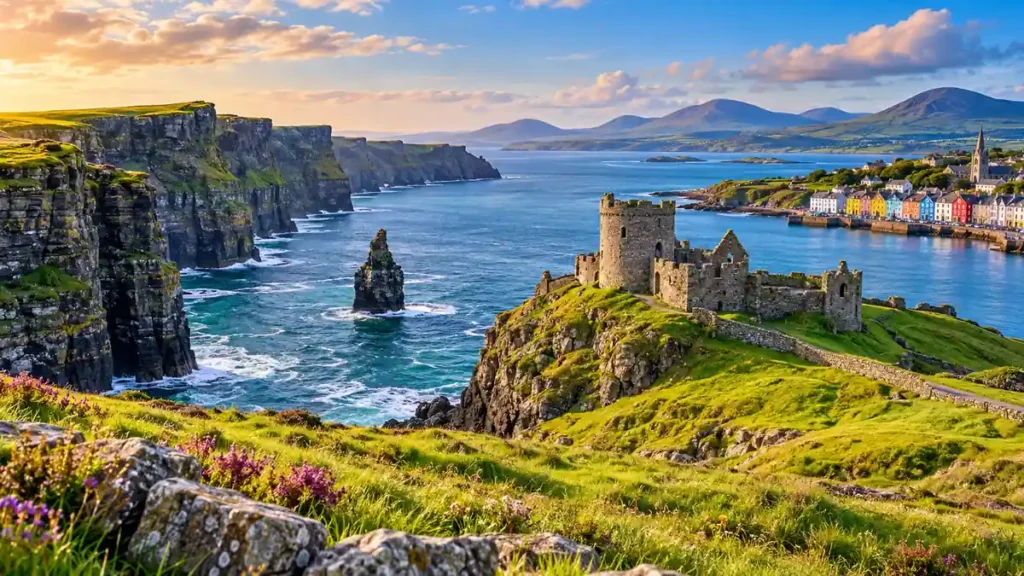
Ireland is a country where dramatic sea cliffs, medieval castles, colorful villages, and ancient landscapes are often just a short drive apart. But with so many remarkable destinations, deciding where to go can be surprisingly difficult.
From Dublin’s historic streets to the rugged Atlantic coastline and the peaceful lakes of County Kerry, the Emerald Isle offers something memorable in every region.
The best places to visit in ireland include Dublin, the Cliffs of Moher, Galway, Killarney National Park, the Ring of Kerry, Dingle Peninsula, Giant’s Causeway, and Connemara. These destinations combine natural beauty, Irish culture, historic landmarks, and outdoor adventures, making them excellent choices for first-time visitors and returning travelers.
Ireland is also remarkably diverse for a relatively small island. A morning spent exploring an ancient monastery can turn into an afternoon walking along a windswept beach, followed by an evening of traditional music in a welcoming pub.
This guide explores 20 of Ireland’s most rewarding destinations, explains what makes each one special, and provides practical advice for planning a memorable trip.
Best Places to Visit in Ireland at a Glance
Ireland’s most famous attractions are spread across the Republic of Ireland and Northern Ireland. Although they share the same island, they are separate jurisdictions, with different currencies and some different travel requirements.
| Destination | Best known for | Ideal visit |
|---|---|---|
| Dublin | History, museums, literary heritage | 2–3 days |
| Cliffs of Moher | Dramatic Atlantic cliffs | Half day |
| Galway | Traditional music, lively streets | 1–2 days |
| Killarney National Park | Lakes, mountains, waterfalls | 1–2 days |
| Ring of Kerry | Coastal scenery, villages | 1–2 days |
| Dingle Peninsula | Beaches, Irish culture, scenic roads | 1–2 days |
| Giant’s Causeway | Geological formations | Half day |
| Connemara | Wild landscapes, hiking | 1–2 days |
| Cork | Food, markets, historic attractions | 1–2 days |
| Kilkenny | Medieval architecture, castle | 1 day |
| Glendalough | Monastic ruins, mountain trails | Half to full day |
| Rock of Cashel | Medieval monuments | 2–3 hours |
| Belfast | Titanic history, culture | 1–2 days |
| Donegal | Remote beaches, sea cliffs | 2–3 days |
| Aran Islands | Island life, ancient forts | Full day or overnight |
| Wicklow Mountains | Mountain scenery, walking | 1 day |
| Waterford | Viking history, museums | 1 day |
| Sligo | Surfing, mountains, literary heritage | 1–2 days |
| Westport | Coastal charm, Croagh Patrick | 1–2 days |
| Skellig Michael | Ancient monastery, wildlife | Full day |
These times represent suggested sightseeing durations rather than travel times between destinations.
1. Dublin: Ireland’s Historic and Cultural Capital


4
Dublin is an excellent starting point for understanding Ireland’s history, literature, and contemporary culture.
The capital combines Georgian architecture, medieval landmarks, internationally recognized museums, and lively neighborhoods. Much of the historic center is walkable, making Dublin particularly convenient for visitors without a car.
Top attractions in Dublin
- Trinity College Dublin: Home to the famous Book of Kells and the historic Old Library.
- Dublin Castle: A landmark associated with centuries of Irish political history.
- St. Patrick’s Cathedral: One of the country’s most significant religious buildings.
- Guinness Storehouse: An exhibition exploring Ireland’s famous stout and its history.
- Kilmainham Gaol: A former prison closely connected to Ireland’s struggle for independence.
Temple Bar is known for nightlife and traditional pubs, although it can be crowded and expensive. For a quieter experience, explore Merrion Square, St. Stephen’s Green, or the coastal village of Howth.
Best for: First-time visitors, history enthusiasts, museum lovers, and city breaks.
Travel tip: Reserve popular attractions in advance, particularly Kilmainham Gaol. For the Book of Kells experience, check which Old Library areas are accessible during the ongoing redevelopment.
2. Cliffs of Moher: Ireland’s Most Famous Coastal Landmark


6
The Cliffs of Moher are among Ireland’s most recognizable natural landmarks.
Located in County Clare on the Atlantic coast, these towering cliffs rise to approximately 214 meters at their highest point and extend for about eight kilometers.
The combination of rugged rock formations, crashing Atlantic waves, and expansive ocean views makes this one of the most photographed landscapes in Ireland.
On clear days, visitors may see the Aran Islands and Galway Bay in the distance.
What to see and do
The main visitor area provides designated viewing platforms, while O’Brien’s Tower offers another perspective over the coastline when accessible.
The surrounding landscape forms part of the Burren and Cliffs of Moher UNESCO Global Geopark, recognized for its geological and cultural significance.
Wildlife enthusiasts may spot seabirds, including Atlantic puffins during their nesting season, generally in spring and early summer.
Best for: Coastal scenery, photography, geology, and nature.
Travel tip: Stay behind safety barriers and follow official trail closures. Weather, strong winds, and coastal erosion can make exposed cliff edges dangerous.
3. Galway: Traditional Irish Music and Colorful Streets


4
Galway is one of Ireland’s most atmospheric cities, famous for its artistic character, traditional music, and welcoming streets.
Situated on Ireland’s western coast, Galway offers an appealing balance of urban culture and easy access to spectacular natural scenery.
The Latin Quarter is filled with independent shops, restaurants, historic buildings, and pubs where musicians frequently perform.
Highlights of Galway
Start with a walk through the Latin Quarter and along Quay Street. Continue toward the Spanish Arch, a surviving part of the city’s historic defenses.
The Claddagh neighborhood is associated with the traditional Claddagh ring, which symbolizes love, loyalty, and friendship.
A walk along the Salthill Promenade offers views across Galway Bay, especially around sunset.
Galway is also a practical base for exploring Connemara, the Aran Islands, and the Burren.
Best for: Music, food, cultural experiences, and relaxed city exploration.
Travel tip: Spend at least one evening in Galway. The atmosphere changes noticeably when traditional music sessions begin.
4. Killarney National Park: Lakes, Mountains, and Waterfalls


5
Killarney National Park in County Kerry is one of the country’s most beautiful protected landscapes.
Established in 1932, it was Ireland’s first national park. Today, it covers more than 10,000 hectares of mountains, lakes, woodlands, and wetlands.
The park is particularly famous for its three interconnected lakes, native oak woodlands, and scenic mountain views.
Must-see attractions
Muckross House and Gardens is a historic Victorian mansion surrounded by beautifully maintained gardens.
Torc Waterfall is reached by a relatively short woodland walk and becomes especially impressive after rainfall.
Ross Castle, a 15th-century tower house overlooking Lough Leane, provides a fascinating glimpse into medieval Irish history.
The Gap of Dunloe, just outside the main park area, is another exceptional landscape featuring mountain passes, lakes, and narrow roads.
Killarney is also one of the best places in Ireland to see native red deer.
Best for: Families, hiking, cycling, wildlife, and landscape photography.
Travel tip: Start early during summer. Popular car parks and scenic viewpoints can become busy by late morning.
5. Ring of Kerry: One of Ireland’s Most Scenic Drives


7
The Ring of Kerry is a celebrated touring route around the Iveragh Peninsula.
The approximately 179-kilometer circuit passes mountains, Atlantic beaches, charming towns, and sweeping coastal viewpoints.
Although driving the circuit in a day is possible, spending two days allows more time for short walks, villages, and quieter stops.
Scenic highlights along the route
- Kenmare: A colorful town known for restaurants, craft shops, and nearby scenery.
- Sneem: A picturesque village surrounded by rolling hills.
- Waterville: A seaside village with views over Ballinskelligs Bay.
- Cahersiveen: A historic town near ancient stone forts.
- Ladies View: A famous viewpoint overlooking Killarney’s lakes and mountains.
- Derrynane Beach: A beautiful sandy beach framed by coastal hills.
The route also connects with the wider Wild Atlantic Way, Ireland’s long-distance coastal touring route.
Best for: Road trips, scenic photography, small towns, and coastal exploration.
Travel tip: Allow extra time for narrow roads and frequent photo stops. Avoid treating the entire route as a race between viewpoints.
6. Dingle Peninsula: Wild Atlantic Scenery and Irish Heritage


7
The Dingle Peninsula is one of Ireland’s most rewarding destinations for travelers seeking dramatic scenery and traditional culture.
Located in County Kerry, the peninsula combines rugged mountains, sandy beaches, ancient archaeological sites, and Irish-speaking communities.
The colorful harbor town of Dingle makes an excellent base for exploring the surrounding region.
What makes Dingle special?
Slea Head Drive is the peninsula’s signature scenic route, featuring coastal cliffs, historic stone structures, and views toward the Blasket Islands.
Coumeenoole Beach is particularly photogenic, although strong currents and dangerous surf mean it is not a safe swimming destination.
Inland, Conor Pass offers spectacular mountain scenery when conditions permit. The road is narrow and unsuitable for certain larger vehicles.
The peninsula is also part of a Gaeltacht region, where the Irish language remains an important part of everyday cultural life.
Best for: Scenic driving, photography, Irish heritage, and quiet coastal escapes.
Travel tip: Spend a night in Dingle rather than rushing through on a day trip from Killarney.
7. Giant’s Causeway: A Geological Wonder in Northern Ireland


8
Giant’s Causeway is one of the island of Ireland’s most extraordinary natural attractions.
Located on the north coast of County Antrim in Northern Ireland, this UNESCO World Heritage Site contains approximately 40,000 interlocking basalt columns.
The unusual formations developed through volcanic activity and cooling lava around 50–60 million years ago.
Many columns have distinctive hexagonal shapes, creating an almost geometric landscape beside the sea.
According to Irish legend, the giant Finn McCool built the causeway as a pathway toward Scotland.
Nearby attractions
The surrounding Causeway Coast is equally impressive.
Dunluce Castle stands dramatically on coastal cliffs, while the Carrick-a-Rede Rope Bridge offers views over the rocky coastline when open.
The scenic coastal route also passes beaches, villages, and viewpoints worth exploring.
Best for: Geology, mythology, photography, and coastal walks.
Travel tip: Northern Ireland uses pounds sterling rather than euros. Check border-related travel and entry requirements before visiting.
8. Connemara: Ireland’s Untamed Western Landscape


6
Connemara is famous for its rugged mountains, peat bogs, sparkling lakes, and open countryside.
This region of County Galway feels noticeably different from Ireland’s busier tourist destinations.
Its landscapes are shaped by the Twelve Bens mountain range, traditional farming communities, and centuries of Irish-speaking culture.
Best things to do in Connemara
Connemara National Park offers marked walking trails, including routes on Diamond Hill with expansive views of the surrounding mountains and coastline.
Kylemore Abbey is one of Ireland’s most photographed buildings. The Benedictine abbey stands beside a lake beneath forested mountains and includes Victorian walled gardens.
The coastal village of Roundstone is another highlight, known for its fishing harbor and access to beautiful beaches such as Dog’s Bay.
Best for: Hiking, peaceful scenery, cultural heritage, and outdoor photography.
Travel tip: Bring waterproof clothing even in summer. Weather can change quickly in the mountains.
9. Cork: Food, History, and Southern Irish Character


Cork is Ireland’s second-largest city in the Republic and an appealing destination for travelers interested in food, history, and local culture.
Located on the River Lee, Cork has a distinctive identity shaped by maritime trade, markets, and a thriving creative scene.
Essential experiences in Cork
The English Market is one of the city’s best-known attractions, offering fresh produce, artisan foods, and regional specialties.
St. Fin Barre’s Cathedral is an impressive example of Gothic Revival architecture, while Cork City Gaol explores aspects of the city’s social history.
Nearby, Blarney Castle attracts visitors interested in medieval history and the famous Blarney Stone.
Cobh, a harbor town southeast of Cork, is closely associated with Irish emigration and the Titanic’s final port of call before its Atlantic crossing.
Best for: Food enthusiasts, city sightseeing, architecture, and maritime history.
Travel tip: Combine Cork city with Cobh or Blarney rather than trying to visit every surrounding attraction in one afternoon.
10. Kilkenny: Medieval Streets and an Impressive Castle


7
Kilkenny is among Ireland’s most attractive historic cities.
Its medieval streets, stone buildings, and riverside setting make it an excellent destination for travelers interested in Ireland’s architectural heritage.
Kilkenny Castle dominates the city center and offers beautifully maintained grounds along the River Nore.
What to explore
The Medieval Mile connects several important historic landmarks, including St. Canice’s Cathedral, Rothe House, and the castle.
St. Canice’s Cathedral is particularly notable for its medieval architecture and adjacent round tower.
Kilkenny also has a strong craft tradition, with galleries and workshops showcasing Irish design.
Best for: Medieval history, architecture, walking tours, and short city breaks.
Travel tip: Kilkenny works well as an overnight stop between Dublin and southern Ireland.
11. Glendalough: Ancient Monastery and Glacial Lakes


6
Glendalough is one of Ireland’s most remarkable historical and natural destinations.
Located in County Wicklow, approximately an hour south of Dublin by car, this glacial valley is famous for its early medieval monastic settlement, lakes, and woodland trails.
The monastery was founded by St. Kevin in the sixth century and became an important center of religious learning.
What to see in Glendalough
The monastic complex contains an impressive round tower, ancient churches, historic graves, and stone structures.
Beyond the ruins, the Upper and Lower Lakes provide some of the most peaceful scenery in eastern Ireland.
The Spinc walking route offers elevated views over the valley, although its steeper sections require suitable footwear and reasonable fitness.
Shorter lakeside and woodland paths are available for visitors who prefer gentler walks.
Best for: Ancient history, hiking, nature, and day trips from Dublin.
Travel tip: Arrive early on weekends and public holidays, when parking areas and popular trails can become crowded.
12. Rock of Cashel: A Spectacular Medieval Landmark


6
The Rock of Cashel rises above the surrounding countryside in County Tipperary.
This historic complex is one of Ireland’s most important medieval monuments and is closely associated with the kings of Munster.
Its surviving buildings include a round tower, Romanesque chapel, Gothic cathedral, and later structures.
Cormac’s Chapel, dating from the 12th century, is especially significant for its architecture and surviving medieval decoration.
The Rock of Cashel also has strong associations with St. Patrick, although some of the stories surrounding the site belong to Irish legend.
The nearby ruins of Hore Abbey provide another memorable perspective, especially for photographers.
Best for: Medieval architecture, Irish history, and heritage photography.
Travel tip: Check access arrangements for Cormac’s Chapel, as conservation requirements may limit entry.
13. Belfast: Titanic History and Northern Irish Culture


Belfast is Northern Ireland’s capital and a city shaped by industrial innovation, political history, and cultural transformation.
One of its most famous attractions is Titanic Belfast, located near the shipyard where RMS Titanic was constructed.
The exhibition explores Belfast’s shipbuilding industry, the vessel’s construction, and its tragic maiden voyage.
Other important attractions
Belfast City Hall is a prominent architectural landmark in the city center.
The Cathedral Quarter features historic streets, galleries, restaurants, and cultural venues.
Visitors interested in Northern Ireland’s more recent history can explore political murals and learn about the Troubles through responsibly conducted historical tours.
St. George’s Market is another worthwhile stop, particularly when its food and craft stalls are operating.
Belfast also provides convenient access to the Causeway Coastal Route.
Best for: Industrial heritage, modern history, museums, and city exploration.
Travel tip: Consider at least two days if you want to explore both the city and the nearby coastline.
14. County Donegal: Remote Beaches and Towering Sea Cliffs


6
County Donegal is one of the best regions for experiencing Ireland’s wild Atlantic landscapes without spending every day in heavily visited tourist areas.
Located in the northwest, Donegal features rugged mountains, traditional villages, expansive beaches, and spectacular sea cliffs.
Its remote character makes it especially appealing to travelers who enjoy quieter destinations.
Best places to explore in Donegal
Slieve League (Sliabh Liag) is famous for its enormous sea cliffs, which rise to approximately 600 meters above the Atlantic.
Glenveagh National Park protects mountain scenery, lakes, peatlands, and woodland, with Glenveagh Castle overlooking Lough Veagh.
Malin Head, on the Inishowen Peninsula, is the northernmost point of mainland Ireland.
Fanad Head Lighthouse offers dramatic coastal scenery, while beaches such as Silver Strand and Ballymastocker showcase Donegal’s remarkable coastline.
Donegal also has strong Irish-language traditions, particularly in its Gaeltacht communities.
Best for: Remote landscapes, beaches, photography, and outdoor adventures.
Travel tip: A car is particularly useful in Donegal because many attractions are spread across rural areas with limited public transport.
15. Aran Islands: Traditional Island Life and Ancient Stone Forts


7
The Aran Islands are a group of three inhabited islands near the mouth of Galway Bay.
They consist of Inishmore, Inishmaan, and Inisheer, each with its own landscape and character.
The islands are known for traditional stone walls, Irish-speaking communities, archaeological monuments, and dramatic coastal scenery.
What makes the Aran Islands unique?
Inishmore, the largest island, is home to Dún Aonghasa, an impressive prehistoric stone fort positioned beside towering cliffs.
Inisheer, the smallest island, offers sandy beaches, historic ruins, and a quieter atmosphere.
Inishmaan is less frequently visited and is particularly appealing to travelers seeking traditional island culture.
Cycling and walking are popular ways to explore, although distances and road conditions vary.
Ferries generally operate from mainland departure points such as Rossaveel and Doolin, subject to seasonal schedules and weather.
Best for: Archaeology, Irish language, cycling, and island landscapes.
Travel tip: Ferry crossings can be affected by Atlantic conditions. Allow flexibility, especially during autumn and winter.
16. Wicklow Mountains: Beautiful Landscapes Near Dublin
The Wicklow Mountains offer a dramatic change of scenery just south of Dublin.
Often called the Garden of Ireland, County Wicklow is known for forested valleys, mountain lakes, rolling hills, and historic estates.
Wicklow Mountains National Park protects a substantial area of upland habitats and scenic landscapes.
Best scenic locations
Sally Gap is a mountain road surrounded by open moorland and sweeping views.
Lough Tay, sometimes called Guinness Lake, is famous for its dark water and pale sandy shoreline.
Powerscourt Waterfall is one of Ireland’s tallest waterfalls, set within a wooded landscape near Enniskerry.
The Powerscourt Estate also features formal gardens and mountain views.
The Wicklow Way, a long-distance walking route, passes through some of the region’s most attractive countryside.
Best for: Hiking, mountain scenery, day trips, and nature photography.
Travel tip: Mountain roads can become difficult in fog, snow, or icy weather. Check conditions before traveling.
17. Waterford: Viking Heritage and Ireland’s Oldest City
Waterford is widely recognized as Ireland’s oldest city, with its Viking foundation traditionally dated to 914 AD.
Located in southeastern Ireland, Waterford offers an engaging combination of Viking history, medieval architecture, and cultural attractions.
The Viking Triangle is the historic heart of the city, where visitors can explore important monuments and museums.
Key attractions
Reginald’s Tower is one of Waterford’s best-known landmarks and houses exhibitions connected to its Viking heritage.
The Medieval Museum displays artifacts from the city’s medieval past.
Waterford Crystal is another internationally recognized part of the city’s identity, with visitor experiences exploring the craft.
Beyond the city, the Waterford Greenway provides a scenic cycling and walking route along a former railway corridor toward Dungarvan.
Best for: Viking history, museums, architecture, and cycling.
Travel tip: Waterford is a useful addition to a road trip through Ireland’s Ancient East, particularly when combined with Kilkenny or the Copper Coast.
18. Sligo: Surfing, Mountains, and Literary Landscapes
County Sligo is a rewarding destination for visitors who enjoy coastal landscapes, outdoor activities, and literary history.
The county is closely associated with the poet W. B. Yeats, whose work drew inspiration from the surrounding mountains, lakes, and countryside.
Benbulben, with its distinctive flat-topped profile, is one of the most recognizable mountains in Ireland.
Best experiences in Sligo
Strandhill is a popular surfing destination with a lively coastal atmosphere.
Mullaghmore is internationally known for powerful Atlantic waves and dramatic coastal views. Its biggest surf is suitable only for highly experienced specialists.
Carrowmore Megalithic Cemetery contains an important collection of prehistoric monuments.
Visitors can also explore Lough Gill, associated with Yeats’s poem The Lake Isle of Innisfree.
Best for: Surfing, hiking, prehistoric history, and literary tourism.
Travel tip: Strandhill Beach has dangerous currents and is not suitable for swimming. Follow local water-safety guidance.
19. Westport: Charming Streets and Outdoor Adventures


7
Westport is one of Ireland’s most appealing small towns, combining attractive streets, traditional music, and access to spectacular outdoor scenery.
Located in County Mayo near Clew Bay, Westport makes an excellent base for exploring the western coast.
The town is known for its Georgian-era planning, colorful buildings, and relaxed atmosphere.
Things to do around Westport
Croagh Patrick, a mountain associated with St. Patrick, is a major pilgrimage destination and offers impressive views over Clew Bay.
The Great Western Greenway provides a scenic cycling and walking route connecting Westport with Newport, Mulranny, and Achill.
Nearby Achill Island is famous for its mountain landscapes and Keem Bay, a sheltered beach surrounded by dramatic cliffs.
Westport House and its surrounding estate also form part of the town’s heritage.
Best for: Cycling, hiking, families, and traditional Irish towns.
Travel tip: Westport is accessible by train from Dublin, making it a useful western base for travelers who prefer not to drive.
Ireland.ie
+1
20. Skellig Michael: An Ancient Monastery in the Atlantic


7
Skellig Michael is among Ireland’s most extraordinary archaeological and natural sites.
Situated approximately 12 kilometers off the County Kerry coast, this steep rocky island is home to the remains of an early Christian monastic settlement.
The monastery, established during the early medieval period, contains distinctive stone beehive huts, terraces, and historic structures.
Skellig Michael is recognized as a UNESCO World Heritage Site for its exceptional cultural significance.
The island is also an important habitat for seabirds, including puffins during their breeding season.
What visitors should know
Access is tightly controlled to protect the island’s fragile heritage and natural environment.
Landing visits are seasonal, dependent on suitable weather and sea conditions, and subject to official visitor limits.
The climb to the monastery involves steep, exposed stone steps without modern handrails along much of the route.
Visitors who cannot make the climb may still enjoy views of the Skellig Islands from the mainland or from permitted boat trips.
Best for: Archaeology, unusual landscapes, wildlife, and adventurous travelers.
Travel tip: Check official landing-season arrangements and physical requirements before planning a visit. Even confirmed departures may be canceled because of weather.
Best Places to Visit in Ireland for Different Travel Styles
Not every destination suits every traveler. The most satisfying Irish itinerary depends on whether the priority is scenery, history, city life, or outdoor adventure.
| Travel interest | Recommended destinations |
|---|---|
| First-time visitors | Dublin, Galway, Cliffs of Moher, Killarney |
| Couples | Dingle, Connemara, Westport, Ring of Kerry |
| Families | Dublin, Killarney, Kilkenny, Cork |
| Nature lovers | Donegal, Wicklow Mountains, Connemara |
| History enthusiasts | Glendalough, Rock of Cashel, Waterford |
| Road trips | Ring of Kerry, Dingle Peninsula, Donegal |
| Photography | Cliffs of Moher, Skellig Michael, Giant’s Causeway |
| Budget-conscious travelers | Galway, Sligo, Waterford, selected hiking destinations |
For a first visit lasting about a week, Dublin, Galway, the Cliffs of Moher, and Killarney offer an excellent introduction without requiring an ambitious journey around the entire island.
Travelers with more time can add Donegal, Northern Ireland, or the southeastern heritage towns.
Best Places to Visit in Ireland by Season
Ireland is a year-round destination, but daylight hours, weather, crowds, and seasonal operations significantly affect the experience.
Spring: March to May
Spring is one of the most appealing times to explore Ireland’s countryside.
The landscape becomes increasingly green, gardens begin flowering, and daylight hours gradually lengthen.
Temperatures remain cool, and rain is possible throughout the season.
Best destinations: Wicklow Mountains, Kilkenny, Killarney National Park, and Dublin.
Late spring is especially attractive for walking and sightseeing before the busiest summer period.
Summer: June to August
Summer generally offers the longest daylight hours and some of the mildest weather.
This makes it particularly suitable for coastal drives, island visits, and outdoor adventures.
However, popular destinations can be crowded, and accommodation prices often rise.
Best destinations: Dingle Peninsula, Aran Islands, Donegal, Ring of Kerry, and Connemara.
Ireland’s summer weather is rarely guaranteed to be sunny, so waterproof layers remain useful.
Autumn: September to November
Early autumn can be a wonderful time to visit Ireland.
September often provides a good balance of daylight, scenery, and somewhat smaller crowds than midsummer.
As autumn progresses, temperatures fall, daylight decreases, and Atlantic storms become more likely.
Best destinations: Galway, Cork, Killarney, Glendalough, and Westport.
Autumn colors are particularly attractive in woodland areas and national parks.
Winter: December to February
Winter offers a quieter experience in many tourist regions.
Cities remain lively, while historic towns, museums, and cultural attractions can be especially enjoyable during shorter days.
Coastal weather may be severe, and some island services and seasonal attractions operate limited schedules.
Best destinations: Dublin, Belfast, Cork, Kilkenny, and Waterford.
For winter trips, prioritize flexible plans and indoor alternatives.
How Many Days Do You Need to Explore Ireland?
Ireland may appear compact on a map, but rural roads, frequent stops, and changing weather can make journeys longer than expected.
A realistic itinerary is usually more enjoyable than trying to see every famous landmark.
3-day Ireland itinerary
For a short visit, focus on one region.
A Dublin-based trip could include:
- Day 1: Explore Dublin’s historic center, Trinity College, and major museums.
- Day 2: Visit Glendalough and the Wicklow Mountains.
- Day 3: Discover Kilkenny or spend more time exploring Dublin.
This approach minimizes travel time while combining history, nature, and city experiences.
5-day Ireland itinerary
Five days allow visitors to experience both Dublin and the west coast.
| Day | Destination | Main experience |
|---|---|---|
| 1 | Dublin | Historic landmarks and museums |
| 2 | Galway | Latin Quarter and traditional music |
| 3 | Cliffs of Moher and Burren | Coastal scenery and geology |
| 4 | Killarney | Lakes, waterfall, and national park |
| 5 | Killarney or return to Dublin | Short scenic outing and onward travel |
This itinerary involves several transfers, so a rental car or carefully coordinated public transport is helpful.
7-day Ireland itinerary
A week provides a better balance of sightseeing and relaxation.
- Days 1–2: Dublin and nearby attractions.
- Day 3: Galway.
- Day 4: Connemara or the Aran Islands.
- Day 5: Cliffs of Moher and the Burren.
- Days 6–7: Killarney National Park and the Ring of Kerry.
The route is particularly suitable for travelers who want to combine cities, landscapes, and traditional Irish culture.
10–14-day Ireland itinerary
With ten days or more, visitors can explore at a slower pace and include additional regions.
A longer journey could follow Dublin, Kilkenny, Cork, Killarney, Dingle, the Cliffs of Moher, Galway, Connemara, Westport, and Donegal.
Northern Ireland can be added as a separate segment featuring Belfast and Giant’s Causeway.
For a 14-day trip, spending two nights in several locations is often preferable to changing accommodation every day.
How to Travel Between Ireland’s Best Destinations
Choosing the right transportation method can significantly improve an Irish holiday.
Renting a car
A rental car provides the greatest flexibility for visiting remote beaches, mountain roads, and rural landmarks.
It is particularly useful in Donegal, Connemara, Dingle, and the Ring of Kerry.
However, travelers should prepare for narrow roads, left-side driving, and occasional limited parking.
Driving distances may look short, but actual travel times can be longer than expected.
Traveling by train
Ireland’s rail network connects several major cities and towns, including Dublin, Cork, Galway, Kilkenny, and Westport.
Rail travel is comfortable for city-to-city journeys, although it does not reach many rural attractions.
Northern Ireland has a separate rail network, with cross-border services linking Dublin and Belfast.
Traveling by bus
Bus services reach more towns and villages than the rail network.
Bus Éireann, Transport for Ireland services, and private operators connect many destinations.
Rural services can be infrequent, particularly on Sundays and public holidays.
For visitors relying on buses, it is worth checking the return journey before setting out.
Guided day excursions
Organized excursions can be useful for attractions that are difficult to reach independently.
The Cliffs of Moher, Giant’s Causeway, Glendalough, and Wicklow Mountains are common day-trip destinations.
However, long excursions from Dublin can involve many hours of travel and limited time at each stop.
Practical takeaway: Public transport works well for major cities, while a car is generally more convenient for exploring Ireland’s remote coastal and mountain regions.
Important Things to Know Before Visiting Ireland
Understanding a few practical details can prevent common travel problems.
Ireland and Northern Ireland have different travel requirements
The Republic of Ireland is an independent country and uses the euro.
Northern Ireland is part of the United Kingdom and uses the pound sterling.
They also have different immigration rules. Depending on nationality and immigration status, visiting both may require separate permissions.
The Common Travel Area arrangements do not automatically grant every international visitor permission to enter both jurisdictions.
Check current requirements with the Irish Immigration Service and the UK government before departure.
Weather changes quickly
Ireland has a temperate maritime climate.
Rain, wind, sunshine, and cloud can occur within the same day, especially along the Atlantic coast.
Pack waterproof outerwear, comfortable walking shoes, and layers rather than relying on a single heavy coat.
Popular attractions need advance planning
Some historic sites, museums, and island excursions have limited capacity.
Kilmainham Gaol, Skellig Michael landing trips, and certain guided heritage experiences are examples where advance arrangements are particularly useful.
Opening hours and access can change seasonally.
Respect natural landscapes
Ireland’s scenic coastline includes unstable cliffs, strong currents, exposed walking routes, and rapidly changing weather.
Stay on designated paths, observe warning signs, and avoid approaching unprotected cliff edges.
Leave no litter, respect private farmland, and avoid disturbing wildlife.
Allow time for spontaneous discoveries
Some of Ireland’s most memorable experiences happen between major attractions.
A quiet harbor, an unexpected coastal viewpoint, a small village café, or a traditional music session can become a highlight of the trip.
Leaving space in the itinerary makes these experiences possible.
Hidden Gems Worth Adding to an Ireland Itinerary
Beyond the famous landmarks, several lesser-visited destinations offer remarkable scenery and cultural experiences.
The Burren, County Clare
The The Burren is an unusual karst landscape of exposed limestone, caves, and rare plants.
Its geological character contrasts sharply with Ireland’s familiar green hills.
Poulnabrone Dolmen, a prehistoric portal tomb, is one of the area’s most significant archaeological landmarks.
The Burren works particularly well alongside the Cliffs of Moher.
Achill Island, County Mayo
is connected to the mainland by a bridge and offers beaches, mountains, and Atlantic scenery.
Keem Bay is one of its best-known attractions, surrounded by steep green slopes.
The island is ideal for travelers who enjoy dramatic coastal landscapes and a quieter pace.
Island Of Ireland
+1
Kinsale, County Cork
Kinsale is a colorful harbor town known for its food culture and maritime history.
Charles Fort, a large 17th-century coastal fortress, overlooks the harbor.
The surrounding coastline includes attractive walking routes and scenic viewpoints.
Brú na Bóinne, County Meath
Brú na Bóinne is a UNESCO World Heritage Site containing some of Europe’s most important prehistoric passage tombs.
Newgrange, Knowth, and Dowth are associated with Neolithic communities that lived in Ireland more than 5,000 years ago.
Newgrange is especially famous for its winter solstice alignment, when sunlight can illuminate the inner passage and chamber under suitable conditions.
Access to the main monuments is managed through official visitor arrangements.
Ireland.com
+1
Beara Peninsula, Counties Cork and Kerry
The Beara Peninsula offers a quieter alternative to some of Ireland’s more heavily visited scenic driving routes.
Its rugged coastline, mountain passes, fishing villages, and ancient monuments reward travelers who prefer exploring without a strict schedule.
The Healy Pass is particularly famous for its winding mountain road and expansive views.
Final Thoughts on the best places to visit in ireland
The best places to visit in ireland reveal a country shaped by extraordinary landscapes, ancient history, and a strong cultural identity.
Dublin and Belfast provide rich urban experiences, while Galway and Cork showcase traditional music, food, and local character. The Cliffs of Moher, Ring of Kerry, Connemara, and Donegal demonstrate the dramatic beauty of Ireland’s Atlantic coastline.
For travelers interested in history, Glendalough, the Rock of Cashel, Kilkenny, and Brú na Bóinne offer fascinating connections to Ireland’s past.
A memorable Irish journey does not require visiting all 20 destinations. Choosing a manageable route, allowing time for scenic stops, and exploring a few places in depth will usually create a more rewarding experience.
Start with the region that interests you most, then build an itinerary around nearby attractions. Ireland’s greatest appeal often lies not only in its famous landmarks, but also in the landscapes, stories, and communities encountered along the way.