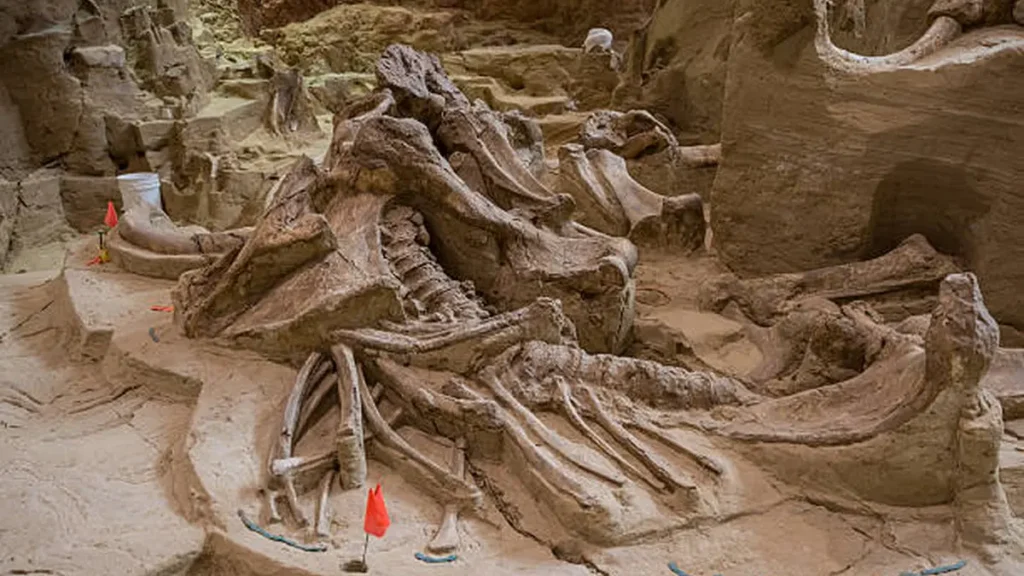
Most museums pose their fossils. The Mammoth Site doesn’t bother — the bones are still lying exactly where the animals died, 26,000 years ago, in the bottom of a sinkhole that a construction crew stumbled into by accident.
The Mammoth Site South Dakota, is an active paleontological dig site and museum built directly over a Pleistocene-era sinkhole that has yielded 61 mammoths — 58 Columbian and 3 woolly — plus remains from more than 87 other Ice Age species, making it the largest concentration of Columbian mammoth fossils found anywhere on Earth.
What Is the Mammoth Site South Dakota Exactly?
It’s easy to assume “mammoth site” means a roadside fossil display. It’s not. This is a working excavation you walk through, enclosed in a building, in the Black Hills just outside Hot Springs, South Dakota.
The facility is run by a 501(c)(3) nonprofit, accredited by the American Alliance of Museums — one of only a small number of accredited museums in the entire state. It doesn’t receive ongoing federal, state, or local funding, so admission and gift shop sales are what keep the excavation going year after year.
What sets it apart from a typical natural history museum is that the bones haven’t been removed and mounted. You’re looking at a real bonebed, in situ, the way paleontologists found it.
How a Housing Project Uncovered an Ice Age Graveyard
In June 1974, an equipment operator named George Hanson was grading land for a housing development that landowner Phil Anderson had planned for the site. Hanson’s blade struck something pale and hard. He climbed down to look and found a seven-foot tusk, sliced lengthwise, along with other bones scattered through the dirt.
That accidental discovery on a 14-acre plot turned into one of the most significant Ice Age fossil beds in North America. Instead of finishing the subdivision, the land became a research site, and eventually the museum that stands there now.
The Sinkhole That Made It All Possible
The reason so many mammoths ended up in one place comes down to geology. Beneath Hot Springs, water dissolved the Minnelusa Limestone over thousands of years, hollowing out underground caverns. Eventually the roof of one cavern collapsed, leaving a steep-walled sinkhole with a warm spring bubbling up through it.
That warm water was the trap. Grass grew green around the edges even in winter, mammoths and other animals came to graze and drink, and the loose, slick sediment on the sinkhole’s steep sides meant that once they slid in, they couldn’t climb back out — mammoths don’t have claws to dig in with. Over roughly 750 years, in three separate phases, the hole slowly filled with sediment and the remains of the animals that fell into it, eventually becoming a shallow mud wallow before disappearing under the modern landscape entirely.
Quick takeaway: The mammoths didn’t die in a flood or a battle — they died one at a time, over centuries, drawn in by warm water and unable to escape a sinkhole they couldn’t see the danger in.
What You’ll Actually See Inside
A visit starts with a short introductory video explaining the geology, then opens onto a walkway that loops around the excavation itself. You’re looking down into the pit — about the size of a gymnasium — at bones and tusks still half-buried in the sediment where researchers are actively working.
Alongside the Columbian and woolly mammoths, the site has produced the remains of a giant short-faced bear, ancient camels, and prehistoric llamas — animals most visitors don’t expect to find in South Dakota. Interpretive panels throughout the walkway explain what you’re looking at and how paleontologists date and identify each specimen.
Hours and Ticket Prices in 2026
Seasonal Hours
- March 1 – May 14: 9:00 a.m. – 5:00 p.m. daily
- May 15 – August 24: 8:00 a.m. – 6:00 p.m. daily
- August 25 – October 31: 9:00 a.m. – 5:00 p.m. daily
- November 1 – February 28: 9:00 a.m. – 3:30 p.m. daily (last tour around 2:30 p.m.)
The site is closed on Thanksgiving, Christmas, New Year’s Day, and Easter Sunday. Because these hours shift by season, it’s worth confirming directly with the site before you finalize travel plans, especially if you’re arriving close to opening or closing time.
Admission Prices
| Age Group | Price |
|---|---|
| Ages 3 and under | Free |
| Ages 4–12 | $13.00 |
| Ages 13–59 | $15.00 |
| Ages 60 and over | $14.00 |
| Active & Retired Military | $14.00 |
General admission covers the self-guided tour of the bonebed and exhibit hall. Extras like the Family Dig class and educational programs cost more on top of that base ticket.
The Family Dig and Other Hands-On Programs
If your group has kids, the Family Dig is the thing that turns “look at old bones” into “I found a bone.” It runs in a separate, climate-controlled building away from the main pit, where visitors dig through boxes of sediment containing casts of real fossils found on-site.
The Mammoth Site also runs summer educational programs where visitors can interact directly with the researchers and scientists working the dig, plus birthday party packages for families in the area. None of this is included in the base admission fee, so budget separately if you want the full hands-on experience.
Planning Your Visit
How Long to Budget
Most visitors move through the self-guided tour, video, and exhibit hall in 60–90 minutes. Add the Family Dig and you’re closer to two hours. It’s not a full-day attraction on its own, which is exactly why it works well as one stop on a longer Black Hills day.
Accessibility
The facility is built with universally accessible walkways, and the self-guided tour is fully wheelchair accessible. If you’re traveling with a mobility device, this is one of the more accommodating stops in the region compared to outdoor sites like Wind Cave or Jewel Cave, which involve stairs and uneven terrain.
Is the Mammoth Site Worth Visiting?
Honestly, yes — with a caveat. If you’re expecting a flashy, animatronic dinosaur-park experience, this isn’t that. It’s quieter and more academic: real bones, real researchers, and an interpretive approach built around actual ongoing science rather than spectacle. Some visitors expecting a bigger, more theatrical museum come away slightly underwhelmed by the pit’s modest size.
Where it earns its reputation is authenticity. You’re standing over an actual excavation, not a recreation, and the Family Dig gives kids something to do with their hands rather than just read placards. For anyone genuinely interested in Ice Age history or paleontology, it’s one of the more legitimate hands-on fossil experiences you’ll find in the Mountain West.
Pairing It With the Rest of the Black Hills
Hot Springs sits in the southern Black Hills, which makes the Mammoth Site an easy addition to a longer regional itinerary rather than a standalone destination. Nearby options include:
- Wind Cave National Park — one of the world’s longest cave systems, a short drive north
- Custer State Park — bison herds and scenic drives
- Evans Plunge Mineral Springs — a warm mineral pool right in Hot Springs
- Angostura Recreation Area — swimming and boating just south of town
Most travelers slot the Mammoth Site in as a half-day stop on the way between Wind Cave/Custer State Park and the rest of the Black Hills loop.
Looking for your next adventure? Explore our Mountain West travel guides for more.
Conclusion
The Mammoth Site isn’t trying to be Jurassic Park — it’s a working excavation that happens to let the public watch, and that’s precisely what makes it worth the stop. Check the current seasonal hours before you go, budget 60–90 minutes (more with the Family Dig), and fold it into a Black Hills itinerary alongside Wind Cave or Custer State Park rather than treating it as a full day out. If you’re building a South Dakota road trip, this is one of the few stops where kids and serious history buffs both leave satisfied.
FAQ Section Mammoth Site South Dakota
How many mammoths have been found at the Mammoth Site?
As of the most recent count, 61 mammoths have been recovered — 58 Columbian mammoths and 3 woolly mammoths — along with remains from more than 87 other Ice Age species, making it the world’s largest known collection of Columbian mammoth fossils.
When was the Mammoth Site discovered?
It was discovered in June 1974, when equipment operator George Hanson uncovered a tusk and other bones while grading land for a planned housing development.
How long does it take to visit the Mammoth Site?
Plan for 60–90 minutes for the self-guided tour and exhibit hall, or closer to two hours if you add the Family Dig program.
Is the Mammoth Site wheelchair accessible?
Yes. The facility features universally accessible walkways, and the main self-guided tour is fully wheelchair accessible.
How much does it cost to visit the Mammoth Site?
As of 2026, admission is $15 for ages 13–59, $14 for ages 60+ and military, $13 for ages 4–12, and free for children 3 and under.
Is the Mammoth Site worth visiting?
Most visitors find it worthwhile for its authenticity — you’re viewing a genuine active excavation rather than a staged display — though those expecting a large, theatrical museum may find the pit smaller than anticipated.
What is the Family Dig at the Mammoth Site?
It’s a hands-on program in a separate building where visitors dig through sediment boxes containing casts of real fossils found on-site. It costs extra beyond general admission.
What other attractions are near the Mammoth Site?
Wind Cave National Park, Custer State Park, Evans Plunge Mineral Springs, and Angostura Recreation Area are all within a short drive of Hot Springs, South Dakota.