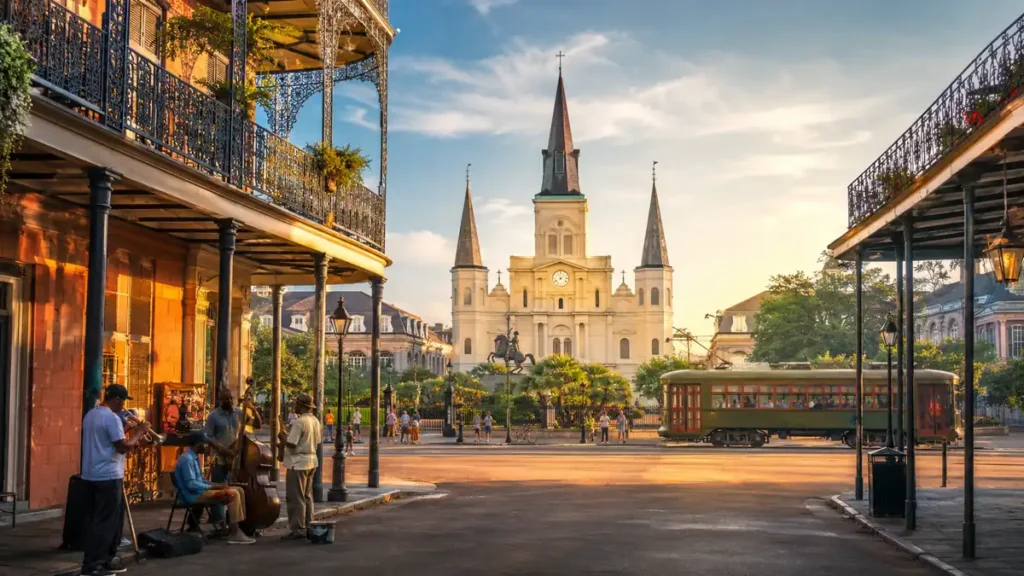
New Orleans does not reveal itself through landmarks alone. Its real character lives in brass-band rhythms, Creole kitchens, shaded courtyards, neighborhood traditions, and conversations that last longer than expected.
The best things to do in new orleans include exploring the French Quarter, hearing live jazz on Frenchmen Street, eating Creole and Cajun dishes, riding the St. Charles streetcar, touring the Garden District, visiting the National WWII Museum, cruising the Mississippi River, and discovering the wetlands surrounding the city.
This guide covers the essential attractions while helping you experience New Orleans beyond Bourbon Street.
Best Things to Do in New Orleans for First-Time Visitors
A first visit should balance famous sights with experiences that explain the city’s history, music, food, and neighborhoods. These five activities provide a strong introduction.
1. Walk Through the French Quarter
The French Quarter, also called the Vieux Carré, is the historic center of New Orleans. Its compact street grid makes it easy to explore on foot, although uneven sidewalks call for comfortable shoes.
Start around Jackson Square, then wander along Royal Street, Chartres Street, and the quieter residential blocks. Look for cast-iron balconies, Creole townhouses, hidden courtyards, antique shops, galleries, and street performers.
Bourbon Street deserves a brief look, especially after dark, but it represents only one side of the neighborhood. Royal Street offers art and architecture, while lower Decatur Street leads toward the French Market and Esplanade Avenue.
Do not treat the Quarter like an outdoor theme park. People live here, so keep noise down on residential streets and avoid blocking doorways while taking photographs.
2. Visit Jackson Square and St. Louis Cathedral
Jackson Square is one of the city’s most recognizable public spaces. The square faces the Mississippi River and is surrounded by several important buildings:
- St. Louis Cathedral
- The Cabildo
- The Presbytère
- The Pontalba Buildings
- The Lower and Upper Pontalba apartments
St. Louis Cathedral anchors the scene with its three distinctive spires. Visitors may enter when religious services or private events are not taking place, but respectful dress and quiet behavior are expected.
The Cabildo explores Louisiana history and the transfer of the Louisiana Purchase. The Presbytère contains exhibitions associated with Mardi Gras and hurricanes, providing useful context for two forces that have profoundly shaped local life.
Artists commonly display their work along the square’s exterior fence. Musicians, tarot readers, and performers gather nearby, making the area feel different every time you pass through.
3. Hear Live Music on Frenchmen Street
New Orleans is widely recognized as the birthplace of jazz, yet the city’s music extends far beyond one genre. Brass bands, blues, funk, gospel, rhythm and blues, and contemporary improvisation can all be heard during a single trip.
Frenchmen Street in the Faubourg Marigny is a dependable place to begin. Venues such as Snug Harbor, The Spotted Cat Music Club, and d.b.a. regularly host local performers. Some shows require tickets, while smaller clubs may collect a cover at the door.
Arrive earlier in the evening if you want a seat. Check age requirements before bringing children, and carry small bills for covers and musician tips.
For a quieter introduction, explore the programs and exhibits associated with New Orleans Jazz National Historical Park. Preservation Hall in the French Quarter is another important venue, particularly for visitors interested in traditional New Orleans jazz.
4. Eat Beignets and Drink Café au Lait
Beignets are square pieces of fried dough covered generously with powdered sugar. They are simple, messy, and closely associated with the city’s café culture.
Café du Monde in the French Market is the best-known stop. It can become crowded, so early morning or later evening may be more comfortable than peak breakfast hours. Café Beignet and several neighborhood cafés provide alternatives.
Pair your order with café au lait, traditionally made with coffee and hot milk. New Orleans coffee is often associated with chicory, although recipes and blends vary.
Beignets are worth trying, but they are only an introduction to the local food scene. Save room for po’boys, gumbo, red beans and rice, jambalaya, oysters, and other regional specialties.
5. Ride the St. Charles Avenue Streetcar
The St. Charles line offers an affordable way to see parts of the Central Business District, Garden District, Uptown, and Carrollton. Its green streetcars travel beneath live oaks and past universities, historic houses, parks, and commercial streets.
The ride itself is part transportation and part sightseeing experience. It is slower than a taxi or rideshare, so use it when you are not rushing.
Confirm current routes, fares, and service notices through the New Orleans Regional Transit Authority before leaving. Major festivals, construction, and parades can temporarily change operations.
Historic Things to Do in New Orleans
New Orleans has been shaped by Indigenous communities, European colonial powers, enslaved Africans, free people of color, Caribbean migration, immigration, and the Mississippi River. Exploring that history adds meaning to nearly everything else you see.
6. Tour the Garden District
The Garden District is known for Greek Revival, Italianate, and Victorian-era architecture. Grand houses sit behind iron fences, but the neighborhood also contains cottages, schools, churches, and local businesses.
A self-guided walk is possible, although a knowledgeable guide can explain architectural details and separate documented history from popular legends.
Magazine Street runs nearby and offers cafés, restaurants, independent shops, and galleries. Combining a morning neighborhood walk with lunch on Magazine Street creates an easy half-day itinerary.
Remember that most Garden District houses are private homes. Remain on public sidewalks and do not enter gates or porches for photographs.
7. Visit a Historic Cemetery Responsibly
New Orleans is famous for above-ground tombs, sometimes called “cities of the dead.” These structures reflect local burial customs, family traditions, religious practices, and environmental conditions.
St. Louis Cemetery No. 1 is closely associated with the tomb of Marie Laveau, the influential 19th-century practitioner of Louisiana Voodoo. Access rules can change and may require an authorized tour.
Lafayette Cemetery No. 1 in the Garden District has also experienced closures and access restrictions. Verify its status rather than building an itinerary around outdated information.
Choose a licensed or reputable guide, follow all posted rules, and never touch, mark, climb, or leave objects on tombs.
8. Explore the National WWII Museum
The National WWII Museum is one of the city’s most substantial attractions. Its exhibitions cover the European and Pacific theaters, military operations, industrial production, civilian experiences, and the personal stories of people affected by the war.
The museum is much larger than many first-time visitors expect. Allow at least half a day; history enthusiasts could spend considerably longer.
Begin with the main galleries rather than trying to rush through every exhibit. Timed films and special experiences may require separate planning. Buying admission in advance can help during busy periods.
9. Learn About Louisiana at the Cabildo and Presbytère
These Louisiana State Museum properties beside Jackson Square are especially useful on hot or rainy days.
The Cabildo connects visitors with the colonial period, the Louisiana Purchase, the Battle of New Orleans, and the state’s political history. The Presbytère examines Mardi Gras traditions and Louisiana’s experiences with major hurricanes.
Together, they help explain why New Orleans developed differently from many other American cities.
10. Visit the Historic New Orleans Collection
The Historic New Orleans Collection offers exhibitions and research resources focused on the history and culture of New Orleans and the Gulf South. Its French Quarter properties also provide a closer look at local architecture.
This is a strong choice for travelers who prefer focused, well-researched exhibitions over crowded attractions. Some areas or tours may require reservations, so check the current schedule.
Music, Culture, and Art Experiences
Music in New Orleans is not merely evening entertainment. It is connected to funerals, parades, churches, family traditions, social aid and pleasure clubs, and neighborhood identity.
11. Experience a Second Line
A second line is a community procession commonly led by a brass band. The “main line” traditionally includes the hosting organization, while the “second line” consists of people dancing and following behind.
Public second lines often take place on Sundays during the season, but routes and times vary. These are living cultural traditions rather than performances staged solely for tourists.
Watch respectfully, follow local directions, tip vendors and musicians when appropriate, and avoid stepping directly in front of participants for photographs.
12. Visit the New Orleans Jazz Museum
Located in the historic Old U.S. Mint near the edge of the French Quarter, the New Orleans Jazz Museum explores the development and cultural reach of jazz.
Its collections may include instruments, recordings, photographs, sheet music, and memorabilia connected to significant musicians. Performances and special programs make it worthwhile to check the calendar before visiting.
The museum pairs naturally with Frenchmen Street, the French Market, or a walk through the Marigny.
13. Explore Studio BE and the Bywater
Studio BE is known for the large-scale work of New Orleans artist Brandan “Bmike” Odums. Its murals and installations examine identity, justice, Black history, resistance, and community.
The surrounding Bywater neighborhood is home to colorful houses, independent businesses, and Crescent Park. Walk through the area thoughtfully—it is a residential community, not simply a backdrop for photographs.
14. See Art in City Park
The New Orleans Museum of Art, commonly known as NOMA, houses collections spanning several cultures and historical periods. Next to it, the Sydney and Walda Besthoff Sculpture Garden places modern and contemporary works within a landscaped outdoor setting.
The sculpture garden is one of the city’s strongest combinations of art and nature. It is also easier to fit into a mixed itinerary than a long indoor museum visit.
Food and Drink Experiences Worth Planning Around
New Orleans cuisine grew from overlapping African, Caribbean, French, Spanish, German, Italian, Indigenous, and American influences. Eating well here means understanding those relationships rather than working through a checklist of famous dishes.
15. Try Creole and Cajun Food—Without Confusing Them
Creole and Cajun cuisines share ingredients and influence each other, but they are not interchangeable.
Creole cooking developed largely in and around New Orleans through urban, multicultural traditions. Cajun cooking is rooted in the rural communities of southern Louisiana and Acadian history. Restaurant menus may blur the boundary, but the distinction remains culturally meaningful.
Look for dishes such as:
| Dish | What to expect |
|---|---|
| Gumbo | A deeply flavored stew that varies by cook, season, and tradition |
| Jambalaya | Seasoned rice cooked with meat, seafood, or both |
| Red beans and rice | A classic Monday dish traditionally made with leftover pork |
| Shrimp Creole | Shrimp in a seasoned tomato-based sauce, usually served with rice |
| Crawfish étouffée | Crawfish in a rich, seasoned sauce served over rice |
| Po’boy | French bread filled with roast beef, seafood, or other ingredients |
| Muffuletta | A round sandwich with cured meats, cheese, and olive salad |
| Bananas Foster | Bananas cooked with butter, sugar, spices, and rum |
Crawfish availability is seasonal, and preparations differ widely. Ask what is fresh rather than assuming every seafood dish is equally good throughout the year.
16. Take a Food Tour
A well-run food tour can explain how immigration, trade, religion, geography, and segregation influenced local cuisine. It also lets visitors sample several dishes without ordering full portions at every stop.
Look for tours that discuss food history and support locally owned businesses. Confirm dietary accommodations before booking because seafood, pork, gluten, dairy, and shellfish appear frequently in traditional recipes.
17. Learn About New Orleans Cocktails
New Orleans has deep connections to American cocktail history. Drinks commonly associated with the city include the Sazerac, Ramos Gin Fizz, Vieux Carré, and Hurricane.
The Sazerac House presents exhibits about spirits, bitters, and cocktail culture. Historic bars such as the Carousel Bar, Arnaud’s French 75 Bar, and Lafitte’s Blacksmith Shop offer different atmospheres.
A cocktail can be part of the cultural experience, but open-container rules do not eliminate the need for good judgment. Use plastic containers where required, stay hydrated, and never carry drinks into places where they are prohibited.
Outdoor Things to Do in New Orleans
The city’s parks, waterways, and proximity to wetlands provide a useful counterbalance to crowded streets and indoor museums.
18. Spend Time in New Orleans City Park
City Park is considerably larger than many visitors anticipate. Its attractions include lagoons, walking paths, mature live oaks, recreational areas, NOMA, the Besthoff Sculpture Garden, and family-oriented facilities.
The Louisiana Children’s Museum is located within the park and works particularly well for families seeking an indoor activity during hot or rainy weather.
Plan around one or two specific destinations rather than attempting to walk across the entire park without a route.
19. Walk or Bike Through Crescent Park
Crescent Park follows a section of the Mississippi River through the Marigny and Bywater. It provides skyline views, open lawns, industrial architecture, and a quieter alternative to the French Quarter riverfront.
Access points can involve stairs or elevated bridges. Check your route in advance if mobility is a concern.
Morning and late afternoon are usually more comfortable than midday during warmer months.
20. Cruise the Mississippi River
A river cruise helps visitors understand how the Mississippi shaped New Orleans as a port and commercial center. Options range from short sightseeing trips to evening cruises with music or meals.
Some vessels use traditional-style paddlewheels, but the experience, narration, food, and entertainment vary by operator. Read the itinerary carefully rather than selecting a cruise based only on the boat’s appearance.
For a low-cost river experience, consider the passenger ferry between Canal Street and Algiers Point. The crossing is brief, but it offers excellent views of the French Quarter skyline.
21. Take a Swamp or Bayou Tour
Swamp tours introduce visitors to wetlands outside central New Orleans. Depending on the location and season, you may see alligators, turtles, egrets, herons, cypress trees, and Spanish moss.
Boat styles matter. Airboats are fast and loud, while flat-bottomed boats generally provide a slower experience that may be better for conversation and wildlife observation.
Choose an operator that treats animals responsibly. Feeding wildlife to force close encounters can alter natural behavior and should not be the main reason for selecting a tour.
The Barataria Preserve, part of Jean Lafitte National Historical Park and Preserve, offers another way to experience Louisiana wetlands through trails and boardwalks.
Things to Do in New Orleans with Kids
New Orleans has an adult nightlife reputation, but families can build a full itinerary without spending much time around Bourbon Street.
22. Visit the Audubon Aquarium and Insectarium
The Audubon Aquarium near the Mississippi River houses thousands of animals representing hundreds of species. Exhibits commonly highlight marine environments, Gulf ecosystems, penguins, and the aquarium’s well-known white alligators.
The connected Audubon Insectarium adds interactive displays involving insects and their ecological roles. Together, they provide a convenient indoor option when the weather is uncomfortable.
Allow several hours if visiting both attractions, and verify current admission arrangements before arrival.
23. Explore Audubon Zoo
Audubon Zoo occupies a landscaped Uptown setting near Audubon Park. Its animal habitats, Louisiana Swamp area, and family facilities can fill most of a day.
Outdoor conditions matter. During warmer months, arrive near opening time, carry water, and schedule indoor or shaded breaks.
The zoo is not beside the aquarium, so avoid assuming both can be combined quickly without accounting for travel time.
24. Visit the Louisiana Children’s Museum
The Louisiana Children’s Museum in City Park offers hands-on learning environments focused on literacy, science, health, nature, and the culture of the region.
It is particularly useful for younger children who need active play rather than another walking tour. Families can combine it with a picnic, sculpture-garden visit, or time near the park’s lagoons.
Unique Things to Do in New Orleans Beyond the Main Attractions
Once you have seen the major landmarks, spend time in neighborhoods where daily life feels more visible.
25. Explore Tremé, Algiers Point, and Mid-City
Tremé is one of the oldest African American neighborhoods in the United States and holds deep connections to jazz, Creole culture, civil-rights history, and second-line traditions. Congo Square in Louis Armstrong Park is especially significant as a gathering place where enslaved and free people of color maintained musical and cultural practices.
Algiers Point sits across the Mississippi River from the French Quarter. Its historic streets and skyline views make it a peaceful side trip reached by ferry.
Mid-City offers access to City Park, neighborhood restaurants, and Bayou St. John. It is a good base for travelers who want a more residential atmosphere while remaining connected to major attractions.
Guided neighborhood tours can add valuable historical context, but choose guides who demonstrate genuine knowledge and respect for the communities they discuss.
Free Things to Do in New Orleans
New Orleans can be expensive during festivals and major events, but many memorable experiences cost little or nothing.
Good free activities include:
- Walking around Jackson Square
- Exploring Royal Street and its galleries
- Browsing the French Market
- Watching ships from the riverfront
- Visiting the Besthoff Sculpture Garden
- Walking through Crescent Park
- Exploring City Park’s public spaces
- Listening to street musicians
- Touring neighborhoods from public sidewalks
- Watching a public second line respectfully
- Riding the ferry for a low fare rather than taking a full cruise
Street music may be free to hear, but tipping performers is customary when you stop to listen or record.
What to Do in New Orleans at Night
New Orleans nightlife is broader than crowded bars. A memorable evening might include a ticketed jazz set, dinner at a neighborhood restaurant, a theatrical performance, or a walk through the illuminated French Quarter.
Frenchmen Street is usually better suited to music-focused visitors than Bourbon Street. Preservation Hall offers structured performances, while clubs throughout Marigny, Tremé, Uptown, and the Central Business District present different styles.
Ghost tours are popular because the city’s architecture and history create an atmospheric setting. Treat supernatural stories as entertainment unless a guide distinguishes folklore from documented events. Tours involving slavery, epidemics, disasters, or violent deaths should handle those subjects respectfully.
If you visit Bourbon Street, remain aware of your surroundings, keep valuables secure, and stay with your group. Avoid poorly lit, empty blocks late at night, especially when unfamiliar with the area.
Planning Your New Orleans Itinerary
Most first-time visitors need at least three full days. Four or five days allow a more relaxed pace and room for museums, neighborhoods, or a wetland excursion.
A Practical Three-Day Plan
Day 1: French Quarter and Marigny
- Explore Jackson Square and St. Louis Cathedral.
- Visit the Cabildo or Presbytère.
- Walk Royal Street and the French Market.
- Eat a po’boy or Creole lunch.
- Hear live music on Frenchmen Street.
Day 2: Garden District and Downtown Museums
- Ride the St. Charles streetcar.
- Walk through the Garden District.
- Have lunch near Magazine Street.
- Spend the afternoon at the National WWII Museum.
- Choose a jazz performance or historic cocktail bar.
Day 3: Parks, River, or Wetlands
- Visit City Park, NOMA, or the sculpture garden.
- Explore Bayou St. John or Mid-City.
- Take a Mississippi River cruise, ferry ride, or swamp tour.
- Finish with a neighborhood dinner.
Do not schedule every hour. Streetcars may run slowly, weather changes quickly, and spontaneous music is part of the appeal.
Best Time to Visit New Orleans
February through May usually brings major celebrations and pleasant spring conditions, but it also includes high prices and heavy crowds around Mardi Gras and the New Orleans Jazz & Heritage Festival.
Autumn can offer festivals and improving weather, although tropical weather remains a consideration during Atlantic hurricane season. Summer is hot, humid, and rainy, but hotel rates may be lower and museums provide relief from the heat.
Mardi Gras does not fall on the same date every year. The main celebration extends beyond Fat Tuesday, with parades and events occurring throughout Carnival season. Verify official parade routes and schedules before booking.
Festival calendars, attraction hours, transit routes, and cemetery access can change. Confirm time-sensitive details through official sources shortly before your trip.
Essential Tips for Visiting New Orleans
A few practical choices can make the city far easier to enjoy:
- Wear comfortable, closed-toe shoes; sidewalks can be uneven.
- Carry water, especially from late spring through early fall.
- Pack light rain protection because showers can develop quickly.
- Use streetcars for the experience, not when facing a tight deadline.
- Check parade routes because they can interrupt traffic and transit.
- Make restaurant reservations for popular weekend dinners.
- Tip musicians, bartenders, servers, guides, and drivers appropriately.
- Avoid touching cemetery tombs or entering private property.
- Keep valuables secure in dense nightlife crowds.
- Verify weather advisories during hurricane season.
- Support locally owned restaurants, shops, guides, and music venues.
New Orleans rewards curiosity, but cultural respect matters. Voodoo, second lines, jazz funerals, Mardi Gras Indian traditions, and Creole identity are not decorative tourist themes. They are connected to communities with deep histories.
How to Choose Among the Many Things to Do in New Orleans
Build your itinerary around four elements: music, food, history, and neighborhoods. Start with the French Quarter, but do not stay there for the entire trip. Ride the St. Charles streetcar, hear musicians in a proper venue, visit a museum, and eat beyond the busiest tourist blocks.
The most rewarding things to do in new orleans leave space for discovery. Plan one or two anchors each day, verify current operating information, and allow the city’s street life, conversations, and unexpected music to fill the time between them.