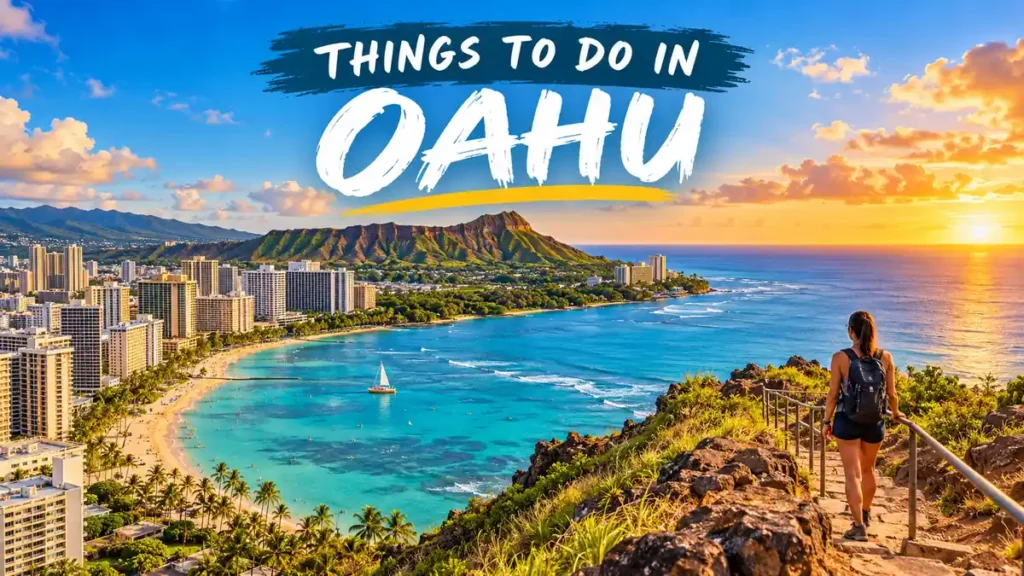
Oʻahu is often introduced through Waikīkī, but limiting a trip to Honolulu’s resort district means missing much of what makes the island special. Drive beyond the city and you find volcanic ridges, turquoise bays, legendary surf beaches, historic Hawaiian sites, waterfalls, botanical gardens, and small North Shore towns.
The best things to do in oahu include visiting Pearl Harbor National Memorial, hiking Diamond Head, swimming or learning to surf at Waikīkī Beach, exploring the North Shore, snorkeling in Hanauma Bay, discovering Hawaiian history at ʻIolani Palace, and spending time along the dramatic Windward Coast. Go Hawaii
The key is not trying to squeeze the entire island into one frantic driving loop. Oʻahu rewards travelers who divide their trip by region and leave enough time to actually enjoy each place.
1. Visit Pearl Harbor National Memorial
For anyone interested in history, Pearl Harbor belongs near the top of an Oʻahu itinerary.
Pearl Harbor National Memorial commemorates the December 7, 1941 attack that brought the United States into World War II. The visitor center provides museums and exhibits that help put the attack and the wider Pacific War into context. National Park Service
The best-known experience is the USS Arizona Memorial, reached by boat from the visitor center. The atmosphere is deliberately quiet and reflective, so approach it as a memorial rather than simply another sightseeing stop.
You can also build a longer Pearl Harbor day around nearby historic attractions if military history is a major interest.
The National Park Service recommends checking current schedules, reservation information, rules, and closures before visiting. The visitor center is roughly a 45-minute drive from Waikīkī under typical conditions, although Honolulu traffic can make the journey longer. National Park Service
Quick takeaway: Give Pearl Harbor at least half a day if you want more than a rushed visit.
2. Hike Diamond Head for Classic Oʻahu Views
Diamond Head, traditionally known as Lēʻahi, rises above the southeastern end of Waikīkī and provides one of the island’s most recognizable views.
The summit trail climbs through the crater and incorporates switchbacks, stairs, a tunnel, and remnants of the site’s military history. From the top, the panorama stretches across Waikīkī and Oʻahu’s southern coastline. Hawaii DLNR
This is not a wilderness hike. It is popular, exposed to the sun, and steep in places. Good footwear, water, sunscreen, and an early start make it much more comfortable.
Non-Hawaiʻi residents currently need advance entry reservations, and parking reservations are also required if driving. Normal operating hours are 6 a.m. to 6 p.m., with the final entry at 4:30 p.m. State Parks recommends allowing roughly 1.5–2 hours for the hike. Hawaii DLNR
That reservation requirement is easy to overlook, so Diamond Head is one attraction to organize before arriving on the island.
3. Spend a Morning at Waikīkī Beach
Waikīkī Beach is touristy, busy, and absolutely worth experiencing at least once.
Its relatively accessible setting makes it an easy place to swim, paddle, relax on the sand, watch surfers, or simply walk along the waterfront. The surrounding neighborhood puts restaurants, shopping, hotels, and nightlife within walking distance.
Waikīkī also has an important place in modern surfing culture. If you have never surfed before, taking a beginner lesson here can be more rewarding than simply watching from shore.
Go early if you want a quieter beach experience. Later in the day, stay for sunset and an evening walk through Waikīkī.
4. Snorkel at Hanauma Bay Nature Preserve
Hanauma Bay is one of Oʻahu’s best-known snorkeling locations and one of the easiest places for visitors to observe marine life close to Honolulu.
The sheltered volcanic bay combines clear water, reef habitat, and dramatic surrounding cliffs. Snorkeling conditions vary with weather and ocean conditions, so never assume the water is safe simply because the bay looks calm from above.
Hanauma Bay is also a protected nature preserve rather than an ordinary public beach. Visitor access is controlled, making advance planning particularly important.
Never stand on coral, feed wildlife, chase fish, or touch marine animals. Reef ecosystems are easily damaged, and responsible snorkeling is part of keeping places like Hanauma Bay healthy.
5. Take a North Shore Road Trip
A North Shore day provides one of the biggest contrasts with Waikīkī.
Oʻahu’s North Shore is famous for roughly seven miles of legendary surfing coastline. Waimea Bay, ʻEhukai Beach—home to Banzai Pipeline—and Sunset Beach are among its best-known locations. Go Hawaii
Conditions change dramatically with the seasons.
From roughly November through February, powerful swells attract elite surfers and spectators. Waves can become extremely dangerous, and inexperienced swimmers and surfers should stay out when conditions are rough. During the calmer summer months, some North Shore beaches become more suitable for swimming and beginner activities. Go Hawaii
A good North Shore day can combine beaches, Haleʻiwa, food trucks, shave ice, and scenic stops rather than trying to visit every attraction.
6. Explore Haleʻiwa Town
Haleʻiwa is the North Shore’s historic surf town and an ideal place to slow down between beach stops.
Its plantation-era buildings contain surf shops, galleries, boutiques, cafés, restaurants, and casual food spots. The town is approximately an hour from Waikīkī without heavy traffic. Go Hawaii
Try local-style food, browse small shops, and get shave ice before continuing toward Waimea Bay, Pipeline, or Sunset Beach.
Haleʻiwa works best as part of a North Shore day rather than as a quick photo stop.
7. See Waimea Bay
Waimea Bay played an important role in the development of big-wave surfing and remains one of the North Shore’s defining beaches. Go Hawaii
In summer, the bay can look surprisingly peaceful. Winter can transform the same stretch of water into a powerful big-wave arena.
That seasonal difference matters. A beach that appears suitable for swimming in photographs may be completely inappropriate on the day you arrive.
Check lifeguard warnings and current ocean conditions before entering the water.
8. Watch Surfers at Banzai Pipeline
ʻEhukai Beach Park is home to Banzai Pipeline, one of surfing’s most famous breaks.
When winter swell arrives, skilled surfers ride powerful waves breaking over a shallow reef. Watching from shore can be spectacular, particularly during major surf events.
This is not a beginner surf break.
The North Shore’s huge winter waves can be hazardous even for highly experienced surfers. Official Oʻahu tourism guidance specifically advises inexperienced surfers to leave these conditions to professionals. Go Hawaii
Watching safely from shore is an experience in itself.
9. Visit Sunset Beach
Continue along the North Shore and you reach another legendary surfing location: Sunset Beach.
Its long shoreline makes it appealing even when you are not there for surfing. Depending on the season, you might encounter enormous winter swell or considerably calmer summer water.
It is also a pleasant place to end a North Shore afternoon.
Just remember that the name does not override practical geography or driving plans—you do not need to remain until dark if you have a long trip back to Honolulu.
10. Walk Through Waimea Valley
Travelers who want something beyond beaches should consider Waimea Valley.
The valley provides an opportunity to learn about the traditional Hawaiian ahupuaʻa system—mountain-to-sea land divisions that supported communities through carefully managed natural resources.
Visitors can walk through botanical landscapes toward Waimea Falls while encountering Hawaiian cultural interpretation along the way. GoHawaii describes Waimea Valley as one of Oʻahu’s remaining intact ahupuaʻa. Go Hawaii
It pairs naturally with Waimea Bay because the two attractions are close together.
11. Discover Hawaiian History at ʻIolani Palace
A trip to Oʻahu becomes far more meaningful once you understand that Hawaiʻi was an independent kingdom.
ʻIolani Palace in downtown Honolulu was the home of Hawaiʻi’s last reigning monarchs and is now a museum of Hawaiian monarchy history and a National Historic Landmark. Its rooms and collections help tell the story of the Hawaiian Kingdom, King Kalākaua, Queen Liliʻuokalani, and the overthrow of the monarchy. Iolani Palace
This is one of the most valuable cultural experiences on the island.
Tours generally operate Tuesday through Saturday, and reservations are strongly recommended. Both docent-led and self-guided audio experiences are offered, depending on the day. Iolani Palace
Allow around 60–90 minutes for a standard tour. Iolani Palace
12. Explore Historic Downtown Honolulu
After ʻIolani Palace, don’t immediately return to Waikīkī.
Several important historic sites are clustered around downtown Honolulu. Nearby landmarks include Aliʻiōlani Hale, Kawaiahaʻo Church, and the Hawaiʻi State Capitol. Iolani Palace
Walking this area helps connect the story of the Hawaiian monarchy with modern Honolulu.
From there, continue toward Chinatown for markets, restaurants, galleries, and a different side of the city.
13. Learn to Surf
Few activities connect visitors with Oʻahu’s identity quite like surfing.
Beginners should choose a supervised lesson at an appropriate beach rather than renting a board and heading into unfamiliar water alone. Waikīkī is a popular starting point because beginner lessons are readily available.
Your first session is less about looking impressive and more about learning positioning, paddling, standing technique, surf etiquette, and basic ocean awareness.
Even standing up for several seconds can become one of the most memorable moments of the trip.
14. Drive the Windward Coast
If Waikīkī shows Oʻahu’s urban resort side, the Windward Coast reveals its greener personality.
The Koʻolau Range rises dramatically behind communities such as Kailua and Kāneʻohe, producing some of the island’s most impressive scenery.
Rather than treating the drive as transportation between attractions, make the landscape part of the experience.
Allow time for beaches and viewpoints, but avoid blocking roads, parking illegally, entering private property, or stopping wherever social media suggests there might be a photograph.
15. Relax at Kailua Beach
Kailua offers a very different atmosphere from central Waikīkī.
Its broad stretch of sand and blue water makes it appealing for a slower beach day, particularly if your itinerary already contains several structured attractions.
Nearby Kailua town also provides plenty of opportunities for breakfast, lunch, and casual shopping.
For many travelers, spending several hours here instead of racing between another five sightseeing stops is the better decision.
16. Experience Lanikai
Lanikai is famous for its clear water, soft sand, and views toward the offshore Mokulua islets.
The setting is beautiful, but visitors should remember that Lanikai is also a residential neighborhood. Parking and access require consideration for people who live there.
Don’t block driveways, leave rubbish, trespass, or treat residential streets as tourist facilities.
Arriving respectfully is just as important as finding the perfect photograph.
17. Visit the Polynesian Cultural Center
The Polynesian Cultural Center in Lāʻie presents cultures from Hawaiʻi, Samoa, Tonga, Fiji, Tahiti, and Aotearoa through demonstrations, performances, crafts, food, and interactive activities.
The 42-acre attraction can easily occupy much of a day, particularly if you stay for evening entertainment. Go Hawaii
It’s especially popular with families because activities extend beyond simply viewing exhibits.
However, remember that Polynesia contains many distinct cultures. Use the experience as an introduction rather than assuming a single attraction represents the complete history or identity of every Pacific community.
18. See Oʻahu From the Water
Some of Oʻahu’s best scenery is easier to appreciate once you leave the shore.
Depending on conditions and season, options can include sailing, kayaking, stand-up paddleboarding, snorkeling excursions, outrigger canoe experiences, and sunset cruises.
Water activities also provide a completely different perspective on Diamond Head, Waikīkī, and Oʻahu’s mountain backdrop.
Choose reputable operators and take ocean-safety instructions seriously. Conditions in Hawaiʻi can change quickly.
19. Look for Hawaiian Green Sea Turtles Responsibly
Hawaiian green sea turtles, or honu, are among the marine animals visitors hope to see around Oʻahu.
You may encounter them while snorkeling or resting along certain beaches, particularly around the North Shore.
Seeing one does not mean approaching it.
Give wildlife plenty of space and never touch, feed, chase, surround, or pose directly beside an animal. A telephoto lens or phone zoom produces a photograph without disturbing wildlife.
The same principle applies to Hawaiian monk seals and other protected marine species.
20. Try Oʻahu’s Local Food
Some of the best things to do in oahu involve a plate rather than a landmark.
Look beyond resort restaurants and try foods connected to Hawaiʻi’s diverse culinary history.
Depending on your tastes, that might include:
- Poke
- Plate lunch
- Kalua-style pork
- Loco moco
- Spam musubi
- Malasadas
- Fresh tropical fruit
- Garlic shrimp
- Shave ice
Haleʻiwa and Kahuku are particularly convenient stops for food during a North Shore drive, while Honolulu offers everything from casual neighborhood restaurants to high-end dining.
Food is also an excellent way to appreciate the Japanese, Chinese, Filipino, Portuguese, Native Hawaiian, Korean, and other influences that have shaped modern Hawaiʻi.
21. Spend Time at Ala Moana Beach Park
If Waikīkī feels too crowded, Ala Moana Beach Park provides an easy alternative close to central Honolulu.
Its waterfront setting works well for walking, picnicking, cycling, or simply spending an unstructured afternoon outside.
Magic Island, at the eastern end of the park, provides attractive views back toward Waikīkī and Diamond Head.
GoHawaii’s suggested Honolulu itinerary specifically combines Ala Moana Beach Park and Magic Island as part of a waterfront cycling route. Go Hawaii
22. Hike Beyond Diamond Head
Diamond Head receives most of the attention, but Oʻahu has hiking opportunities ranging from paved scenic walks to demanding ridge trails.
Before choosing a hike, consider more than distance.
Heat, humidity, rain, mud, exposed ridges, elevation gain, trail legality, and parking can dramatically change the difficulty of an outing.
Avoid relying exclusively on social-media videos. Some unofficial trails cross private property or involve risks that aren’t obvious in a 20-second clip.
Choose legal, maintained trails and check current conditions before setting out.
23. Watch an Oʻahu Sunset
You don’t need to book an expensive activity every evening.
A sunset from the beach can be one of the simplest highlights of an Oʻahu vacation.
Waikīkī makes this especially easy because you can swim or walk during the late afternoon, watch the light change over the Pacific, and then head directly to dinner.
The North Shore can also produce spectacular evenings, particularly when surf conditions add drama to the coastline.
Arrive before the sun reaches the horizon. The changing light before and after sunset is often better than the exact moment the sun disappears.
24. Attend a Lūʻau With Cultural Context
A lūʻau can combine food, music, dance, storytelling, and cultural interpretation in one evening.
Experiences vary considerably. Some emphasize large-scale entertainment, while others place greater weight on Hawaiian history and cultural explanation.
Research what is actually included before booking rather than choosing solely by price.
Also recognize that Hawaiian culture and broader Polynesian cultures are related but not interchangeable. A thoughtful program should help visitors understand those distinctions.
25. Leave Space for an Unplanned Oʻahu Day
One of the easiest mistakes when planning Oʻahu is scheduling every hour.
Weather changes. Ocean conditions change. Traffic changes. You may discover a beach you want to enjoy longer or a restaurant you want to return to.
Keep part of the trip flexible.
A free afternoon gives you room to revisit Waikīkī, spend longer on the North Shore, explore Honolulu, or simply sit beside the ocean without worrying about the next reservation.
That breathing room often produces better memories than another attraction squeezed onto a checklist.
Best Things to Do in Oahu for First-Time Visitors
If you have limited time, prioritize experiences that show different sides of the island rather than choosing five similar beaches.
For a first trip, a balanced shortlist is:
- Pearl Harbor National Memorial
- Diamond Head
- Waikīkī Beach and a surf lesson
- Hanauma Bay
- North Shore and Haleʻiwa
- ʻIolani Palace and historic Honolulu
- Windward Coast and Kailua
- One cultural or food-focused experience
These destinations consistently appear among Oʻahu’s major visitor highlights, but together they also provide a useful mixture of nature, history, culture, ocean activities, and city life. Go Hawaii
Things to Do in Oahu Without Spending Much
Oʻahu can be expensive, but memorable days don’t necessarily require expensive tours.
Beach time, scenic drives, neighborhood walks, sunsets, historic districts, and many viewpoints can be enjoyed for little more than transportation and parking.
Pearl Harbor’s visitor center, museums, grounds, and exhibits are free, although particular programs, reservations, parking, or nearby partner attractions may involve charges. National Park Service
Another good strategy is to combine paid and free activities. Hike Diamond Head in the morning, for example, then spend the afternoon at the beach instead of booking two major tours on the same day.
Things to Do in Oahu With Kids
Families usually benefit from choosing fewer activities and leaving more beach time between them.
Waikīkī, appropriate snorkeling experiences, easy nature walks, Waimea Valley, the Polynesian Cultural Center, and calmer beach days can all work well depending on children’s ages and ocean conditions.
Waimea Valley and the Polynesian Cultural Center are particularly useful when families want cultural experiences with hands-on elements. GoHawaii highlights the latter’s family-friendly activities and demonstrations covering Pacific Island cultures. Go Hawaii
Remember that Hawaii’s sun and heat can tire children faster than expected. Carry water, use sun protection, and don’t underestimate walking distances.
How Many Days Do You Need in Oahu?
Five to seven days is a comfortable amount of time for a first Oʻahu trip.
Three days can cover several major attractions, but you’ll have to make choices. With five days, you can devote separate days to Honolulu/Pearl Harbor, Waikīkī/Diamond Head, the North Shore, and the Windward Coast while retaining some flexibility.
Seven days makes the trip noticeably more relaxed.
A sensible five-day structure might look like this:
| Day | Area | Main Experiences |
|---|---|---|
| 1 | Waikīkī | Beach, surfing, sunset |
| 2 | Honolulu | Pearl Harbor, downtown, ʻIolani Palace |
| 3 | Southeast Oʻahu | Diamond Head, Hanauma Bay area |
| 4 | North Shore | Haleʻiwa, Waimea, Pipeline, Sunset Beach |
| 5 | Windward Coast | Kailua, scenic coast, flexible stops |
Don’t treat this as a rigid schedule. Reservation availability, surf, weather, traffic, and personal interests should determine the final order.
Do You Need a Car in Oahu?
Not necessarily.
If most of your trip centers on Waikīkī and Honolulu, you can use public transportation, rideshares, organized tours, bicycles in appropriate areas, and walking.
A rental car becomes more useful when you want to independently explore the North Shore or Windward Coast.
One practical approach is to stay in Waikīkī without a car for several days and rent one only for island exploration. That can reduce parking costs while avoiding the inconvenience of keeping a vehicle you don’t need every day.
Whatever transportation you choose, group attractions geographically. Driving from Waikīkī to the North Shore, back toward Honolulu, and then out to the Windward Coast on the same day wastes valuable vacation time.
When Is the Best Time to Visit Oahu?
Oʻahu can be visited year-round, but what you want to do should influence when you travel.
Winter brings the famous large North Shore surf. GoHawaii identifies November through February as prime months for seeing big-wave surfing, while May through September generally brings calmer North Shore conditions. Go Hawaii
Travelers focused on swimming and snorkeling should pay more attention to daily ocean conditions than to a generic “best month.”
Weather also varies across the island. Honolulu may be sunny while mountains and Windward areas receive showers.
Pack for changing conditions rather than expecting every part of Oʻahu to have identical weather.
Practical Tips for Exploring Oahu
A few planning decisions can make an enormous difference.
Book reservation-based attractions early. Diamond Head requires advance reservations for non-residents, while other high-demand experiences can also fill up. Hawaii DLNR
Group your days geographically. Keep North Shore attractions together, Windward Coast destinations together, and Honolulu sights together.
Respect ocean warnings. Never judge safety solely from appearance. Waves, currents, and shorebreak can be stronger than expected.
Start outdoor activities early. You’ll encounter cooler temperatures and often fewer people.
Carry reef-conscious sun protection, water, and proper footwear. Tropical sun can be intense even when clouds are present.
Respect local communities. Don’t block driveways, trespass for photographs, ignore parking signs, or leave rubbish behind.
Learn before you visit. Oʻahu isn’t simply a collection of beaches. Understanding Hawaiian history and culture changes how you experience places such as ʻIolani Palace, Waimea Valley, and Honolulu.
Making the Most of the Things to Do in Oahu
The most rewarding things to do in oahu aren’t all found in one neighborhood—or even on one type of itinerary.
Spend time in Waikīkī, but leave the resort district. Learn what happened at Pearl Harbor. Hike Diamond Head. Drive north to Haleʻiwa and Waimea. Explore Hawaiian history at ʻIolani Palace. See the Koʻolau mountains from the Windward side, eat local food, and leave enough unscheduled time to simply enjoy the Pacific.
Oʻahu works best when you combine its famous attractions with a slower appreciation of the island itself. Instead of trying to collect every landmark, choose a few meaningful experiences from each region. You’ll spend less time racing between parking lots and more time understanding why Oʻahu remains one of Hawaiʻi’s most fascinating islands.