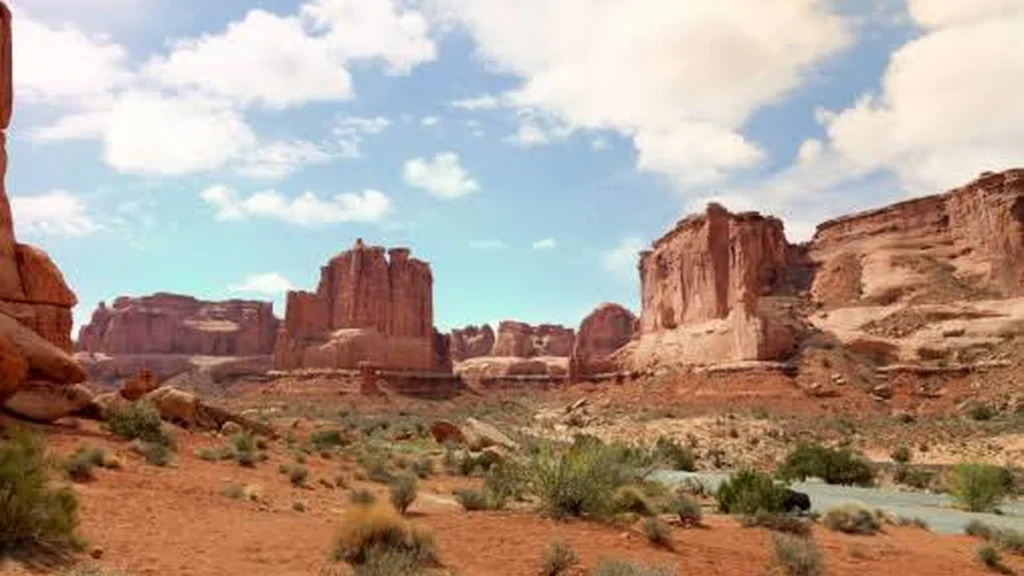
Somewhere between Salt Lake City and Las Vegas, Utah packed five national parks into one stretch of desert — and gave them a nickname that undersells how different they actually are from each other.
The Mighty 5 refers to Utah’s five national parks — Zion, Bryce Canyon, Capitol Reef, Arches, and Canyonlands — all located in the southern half of the state. Together they draw close to 10 million visitors a year, spanning slot canyons, hoodoos, and the largest concentration of natural stone arches on Earth.
If you’ve seen the phrase pop up on a tour brochure or a road-trip blog and wondered whether it’s an official designation or just clever marketing, you’re not alone. Here’s what it actually means, what each park delivers, and how to plan a trip that doesn’t waste your limited vacation days driving in the wrong direction.
What Is “The Mighty 5”?
“Mighty 5” is Utah’s own tourism branding for its national parks, coined by the Utah Office of Tourism to market the state’s five parks as one connected experience rather than five separate destinations. It’s not an official National Park Service term, but it’s stuck — you’ll see it on rental car ads, tour itineraries, and license plates.
All five parks sit on the Colorado Plateau, the same geologic region responsible for the Grand Canyon. That’s why the rock looks related from park to park even though the scenery is wildly different: this plateau has been lifted, cracked, and eroded in different ways depending on the local rock layers, producing narrow slot canyons in one park and thousands of freestanding arches in another.
Quick Takeaway: Mighty 5 = Zion, Bryce Canyon, Capitol Reef, Arches, Canyonlands. It’s a marketing umbrella, not a single park, and you visit each one separately with its own entrance fee.
The 5 Parks, One by One
Each park earns its spot on the list for a different reason. Skipping the profile stage is the most common planning mistake — people assume the parks are interchangeable red-rock scenery and end up disappointed when one park doesn’t deliver what they expected from another.
Zion National Park
Zion is usually the most-visited of the five, and for good reason: it’s the most dramatic on arrival. You drive straight into a canyon with towering sandstone walls on either side. The signature hikes are Angels Landing, a chained climb along a narrow ridge with serious exposure, and The Narrows, where you wade up the Virgin River between canyon walls that in places are only 20–30 feet apart. Zion runs a mandatory shuttle system through the main canyon for most of the year, so you’re not driving your own car past the trailheads.
Bryce Canyon National Park
Bryce isn’t a canyon in the traditional sense — it’s a series of natural amphitheaters carved into the edge of a high plateau, filled with hoodoos, the spindly rock towers Bryce is famous for. Sitting at 8,000–9,000 feet, it’s noticeably cooler than the other four parks, which matters if you’re visiting in summer. It’s also one of the designated Dark Sky Parks in the group, and the amphitheater views at sunrise are hard to overstate.
Capitol Reef National Park
Capitol Reef is the quiet one. It’s the least visited of the Mighty 5, built around the Waterpocket Fold, a 100-mile buckle in the earth’s crust that creates a long, stepped wall of cliffs and canyons. If Zion and Bryce feel busy, Capitol Reef feels like you have the place to yourself — good hiking, an old pioneer orchard you can pick fruit from in season, and none of the crowd logistics of its neighbors.
Arches National Park
Arches holds more than 2,000 cataloged sandstone arches, the largest concentration anywhere in the world, packed into a relatively small park just outside Moab. Delicate Arch, the freestanding arch that appears on Utah license plates, is the park’s most-hiked destination. Arches is also compact enough to see a lot in a single day — which is exactly why it gets crowded, and why timed-entry reservations have become part of visiting it during peak season.
Canyonlands National Park
Canyonlands is the largest of the five and, by visitor numbers, the least crowded relative to its size. It’s split into districts (Island in the Sky is the one most visitors reach), with sweeping mesa-and-canyon views carved by the Colorado and Green Rivers. Grand View Point Overlook and Mesa Arch are the two spots nearly everyone photographs. If you want to drive the White Rim Road, budget significantly more time and a high-clearance vehicle.
Quick Takeaway: Arches and Zion are the busiest and most iconic; Capitol Reef and Canyonlands reward people who want solitude; Bryce is the outlier both in elevation and in look.
How Many Days You Need — and What Order to Do Them In
A realistic minimum for all five parks is 7 days, and 10 days lets you actually hike rather than just photograph pullouts. Trying to do it in 4–5 days means you’ll be driving more than you’re hiking.
The parks fall along a rough line across southern Utah, which makes a point-to-point route more efficient than a loop:
- Zion (closest to Las Vegas)
- Bryce Canyon
- Capitol Reef
- Arches (near Moab)
- Canyonlands (also near Moab, closest to Salt Lake City)
Doing this route in either direction avoids backtracking. Trying to loop back to your starting airport instead of flying in and out of different cities can add a full day of driving you don’t need.
| Park | Suggested Time | Best For |
|---|---|---|
| Zion | 2 days | Angels Landing, The Narrows |
| Bryce Canyon | 1–2 days | Sunrise views, hoodoo hikes |
| Capitol Reef | 1 day | Waterpocket Fold, solitude |
| Arches | 1–2 days | Delicate Arch, Devils Garden |
| Canyonlands | 1–2 days | Grand View Point, Mesa Arch |
What It Actually Costs in 2026
Entrance fees are simple on paper, but a change taking effect January 1, 2026 catches a lot of international travelers off guard.
- Standard vehicle entrance fee: around $35 per park, valid for 7 days.
- America the Beautiful annual pass: $80, covers the entrance fee at every national park in the country for a year — worth it the moment you’re visiting three or more of the Mighty 5.
- New for 2026: non-U.S. residents aged 16 and older must pay an additional $100 per person, per park at Bryce Canyon and Zion (and other major parks nationally), unless they hold the separate America the Beautiful Non-Resident Annual Pass ($250), which covers the surcharge for the pass holder and everyone in one non-commercial vehicle. Children 15 and under are exempt.
- If you’re booking a commercial tour, this non-resident fee is usually collected locally in cash, separate from what you paid to book the trip — worth confirming with your tour operator before you go.
Quick Takeaway: U.S. residents visiting 3+ parks: buy the $80 annual pass. Non-U.S. residents: budget for either the $250 non-resident pass or $100/person at Bryce and Zion, on top of standard fees.
When to Go and Where to Base Yourself
Spring (April–May) and fall (September–October) hit the sweet spot: warm days, cool nights, and lighter crowds than summer. Summer is hot enough at the lower-elevation parks (Zion, Arches, Canyonlands) that midday hiking gets genuinely uncomfortable, while Bryce’s higher elevation keeps it more tolerable. Winter brings snow-dusted hoodoos and near-empty trails at Bryce, but some high-elevation roads and trails close.
For flights, Las Vegas is the closer airport to Zion (roughly 2 hours 45 minutes), while Salt Lake City is closer to Arches and Canyonlands (roughly 3 hours 45 minutes). Flying into one and out of the other, if your itinerary allows it, saves a day of backtracking.
Lodging books out fast — sometimes a year ahead for peak-season dates near Zion and Moab — so reserve rooms before you lock in flights, not after.
Reservations, Permits, and the Mistakes Most First-Timers Make
A few things trip up nearly every first-time Mighty 5 traveler:
- Zion’s shuttle runs through the main canyon during the busy season, and you can’t drive your own car past the visitor center during those months — plan around shuttle hours, not your own schedule.
- Angels Landing requires a permit, awarded through a lottery system, not a walk-up trail anymore.
- Arches uses timed-entry reservations during peak months (roughly April through October), so showing up without one can mean being turned away at the gate.
- Underestimating drive times between parks is the single biggest schedule-wrecker — Utah’s back roads are scenic but slow, and “2 hours” on a map can run longer with stops.
- Treating all five parks as equally busy leads to bad time allocation. Arches and Zion need reservation-aware planning; Capitol Reef and Canyonlands generally don’t.
Is the Mighty 5 worth the hype? For most travelers, yes — but which park hits hardest depends on what you’re after. If you want the single most photogenic, crowded-in-a-good-way experience, Zion and Arches deliver. If you want the version of Utah with almost nobody else around, Capitol Reef and Canyonlands are the ones to prioritize.
If you’re planning another destination too, check out our Southwest USA travel guides for more trip ideas.
FAQ Section
What is the Mighty 5 in Utah?
The Mighty 5 is Utah’s tourism nickname for its five national parks: Zion, Bryce Canyon, Capitol Reef, Arches, and Canyonlands. It’s a marketing term, not an official National Park Service designation, but it’s the standard way the parks are grouped for road-trip planning.
How many days do you need for the Mighty 5?
Most travelers need at least 7 days to see all five parks reasonably, and 10 days if you want real hiking time instead of quick photo stops. Fewer than 7 days usually means more driving than sightseeing.
What order should you visit the Mighty 5 in?
A point-to-point route works best: Zion, then Bryce Canyon, then Capitol Reef, then Arches, then Canyonlands (or the reverse). This follows their geographic line across southern Utah and avoids backtracking.
How much does it cost to visit the Mighty 5 in 2026?
Standard entrance is about $35 per park for 7 days, or $80 for an annual America the Beautiful pass. Starting January 1, 2026, non-U.S. residents also pay a $100 per-person surcharge at Bryce Canyon and Zion, unless they buy the $250 non-resident annual pass.
Which Mighty 5 park is the least crowded?
Capitol Reef is the least visited of the five, followed by Canyonlands relative to its large size. Arches and Zion draw the biggest crowds.
Do you need reservations for the Mighty 5?
Arches requires timed-entry reservations during peak months, and Angels Landing in Zion requires a lottery permit. Bryce Canyon, Capitol Reef, and Canyonlands generally don’t require advance reservations to enter.
Is the Mighty 5 worth doing as a road trip without a tour?
Yes — it’s a well-marked, drivable route, and most travelers self-drive it. A guided tour mainly saves you logistics planning and gives you a local guide’s shortcuts, not access you couldn’t get on your own.
What’s the best time of year to visit the Mighty 5?
Spring (April–May) and fall (September–October) offer the best balance of mild weather and manageable crowds. Summer is hot at the lower-elevation parks; winter brings snow and some road closures, especially at Bryce.