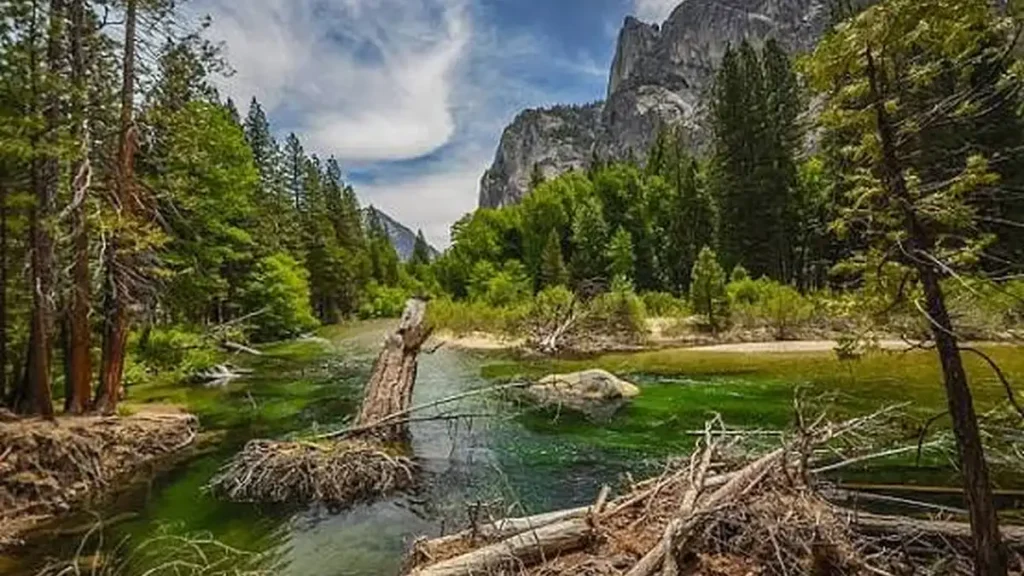
Most people drive right past Kings Canyon. They’re headed to Yosemite or Sequoia’s General Sherman Tree, and Kings Canyon becomes the park they meant to stop at. That’s a mistake — this is one of the deepest canyons in the country, and most of it still feels empty even in July.
Kings Canyon National Park sits in the southern Sierra Nevada in California, jointly managed with Sequoia National Park. It protects giant sequoia groves at Grant Grove, a glacially carved canyon deeper than the Grand Canyon in places at Cedar Grove, and over 200 marble caves — plus wilderness that feeds straight into the John Muir Trail.
What Is Kings Canyon National Park?
Kings Canyon National Park splits into two very different halves, and understanding that split is the single most useful thing before you plan anything else.
Grant Grove sits near the park’s western entrance off CA-180, holds a cluster of giant sequoia groves including the General Grant Tree, and stays open all year — even in winter, snow chains and all.
Cedar Grove, by contrast, sits at the bottom of the actual canyon, roughly 30 miles east along the Kings Canyon Scenic Byway. This is where you get the granite walls, the Kings River, and the trailheads people come for — but the road down is seasonal, closing under snow from roughly late fall to early spring.
A lot of visitors confuse this park with Sequoia National Park next door, and it’s an honest mistake since the two are administered together and share an entrance. But the General Sherman Tree — the largest tree on Earth by volume — is in Sequoia, not Kings Canyon. If that’s specifically what you’re after, you’ll want the Giant Forest area of Sequoia, not Grant Grove. Kings Canyon’s headline attraction is the canyon itself, not a single tree.
Quick Takeaway
Grant Grove = sequoias, open year-round, easy access. Cedar Grove = the canyon, waterfalls, and best hikes, open roughly mid-May through mid-October.
Best Time to Visit Kings Canyon
The honest answer depends entirely on whether you care about Cedar Grove.
If you only want Grant Grove’s sequoias, any season works, though winter brings snow and possible tire-chain requirements on the approach roads. If you want the canyon floor — Zumwalt Meadow, Mist Falls, Road’s End — you’re locked into the window when CA-180 to Cedar Grove is actually open, which typically runs mid-May to mid-October and shifts year to year based on snowpack.
Summer (June–August) is peak season and the only realistic time for serious backpacking into the high country. Grant Grove sits around a comfortable 75°F while the canyon floor can climb past 90°F, so the Kings River becomes a genuine relief stop rather than just scenery. Afternoon thunderstorms are common in the high Sierra and can roll into the canyon fast.
Fall (September–October) is my pick for a first visit if you can swing it. Crowds thin out noticeably, temperatures are pleasant for long hikes, and the road to Cedar Grove is usually still open through most of October before the seasonal closure.
Spring looks appealing on paper but comes with a catch: much of the Cedar Grove road may still be closed for snow clearing and repairs, so you’re effectively limited to Grant Grove.
Winter means Grant Grove only, snow on the ground, and a genuinely different, quieter kind of visit — good for solitude, bad if the canyon itself is the draw.
Entrance Fees and Passes for 2026
Here’s where a lot of older articles are already out of date, so pay attention to this section specifically.
The base entrance fee structure hasn’t changed: $35 per private vehicle, $20 per person on foot or bike, $30 per motorcycle, valid for 7 days at both Sequoia and Kings Canyon together. An annual pass covering both parks is also available, and the America the Beautiful Pass ($80/year, covering 2,000+ federal recreation sites) pays for itself after two visits to almost any major park.
What has changed for 2026: Kings Canyon is one of eleven high-traffic national parks — alongside Yosemite, Yellowstone, Grand Canyon, and others — now charging a $100 non-resident surcharge per person for international visitors aged 16 and up. U.S. citizens and lawful permanent residents are unaffected and should bring a Permanent Resident Card if claiming resident pricing.
There are also ten fee-free days scheduled across 2026, including a fee-free weekend around July 3–5 and single days in February, May, June, August, September, October, and November — though as of this year, those free-entry days apply only to U.S. citizens and residents, a policy shift worth knowing before you plan an international trip around one.
| Pass Type | Price | Covers |
|---|---|---|
| Vehicle pass (7-day) | $35 | Sequoia + Kings Canyon |
| Per-person pass (7-day) | $20 | Sequoia + Kings Canyon |
| Motorcycle pass (7-day) | $30 | Sequoia + Kings Canyon |
| America the Beautiful (annual) | $80 | All federal recreation sites |
| Senior Annual Pass | $20 | Same as America the Beautiful, ages 62+ |
| Non-resident surcharge | +$100/person | International visitors, 11 busiest parks |
Grant Grove — Giant Sequoias Year-Round
Grant Grove is usually the first stop for anyone entering via CA-180, and honestly, a lot of visitors treat it as a quick photo op before rushing off toward Sequoia. That undersells it.
The General Grant Tree anchors the grove — around 267 feet tall with a trunk volume of roughly 46,608 cubic feet, making it the second- or third-largest tree on Earth depending on which measurement you trust. The General Grant Trail loop that circles it is an easy 1.5-mile paved walk with about 150 feet of elevation gain, wheelchair accessible, and passes the Fallen Monarch, a downed sequoia hollow enough to walk straight through, along with the historic Gamlin Cabin.
If you want more grove and fewer crowds, extend it into the North Grove, Sunset & Grant Tree Trail loop for a longer walk among the same ancient trees with noticeably fewer people.
For a viewpoint fix, Panoramic Point is a short but steep walk from a parking area that opens up one of the better wide-angle views of the Sierra crest without needing a full hike. Big Stump Trail, a 0.7-mile loop partly paved and partly compact dirt, tells the uglier history of the area — this grove was heavily logged before park protection, and the trail makes that visible rather than glossing over it.
Cedar Grove — Deep in the Canyon
This is the part of the park most day-trippers never see, because it requires committing to the seasonal drive down. It’s worth it.
Zumwalt Meadow is the single most-recommended easy walk in the entire park, and for good reason: a roughly 1.5-mile loop across open meadow with the granite walls of North Dome and Grand Sentinel rising directly above you. It’s named for D.K. Zumwalt, a railway attorney who helped protect the land, and the flat, gentle terrain makes it genuinely kid-friendly — a rarity for a trail with views this dramatic. Deer sightings here are common, especially early morning.
Roaring River Falls delivers a 40-foot drop into a granite bowl via a short paved trail, easily managed by families or visitors with mobility limitations. Come midday when sunlight hits the water directly for the best color.
Road’s End marks where the pavement stops and the wilderness starts — it’s the staging point for backpacking trips, horseback excursions, and the trailhead cluster feeding into Woods Creek, Bubbs Creek, and eventually the Rae Lakes Loop.
Muir Rock, a flat slab along the Kings River near Road’s End, is where local lore says John Muir liked to sit and talk with passersby. It’s a short, easy walk from the parking area and a nice place to just sit for a while.
For something underground, Boyden Cavern (accessed via a separate, privately guided tour along the scenic byway) runs 45-minute to hour-long tours through marble cave formations — a different composition than the limestone caves common in the eastern U.S., which is why the park has such an unusual concentration of them.
Quick Takeaway
If you have limited time in Cedar Grove, prioritize Zumwalt Meadow and Roaring River Falls — both are short, both deliver disproportionately good views for the effort.
The Best Hikes in Kings Canyon, Ranked by Difficulty
| Trail | Distance | Difficulty | Highlights |
|---|---|---|---|
| General Grant Trail | 1.5 mi loop | Easy | General Grant Tree, Fallen Monarch, wheelchair accessible |
| Roaring River Falls | 0.3 mi paved | Easy | 40-ft waterfall, family-friendly |
| Zumwalt Meadow Loop | 1.5 mi loop | Easy | Meadow views, North Dome, wildlife |
| Big Stump Trail | 0.7 mi loop | Easy | Logging history, partial dirt path |
| Mist Falls | 8 mi round-trip | Moderate | Waterfall, Kings River views |
| Paradise Valley (extension) | 13 mi round-trip | Strenuous | Backcountry valley, views toward the Sphinx |
| Rae Lakes Loop | ~41 mi | Strenuous (multi-day) | Alpine lakes, high Sierra, permit required |
Mist Falls is the trail most experienced hikers point to as Kings Canyon’s signature day hike: roughly 4 miles out to the falls with the option to keep going another 2.5 miles to Paradise Valley if you’ve got the legs and the daylight. Expect close proximity to the Kings River the entire way, shaded stretches of cedar and ponderosa pine, and views down-canyon toward the distinctive granite formation known as the Sphinx.
The Rae Lakes Loop is the park’s marquee backpacking route — a multi-day trip through genuine high-Sierra alpine terrain that requires a wilderness permit and serious planning. It’s not a casual add-on to a day trip; treat it as its own trip.
Where to Stay
Lodging in the park splits cleanly by area, and prices vary more than people expect.
John Muir Lodge (Grant Grove, open year-round): 36 rooms, roughly $210–$417/night depending on season, half a mile from the sequoia grove and visitor center.
Grant Grove Cabins (Grant Grove, seasonal): rustic and tent-cabin options, generally the budget-friendlier choice in that area.
Cedar Grove Lodge (Cedar Grove, open late April to mid-October only): 21 rooms, around $232/night, walking distance to the Cedar Grove visitor center — but note the access road is a genuinely winding mountain drive, worth knowing if anyone in your group gets carsick.
For camping, Azalea and Sunset campgrounds near Grant Grove operate close to year-round, while Sheep Creek (111 sites, Cedar Grove, roughly May through late October in 2026) and Moraine and Sentinel campgrounds sit down in the canyon itself along the river. Worth flagging: some nearby Sequoia-side campgrounds like Buckeye Flat and South Fork remain closed for storm damage, and Dorst Creek has no 2026 operating dates — so don’t assume every campground you’ve seen mentioned elsewhere is actually open this year. Check current status before booking.
| Property | Area | Season | Approx. Price |
|---|---|---|---|
| John Muir Lodge | Grant Grove | Year-round | $210–$417/night |
| Grant Grove Cabins | Grant Grove | Seasonal | Budget–mid range |
| Cedar Grove Lodge | Cedar Grove | Late April–mid Oct | ~$232/night |
| Sheep Creek Campground | Cedar Grove | May–late Oct | Standard camping fee |
| Azalea / Sunset Campground | Grant Grove | Mostly year-round | Standard camping fee |
Getting There and Driving Times
Kings Canyon is most commonly reached via CA-180 East from Fresno, roughly 55 miles to the Big Stump entrance — figure about an hour and a half depending on traffic and where exactly you’re coming from in the city. From there, the Kings Canyon Scenic Byway continues another 30-plus miles down into Cedar Grove, and that stretch alone can take well over an hour given the switchbacks, so don’t judge the drive time by mileage alone.
If you’re coming from Three Rivers or the Sequoia side, the parks connect via the Generals Highway, though that’s a slower, more winding mountain road than a straight shot on 180.
Sample Itinerary — 1 Day vs. 3 Days
One day: Realistically, you can see the General Grant Tree, walk the Big Stump Trail, stop at the Kings Canyon Visitor Center, drive the full scenic byway down to Cedar Grove, hike out to Mist Falls, and squeeze in Zumwalt Meadow or Roaring River Falls before heading back out. It’s full, but doable — you just won’t have time for the Rae Lakes Loop or a deeper exploration of either grove.
Three days: Day one, settle into Grant Grove and do the sequoia loops plus Panoramic Point. Day two, drive down to Cedar Grove early, hike Mist Falls to Paradise Valley, and catch sunset at Junction View on the way back. Day three, take it slower — Zumwalt Meadow, Muir Rock, maybe a Boyden Cavern tour, with time to actually sit by the river instead of rushing between stops.
Practical Tips Before You Go
- Cell service is close to nonexistent in Cedar Grove and much of the canyon — download offline maps and tell someone your plans before you lose signal.
- Wilderness permits are required for overnight backcountry trips, including the Rae Lakes Loop; these can book out well in advance during peak summer.
- Bear boxes are mandatory at all campgrounds — food storage rules are enforced, not optional.
- Accessibility: the General Grant Tree Trail and Big Stump Trail are paved and wheelchair-navigable; Zumwalt Meadow includes some boardwalk sections; Panoramic Point’s viewpoint parking area is accessible even though the trail beyond it isn’t.
- Road conditions change fast on the Cedar Grove route — check current alerts before driving down, especially in shoulder seasons.
Final Thoughts
Kings Canyon rewards the visitors willing to commit to Cedar Grove’s seasonal window rather than stopping at Grant Grove and calling it done. The sequoias are worth seeing, but the canyon itself — the meadow, the falls, the river, the wilderness beyond Road’s End — is the actual reason to make the drive. Time your visit around the CA-180 opening, book Cedar Grove Lodge or a canyon-floor campsite early if you want to stay down there, and budget more driving time than the mileage suggests.
If you’re planning the trip now, start with current entrance fees and road status directly on the NPS Sequoia & Kings Canyon site, then work backward into lodging and trail choices from there.
Looking for your next adventure? Explore our California travel guides for more.
FAQ Section
Q: Is Kings Canyon National Park the same as Sequoia National Park?
No — they’re separate parks managed jointly by the same NPS staff and share an entrance fee. Kings Canyon holds Grant Grove and the canyon itself; the General Sherman Tree is in Sequoia’s Giant Forest, not Kings Canyon.
Q: How much does it cost to enter Kings Canyon National Park?
A 7-day pass covering both Sequoia and Kings Canyon runs $35 per vehicle, $20 per person, or $30 per motorcycle. Non-U.S. residents pay an additional $100 per person surcharge starting in 2026.
Q: Can you visit Kings Canyon in one day?
Yes, though it’s a full day. You can see Grant Grove’s sequoias, drive the scenic byway to Cedar Grove, and hike to Mist Falls or Zumwalt Meadow — but you’ll miss backcountry trails like Rae Lakes Loop.
Q: When does the road to Cedar Grove open?
Typically mid-May through mid-October, though exact dates shift yearly based on snowpack and storm damage. Always check current NPS road status before driving down.
Q: What is Kings Canyon National Park known for?
Its deep glacially carved canyon (among the deepest in the U.S.), giant sequoia groves at Grant Grove, over 200 marble caves, and access to high-Sierra wilderness including the Rae Lakes Loop.
Q: Do I need a reservation to visit Kings Canyon National Park?
No timed-entry reservation is required for the park itself, but campgrounds and lodges should be booked in advance, especially in summer, and overnight wilderness trips require a separate backcountry permit.
Q: Is Kings Canyon National Park worth visiting if I’ve already seen Sequoia?
Yes — the canyon floor experience (Zumwalt Meadow, Mist Falls, Road’s End) is entirely different terrain from Sequoia’s Giant Forest and doesn’t overlap in scenery.