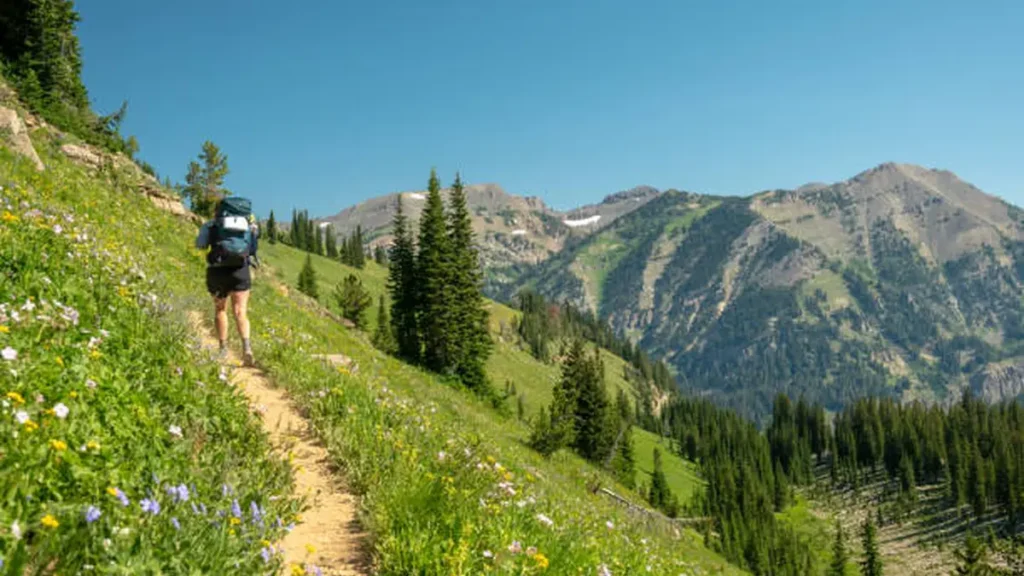
The Tetons don’t do foothills. You park your car, walk fifteen minutes, and suddenly you’re staring straight up at 13,775 feet of raw granite with no warm-up in between. That’s what makes hiking here different from almost anywhere else in the Rockies — and it’s also why picking the wrong trail can mean a miserable day instead of the best one of your trip.
Grand Teton hikes range from the flat, family-friendly Taggart Lake Trail (about 3 miles) to the strenuous, all-day Paintbrush Canyon Loop (roughly 19–20 miles). Standouts include Delta Lake for dramatic close-up views of the Grand, Cascade Canyon for classic glacial scenery, and Jenny Lake’s Hidden Falls for an easy payoff near the shuttle boat dock.
How to Choose a Grand Teton Hike
Before you commit to a trailhead, match the hike to your day. A short window before dinner reservations calls for something different than a trip built around one big canyon push.
| Hike | Distance | Elevation Gain | Difficulty | Trailhead |
|---|---|---|---|---|
| Taggart Lake Trail | ~3 miles | ~450 ft | Easy | Taggart Lake |
| Jenny Lake–Hidden Falls–Inspiration Point | ~2 miles (with boat) | ~500 ft | Easy | South Jenny Lake |
| Phelps Lake Loop | ~3–6.6 miles | ~300–500 ft | Easy–Moderate | Rockefeller Preserve / Death Canyon |
| Leigh Lake | ~7 miles | ~100 ft | Easy–Moderate | String Lake |
| Death Canyon to Static Peak Junction | ~7.7 miles | Substantial | Strenuous | Death Canyon (via Whitegrass Ranch alt. route in 2026) |
| Delta Lake | ~8–9 miles | ~2,300–2,400 ft | Strenuous | Lupine Meadows |
| Amphitheater & Surprise Lakes | ~10 miles | ~2,700 ft | Strenuous | Lupine Meadows |
| Paintbrush Canyon Loop | ~19–20 miles | Major | Very strenuous | String Lake |
| Cascade Canyon to Lake Solitude | ~14–15 miles | Major | Very strenuous | Jenny Lake / String Lake |
Best Easy Hikes in Grand Teton National Park
Taggart Lake Trail
This is the one nearly every guide leads with, and for good reason. Taggart Lake Trail remains one of the most beloved and accessible hikes in Grand Teton National Park, popular for its sweeping views of the Tetons, family-friendly route, and year-round appeal.The trailhead sits directly off Teton Park Road, and from there you can extend the loop to include Bradley Lake if you want more mileage. The catch: the lot fills fast, so an early start isn’t optional in July and August — it’s the whole strategy.
Jenny Lake, Hidden Falls & Inspiration Point
This is the “easy but spectacular” option people picture when they think of the park. Take the shuttle boat across Jenny Lake, then walk a short, mostly flat path to Hidden Falls before climbing briefly to Inspiration Point for a view straight down the lake toward the Cathedral Group. Parking at South Jenny Lake is famously tight in summer — arrive before 9 a.m. or after 4 p.m.
Phelps Lake Loop
Quieter than Jenny or Taggart, and a good pick if you want lake views without the crowds. The shortest version starts from the Rockefeller Preserve and follows Lake Creek down to the Phelps Lake shore — about 3 miles round trip with roughly 300 feet of gain, or you can extend it into a full loop around the lake. Note: in 2026, road construction has closed the Death Canyon Trailhead, so anyone approaching Phelps Lake from that side needs the Whitegrass Ranch alternate access route, which adds roughly a mile each way.
Best Moderate Hikes in Grand Teton
Leigh Lake
A gentle, mostly level trail along the shore of Leigh Lake, with the Tetons rising almost directly out of the water. It’s an easy add-on if you’re already at String Lake, and one of the better options if you’re traveling with kids who can handle a longer flat walk but not real elevation gain.
Death Canyon to the Static Peak Junction
The most demanding trail in the Phelps Lake / Moose-Wilson Road area, and one that most easy-hike lists skip entirely — a real gap in the existing coverage. Expect wildflower meadows, waterfalls, and a real workout over roughly 7.7 miles. Plan for most of a day, and remember that the 2026 trailhead closure means routing in via Whitegrass Ranch.
Best Strenuous, Bucket-List Hikes
Delta Lake
Ask serious Teton hikers for their favorite trail and this comes up constantly. The lake sits directly beneath the Grand Teton itself, and the water carries an almost unreal turquoise color fed by glacial silt. What most articles undersell is the approach: the use trail to Delta Lake is unofficial and unmaintained, crossing boulder fields before a steep final push, so solid footwear and daylight-hours planning matter more here than on marked trails. Round trip runs roughly 8–9 miles with about 2,300–2,400 feet of climbing from the Lupine Meadows Trailhead.
Amphitheater & Surprise Lakes
Same trailhead as Delta Lake, different fork. This one is fully maintained and rewards you with two alpine lakes tucked beneath Disappointment Peak. The lower section climbs through dense forest before opening to a junction with sweeping views back over Bradley and Taggart Lakes — a nice psychological boost before the final push. Many hikers combine Delta with Amphitheater and Surprise into one long day, covering all three lakes in roughly 11–12 miles.
Paintbrush Canyon Loop
The Tetons’ signature all-day mission. The loop climbs Paintbrush Canyon, crosses Paintbrush Divide near 10,700 feet, drops to Holly Lake and Lake Solitude, then returns via Cascade Canyon and around Jenny Lake. It’s roughly 19–20 miles with major elevation gain, and it’s tough enough that a meaningful share of hikers split it into an overnight backpacking trip rather than pushing it in a day. Snow can linger on the Divide well into summer, so check trail conditions before you commit to a single-day attempt.
Cascade Canyon to Lake Solitude
If you only have time for one big canyon hike and don’t want the full Paintbrush loop, this is the trail. It follows glacially carved Cascade Canyon deep into the range, with the jagged Cathedral Group — Grand Teton, Middle Teton, and South Teton — rising directly overhead, before ending at the quiet, high-alpine Lake Solitude. Above roughly 10,000 feet, expect lingering snowfields for much of the summer.
Multi-Day Backpacking: The Teton Crest Trail
For hikers who want more than a day trip, the Teton Crest Trail links several of the park’s best canyons — Paintbrush, Cascade, and beyond — into a multi-day traverse through some of the most scenic high country in the Rockies. This requires a backcountry camping permit, careful food storage, and enough fitness to handle consecutive days above 9,000 feet. It’s not a beginner’s trip, but it’s the single best way to see the range without doubling back to the trailhead each night.
Permits, Fees & 2026 Trail Conditions
This is the section most competing guides either skip or get outdated on — and it’s the part that actually determines whether your trip goes smoothly.
Entrance fees: Fees run $25 (non-motorized) to $75 (motorized) per vehicle for a standard multi-day pass, and no timed-entry reservation is required — you can simply drive in.
New for 2026: Starting January 1, 2026, non-US residents aged 16 and older pay an additional $100 per person on top of the standard vehicle entrance fee. This applies at Grand Teton along with several other high-traffic parks. If that surcharge would add up across your trip, the $250 America the Beautiful Non-Resident Annual Pass waives it and also covers three additional adults in your party.
Backcountry camping permits: required for any overnight stay in the backcountry one permit allows up to 10 consecutive nights within the park’s backcountry, and 10 nights total during the summer season. Day hikes, including summiting Grand Teton itself car-to-car in a single push, don’t require a backcountry permit only the standard park entrance fee applies if you complete the climb in one day without an overnight stay.Advance reservations and walk-up permits are both available through Recreation.gov, though popular zones like the Lower Saddle fill up months ahead for peak summer weekends.
Construction to know about:Death Canyon Trailhead will be closed for the entire 2026 summer season for construction, though all camping zones in that area remain open and accessible via alternate routes.If Phelps Lake or Death Canyon is on your list, budget the extra mile each way via Whitegrass Ranch.
Quick Takeaway: No entry reservation needed, but non-resident visitors should budget for the new $100 surcharge, overnight backcountry trips need a Recreation.gov permit, and Death Canyon Trailhead is rerouted all summer 2026.
Safety, Bears & Trail Etiquette
Grand Teton is grizzly and black bear country, and it isn’t theoretical — hikers regularly report bear sightings on popular trails like Amphitheater Lake and Death Canyon. Carry bear spray, know how to use it before you’re in a stressful moment, and hike in a group where you can, making noise on blind corners. In the backcountry, food and anything scented needs to go in an approved bear canister or bear box, not just a stuff sack in your tent vestibule.
Beyond bears, the biggest daily obstacle is parking. Trailheads like Taggart Lake, South Jenny Lake, and Lupine Meadows fill by mid-morning throughout July and August. Starting before 7 a.m., or hiking in the two or three hours before sunset, solves most of the crowding problems these trails are known for.
When to Go: Best Season for Grand Teton Hiking
Valley-floor trails like Taggart Lake and Jenny Lake typically clear of snow by mid-June, but higher canyon trails — Paintbrush Divide, Cascade Canyon’s upper reaches, Delta Lake’s final approach — often hold snow into late July. Late July through early September is the safest window for the big strenuous hikes, while wildflowers tend to peak in Paintbrush Canyon and Cascade Canyon in late July. Shoulder season (early June, mid-September) trades some trail access for noticeably thinner crowds on the easy lake hikes.
Putting It Together
Start with Taggart Lake or Jenny Lake if it’s your first visit or you’re traveling with family, add Delta Lake or Cascade Canyon if you want the trip people talk about for years, and build in an early start no matter which trail you choose — that one habit solves most of what goes wrong here. Check current conditions before you go, since snow, permits, and the 2026 Death Canyon closure can all shift your plan on short notice.
For more inspiration like this, take a look at our Mountain West travel guides.
Grand Teton Hikes FAQ
What is the most beautiful hike in Grand Teton National Park?
Delta Lake is the hike most experienced visitors point to first, thanks to its close-up view of the Grand Teton and vivid turquoise water — though Cascade Canyon and the Paintbrush Canyon Loop are close contenders for their canyon scenery.
Is the Delta Lake hike hard?
Yes. It covers roughly 8–9 miles round trip with about 2,300–2,400 feet of elevation gain, and the final approach follows an unmaintained, unmarked route across boulder fields, so it’s harder than its distance alone suggests.
Do you need a permit to day hike in Grand Teton?
No. Day hikes only require the standard park entrance fee. Permits are only required for overnight backcountry camping.
What’s the easiest hike in Grand Teton with a real view?
Taggart Lake Trail or the Jenny Lake–Hidden Falls–Inspiration Point route both deliver strong mountain views for relatively little effort.
How many days should I plan for hiking Grand Teton?
Two full days covers the highlights comfortably. Three to four days lets you add a strenuous canyon hike or an overnight backcountry trip.
Are there bears on Grand Teton trails?
Yes, both black bears and grizzlies are present throughout the park. Carry bear spray, make noise on blind corners, and store food properly.
What changed for hikers in Grand Teton for 2026?
Non-US resident visitors now pay an additional $100 per person on top of the entrance fee, and Death Canyon Trailhead is closed all summer for construction, requiring an alternate approach via Whitegrass Ranch.
Do you need a reservation to enter Grand Teton National Park?
No. Unlike some parks, Grand Teton doesn’t require a timed-entry vehicle reservation — you can drive in directly, though backcountry camping still needs its own permit.