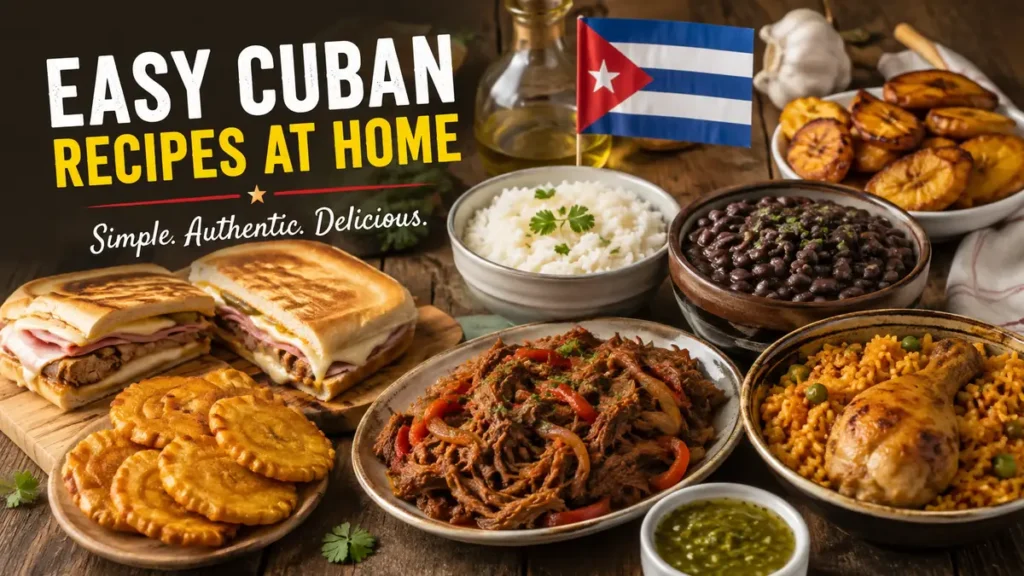
You do not need a restaurant kitchen, hard-to-find equipment, or years of cooking experience to bring Cuban flavors to your table. Many classic dishes begin with remarkably practical ingredients: garlic, onions, bell peppers, citrus, rice, beans, plantains, pork, and warm spices.
If you are looking for easy cuban recipes at home, start with dishes such as picadillo, Cuban black beans, arroz con pollo, tostones, and yuca con mojo. Once you learn a basic sofrito and a bright garlic-citrus mojo, you can use those flavor foundations across several Cuban meals.
Cuban cooking reflects Spanish, African, Caribbean, and Indigenous influences, with dishes ranging from slow-cooked meats to rice, beans, fried plantains, sandwiches, pastries, and custard desserts. The good news for home cooks is that you can start with the simpler classics and build from there.
What Makes Cuban Food So Flavorful?
Cuban food often gets described as “bold,” but that does not necessarily mean hot or heavily spiced. Much of its character comes from layering savory and acidic flavors.
A handful of ingredients appear again and again:
- Garlic
- Onion
- Bell pepper
- Oregano
- Cumin
- Bay leaves
- Citrus juice
- Olive oil
- Tomato sauce
- Rice
- Black beans
- Green and ripe plantains
Two preparations are particularly useful to understand: sofrito and mojo.
Sofrito: A Savory Starting Point
Sofrito is an aromatic mixture commonly built around ingredients such as onions, peppers, and garlic. It forms a flavor base for dishes including beans, rice, stews, and shredded meats.
The exact preparation can vary from household to household. That is part of home cooking: family recipes rarely behave like laboratory formulas.
For a basic version, finely chop onion and bell pepper, then gently sauté them in oil. Add minced garlic toward the end so it becomes fragrant without burning.
Make extra and refrigerate a small batch for your next meal.
Mojo: Garlic and Citrus Working Together
Mojo is another useful building block, especially with pork and yuca. Cuban-style mojo commonly combines plenty of garlic with citrus and oil, producing a sharp, aromatic marinade or sauce. Roast pork marinated in garlicky citrus mojo is one of the best-known applications.
Traditional recipes may use sour orange. If it is difficult to find where you live, a combination of orange and lime juice can provide a practical home-kitchen alternative, although the flavor will not be exactly identical.
Once those two foundations make sense, many Cuban dishes become much less intimidating.
1. Cuban Picadillo for an Easy Weeknight Dinner
If this is your first attempt at Cuban cooking, picadillo is a forgiving place to begin.
Cuban picadillo is a ground-beef dish commonly prepared with tomato, olives, seasonings, and, in some versions, raisins and capers. That combination creates the savory, salty, slightly sweet contrast associated with the dish.
Simple Ingredients
For approximately four servings, use:
- 1 pound ground beef
- 1 small onion, diced
- 1 small bell pepper, diced
- 3 garlic cloves, minced
- 1/2 cup tomato sauce
- 1 teaspoon ground cumin
- 1/2 teaspoon dried oregano
- 1 bay leaf
- 1/3 cup sliced green olives
- 2 tablespoons raisins, optional
- 1 tablespoon capers, optional
- Salt and black pepper
- A little olive oil
How to Make It
Cook the onion and bell pepper in a little oil until softened. Stir in garlic and cook briefly.
Add the ground beef and break it apart with a spoon. Once browned, stir in tomato sauce, cumin, oregano, bay leaf, olives, and raisins or capers if using.
Let everything simmer gently until the sauce reduces and coats the beef.
Serve your picadillo with white rice and black beans.
Quick takeaway: Picadillo is particularly useful for beginners because it delivers familiar Cuban flavors without requiring long marinating or roasting.
2. Cuban Black Beans
A pot of frijoles negros can turn plain white rice into a satisfying meal.
Cuban-style black beans are traditionally paired with white rice, while black beans cooked together with rice are associated with Moros y Cristianos. Cuban recipe collections consistently feature both preparations among core dishes.
For an easier weeknight version, canned black beans save considerable time.
Easy Black Beans
You will need:
- 2 cans black beans
- 1 small onion
- 1/2 green bell pepper
- 3 garlic cloves
- 1 bay leaf
- 1/2 teaspoon cumin
- 1/2 teaspoon oregano
- 1 tablespoon olive oil
- Salt and pepper
- A small splash of vinegar, to taste
Sauté the onion and pepper until tender. Add garlic, followed by the beans and their liquid, bay leaf, cumin, and oregano.
Simmer until the beans become flavorful and the liquid thickens slightly. Taste before adding salt, particularly when using canned beans.
A little vinegar added near the end can brighten a pot that tastes too heavy or flat.
3. Arroz con Pollo: Cuban Chicken and Rice
Few things simplify dinner like cooking your protein and rice in the same pot.
Arroz con pollo combines seasoned chicken with rice, aromatics, broth, tomato, and seasonings. Traditional Cuban versions may also include peas and a coloring or seasoning ingredient such as Bijol.
A Home-Friendly Method
Brown seasoned chicken thighs in a large heavy pot and remove them temporarily.
Cook onion, bell pepper, and garlic in the same pot. Add tomato sauce, chicken broth, oregano, cumin, and a bay leaf.
Return the chicken, stir in the rice, and bring the liquid to a boil. Lower the heat, cover, and cook gently until the rice and chicken are done.
If using frozen peas, add them toward the end rather than at the beginning so they retain better texture.
The most common mistake here is repeatedly lifting the lid and stirring the rice. Give it time to cook undisturbed.
4. Crispy Cuban Tostones
Tostones prove that a short ingredient list can still produce something memorable.
They are made from green plantains, not sweet ripe plantains. The pieces are fried once, flattened, then fried again to develop a crisp exterior.
How to Make Tostones
- Peel green plantains and cut them into thick rounds.
- Heat frying oil over medium heat.
- Fry the pieces until lightly golden and beginning to soften.
- Remove and drain briefly.
- Flatten each piece with a tostonera or the flat bottom of a sturdy cup.
- Return them to the oil.
- Fry until crisp and golden.
- Drain and season immediately with salt.
Serve them hot.
Waiting too long is the enemy of a good tostone. Their texture is at its best soon after the second fry.
For extra flavor, serve them with a garlicky mojo-style dipping sauce.
5. Yuca con Mojo
Yuca, also called cassava, is a starchy root vegetable that works beautifully with garlic and citrus.
Yuca con mojo pairs tender boiled yuca with a tangy garlic sauce and is commonly served alongside roast pork, rice, beans, or grilled meat.
Simple Preparation
Peel the yuca carefully and cut it into manageable pieces, removing the tough central core as needed.
Boil until completely tender.
Meanwhile, prepare a sauce with:
- Garlic
- Citrus juice
- Olive oil
- Sliced onion
- Salt
Pour the warm mojo over the cooked yuca shortly before serving.
The contrast is what makes this dish work: mild, starchy yuca underneath a sharp, aromatic sauce.
6. Easy Ropa Vieja
Ropa vieja is one of the most recognizable dishes associated with Cuban cuisine.
The dish features beef cooked until tender enough to shred, then combined with a seasoned tomato-based sauce, peppers, onions, and other aromatics. Recipe collections frequently place it alongside arroz con pollo and picadillo as a central Cuban classic.
Making Ropa Vieja Easier at Home
You do not need to hover over the stove all afternoon.
A slow cooker or pressure cooker can handle much of the work.
Cook beef with:
- Onion
- Bell peppers
- Garlic
- Tomato sauce
- Broth
- Cumin
- Oregano
- Bay leaf
- Green olives
Once the beef becomes tender, shred it and return it to the sauce.
Let it simmer briefly so those freshly exposed strands of meat absorb the cooking liquid.
Serve with white rice, black beans, and plantains for a fuller meal.
7. Vaca Frita
Have leftover cooked shredded beef? Do not automatically turn it into another stew.
Make vaca frita.
This Cuban dish uses shredded beef flavored with garlic and citrus and cooked until some of its edges become crisp. It provides a noticeably different texture from saucier ropa vieja. Cuban recipe collections describe vaca frita as crispy shredded flank beef flavored with lime and garlic.
Heat oil in a wide skillet, spread the seasoned shredded beef into a relatively thin layer, and give it enough contact with the pan to brown.
Avoid constant stirring.
You want browned edges, not steamed meat.
Finish with lime and serve with sautéed onions, rice, and beans.
8. Weeknight Mojo Pork
Traditional lechón asado is worth making when you have time for a larger roast, but mojo flavors can also work on smaller cuts of pork.
Mojo-marinated roast pork is a major part of Cuban cooking and is also used in the classic Cubano sandwich.
For a quicker meal, marinate pork chops or smaller pieces of pork with:
- Orange juice
- Lime juice
- Plenty of garlic
- Oregano
- Cumin
- Olive oil
- Salt
- Black pepper
Let the meat marinate in the refrigerator, then cook until it reaches a safe internal temperature appropriate for the cut.
The important lesson is not simply “add citrus.” Balance matters. Too much acidic juice for too long can change the exterior texture of the meat.
9. Lechón Asado for a Weekend Meal
When you have more time, graduate from quick mojo pork to lechón asado.
Pork is especially prominent in Cuban cooking, and citrus-garlic mojo is strongly associated with Cuban roast pork.
Pork shoulder works particularly well because slow cooking gives its connective tissue and fat enough time to soften.
Marinate it with mojo, ideally allowing plenty of time for the aromatics to flavor the exterior. Roast slowly until tender.
For crispier edges, increase the heat or use the broiler briefly at the end, watching carefully to prevent burning.
Save the leftovers.
They have another job tomorrow.
10. A Homemade Cubano Sandwich
Yesterday’s roast pork can become today’s lunch.
A classic Cubano, or Cuban sandwich, brings roast pork together with ham, cheese, pickles, mustard, and bread before the sandwich is pressed and heated.
Cuban recipe sources describe the sandwich as a pressed preparation containing ham and Cuban-style roast pork, while broader Cuban food collections identify lechón asado as a key component.
Build Your Sandwich
Layer:
- Cuban bread or a suitable crusty substitute
- Mustard
- Sliced ham
- Roast pork
- Swiss cheese
- Dill pickles
Press the sandwich on a plancha, sandwich press, or heavy skillet.
No press? Put the sandwich in a skillet and place another heavy pan on top.
The goal is a warm, compressed sandwich with crisp bread and melted cheese—not merely a pile of fillings between two slices.
11. Plátanos Maduros
Not every plantain should become a tostone.
As plantains ripen, their skins move from green toward yellow and eventually become heavily spotted or dark. Their flesh gets softer and sweeter.
Those ripe plantains are ideal for maduros.
Slice them diagonally and fry until caramelized and tender.
The sweetness makes them especially good beside salty or savory dishes such as picadillo, roast pork, beans, or shredded beef.
One beginner mistake is using green plantains and expecting sweet maduros. If the fruit is still green and firm, save it for tostones.
12. Moros y Cristianos
Rice and black beans can be served separately, but they can also come together.
Moros y Cristianos is a traditional black-beans-and-rice preparation; Cuban recipe references identify the black beans and white rice as the defining components.
The practical advantage is obvious: you get starch and beans in one cohesive side dish.
Cook the beans with aromatics and seasonings, then use their flavorful liquid when preparing the rice so the grains take on their characteristic darker color and savory taste.
Serve it with pork, chicken, beef, or yuca.
13. Cuban-Style Flan
After all that garlic, citrus, and cumin, dessert should feel different.
Cuban flan is a rich caramel custard made from eggs and milk, often incorporating condensed or evaporated milk.
The Basic Process
First make caramel by melting sugar carefully until amber.
Pour the caramel into your baking dish.
Prepare a custard mixture with eggs and milk, pour it over the caramel, and bake gently—typically in a water bath—until the custard is set but still has a slight movement in the center.
Cool it thoroughly before unmolding.
Patience matters here. Trying to turn out warm flan is a good way to turn dessert into a small kitchen disaster.
14. Arroz con Leche
If flan feels too ambitious, rice pudding is another comforting option.
Arroz con leche is a creamy rice dessert that appears across Spanish and Latin American cooking traditions, including Cuban kitchens and Cuban recipe collections.
A simple home version combines cooked rice with milk, sugar, cinnamon, and a little vanilla.
Cook gently until thick and creamy.
Some cooks prefer it warm. Others refrigerate it until cold.
Either way, cinnamon on top gives the dessert its familiar aromatic finish.
15. Cuban Café con Leche and Tostada
Cuban food at home does not have to mean a large dinner.
A simple breakfast can be just as satisfying.
Cuban café con leche combines strong coffee with hot milk and is commonly served with buttered Cuban toast.
Prepare strong espresso-style coffee, sweeten according to preference, and combine it with hot milk.
Serve it with tostada cubana—buttered Cuban bread pressed or toasted until warm and crisp.
It is a simple combination, which is precisely why ingredient quality and preparation matter.
How to Build a Complete Cuban Meal at Home
You do not need to cook five complicated recipes at once.
Think in components.
| Main Dish | Rice or Beans | Plantain/Yuca Side | Extra |
|---|---|---|---|
| Picadillo | White rice + black beans | Maduros | Avocado |
| Ropa vieja | White rice | Tostones | Lime |
| Mojo pork | Moros y Cristianos | Yuca con mojo | Sliced onion |
| Arroz con pollo | Built into the dish | Tostones | Simple salad |
| Vaca frita | White rice + black beans | Maduros | Lime and onions |
For a first Cuban dinner, picadillo with white rice and black beans is probably the least stressful combination.
Once you are comfortable with that, add tostones or maduros.
Save ropa vieja and lechón asado for days when you have more cooking time.
The Cuban Pantry: What to Keep on Hand
Making Cuban food becomes considerably easier when the basic ingredients are already in your kitchen.
A practical pantry includes:
- Long-grain white rice
- Black beans
- Tomato sauce
- Green olives
- Cumin
- Dried oregano
- Bay leaves
- Olive oil
- Vinegar
- Garlic
- Onions
Then buy fresh ingredients such as bell peppers, citrus, plantains, yuca, chicken, beef, or pork according to the dish you plan to make.
You do not need every specialty ingredient before starting.
That approach usually leads to an expensive pantry and three jars you never open again.
Learn a few recipes first. Expand naturally.
Can You Make Cuban Food Without Sour Oranges?
Yes, with a qualification.
Sour orange has a distinctive balance that is difficult to reproduce perfectly. If you can buy naranja agria, use it when the recipe calls for it.
If you cannot find it, combining regular orange juice with lime juice provides sweetness, fragrance, and acidity that can work as a practical substitute in home mojo.
Taste your mixture before adding it to the meat. It should be noticeably citrusy and tart rather than tasting like breakfast orange juice.
Are Cuban Recipes Spicy?
Cuban food is generally more well-seasoned than chile-hot.
Garlic, cumin, oregano, citrus, peppers, onions, bay leaves, and slow-cooked aromatics create depth without requiring intense chile heat.
Bell peppers appear frequently, but their job is primarily flavor and aroma rather than heat.
So if you enjoy flavorful food but dislike extremely spicy meals, many traditional Cuban dishes are approachable.
What Is the Easiest Cuban Food for Beginners?
Start with picadillo, black beans, maduros, or tostones.
Picadillo uses familiar ground-beef cooking techniques. Canned beans can make frijoles negros manageable on a weeknight. Maduros require little beyond ripe plantains and frying, while tostones teach you the basic twice-fried green-plantain method.
After those, try arroz con pollo.
Ropa vieja and roast pork are not necessarily technically difficult, but they take longer because tenderness depends on adequate cooking time.
Common Mistakes When Cooking Cuban Food at Home
Burning the Garlic
Garlic is central to many of these flavors, but burnt garlic becomes unpleasantly bitter.
When making sofrito, cook your onions and peppers first and add minced garlic later.
Confusing Green and Ripe Plantains
Green plantains are firm, starchy, and excellent for tostones.
Very ripe plantains are softer and sweeter, making them better for maduros.
They are not interchangeable if you want the expected texture and flavor.
Rushing Tough Cuts of Meat
Ropa vieja and roast pork need enough time to become tender.
If the meat is stubbornly tough, it may simply need longer cooking.
Underseasoning Rice and Beans
Rice and beans sound simple, but simple foods expose seasoning mistakes quickly.
Taste throughout cooking and adjust carefully.
Skipping Acidity
Citrus and vinegar can provide contrast to rich meats and beans. If a finished dish tastes heavy even though it has enough salt, a little acidity may be what is missing.
Overcomplicating the Menu
Your first Cuban meal does not need roast pork, ropa vieja, three sides, sandwiches, coffee, and flan.
Cook one main dish well.
That is a much better introduction than exhausting yourself trying to reproduce an entire restaurant menu.
How to Make Cuban Cooking Easier During the Week
The smartest approach is to prepare ingredients that work across multiple meals.
Make a batch of sofrito and use it in beans, picadillo, and other savory dishes.
Prepare black beans ahead and refrigerate portions for quick meals. Cook extra roast pork and use leftovers for Cubano sandwiches.
Even leftover shredded beef can get a second life as crispy vaca frita.
This overlap is one of the practical advantages of learning a cuisine through its foundational flavors rather than treating every recipe as a completely separate project.
Start With One Cuban Dish and Build From There
The best easy cuban recipes at home are not necessarily watered-down versions of traditional food. They are recipes that use approachable techniques while preserving the combinations that give the dishes their identity: aromatic sofrito, garlic and citrus, properly cooked rice and beans, ripe or green plantains used for the right purpose, and meat given enough time to become tender.
Start with picadillo if you want a fast dinner. Try black beans and white rice when you want something inexpensive and comforting. Make tostones when you want to practice a classic plantain technique. When the weekend arrives, move on to ropa vieja or mojo-marinated roast pork.
Once sofrito and mojo become familiar rather than mysterious, Cuban home cooking gets much easier—and one recipe naturally leads to the next.