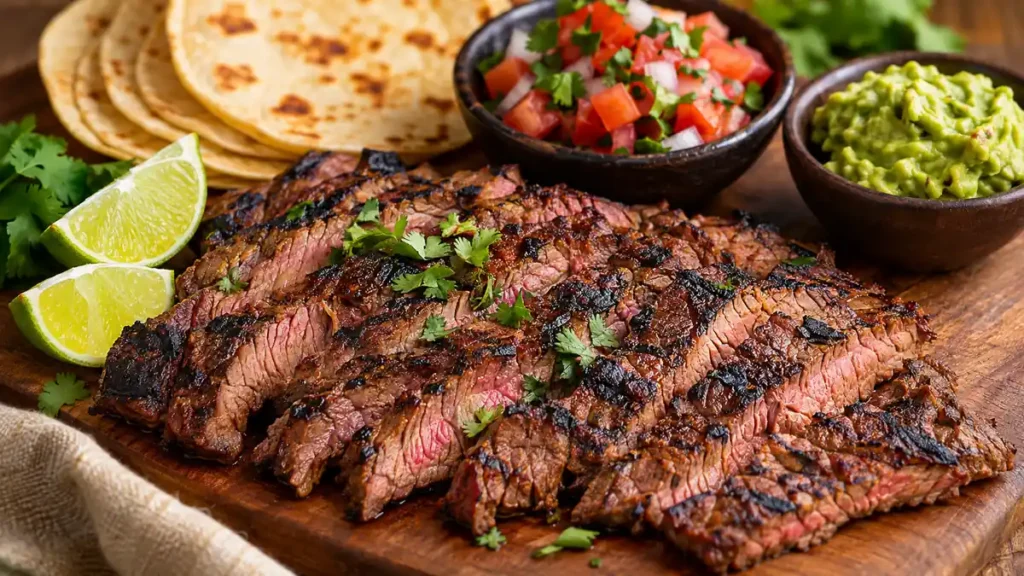
A great steak can turn tough and dry in minutes. The secret to delicious carne asada is choosing the right beef, balancing the marinade, and cooking it quickly over intense heat.
Known for its smoky aroma, beautifully charred edges, and juicy interior, this Mexican favorite is much more than ordinary grilled steak. It is an essential part of backyard gatherings, family meals, and street-food traditions.
carne asada is a Mexican grilled beef dish traditionally prepared with thin cuts of steak, often seasoned or marinated with citrus, garlic, salt, and spices. The meat is cooked over high heat, rested, and sliced against the grain. It is commonly served in tacos, burritos, or alongside tortillas, salsa, and grilled vegetables.
The preparation is straightforward, but small details make a remarkable difference. Understanding the cuts of beef, marinade ingredients, grilling temperatures, and slicing techniques helps produce tender, flavorful meat without unnecessary complications.
What Is carne asada?
The Spanish term carne asada literally translates to “grilled meat” or “roasted meat.” In Mexican cooking, it generally refers to beef cooked over an open flame or hot grill, often with a simple seasoning or a flavorful marinade.
Unlike a thick steak served whole, the finished beef is commonly sliced thinly or chopped into bite-sized pieces. This makes it especially suitable for tacos, quesadillas, tortas, and other Mexican dishes.
Its defining characteristics include:
- Smoky flavor: Charcoal or wood grilling gives the beef a distinctive aroma.
- Charred exterior: High heat creates a browned, savory crust.
- Tender texture: Proper cutting and slicing help make the meat easier to chew.
- Bright seasoning: Citrus, garlic, herbs, and chiles complement the beef.
- Versatility: The grilled meat works as a main course or filling.
Not every preparation requires an elaborate marinade. Some traditional versions rely primarily on salt, fresh beef, and the flavor of the grill.
Where Did carne asada Originate?
The dish is particularly associated with northern Mexico, including the cattle-raising regions of Sonora and Chihuahua.
In Sonora, grilling beef is both a cooking tradition and a social occasion. Families and friends gather around the grill, prepare tortillas, roast vegetables, and share freshly cooked meat.
The northern Mexican tradition emphasizes the natural flavor of beef, often enhanced by charcoal or mesquite wood.
Over time, regional variations developed throughout Mexico and the southwestern United States. Mexican-American cooking introduced additional marinade ingredients and serving styles, while preserving the essential technique of grilling beef over high heat.
Today, carne asada is popular in Mexican restaurants, taquerías, home kitchens, and outdoor celebrations.
What Does carne asada Taste Like?
The flavor is primarily rich, beefy, and savory, with a smoky finish.
A citrus-based marinade introduces mild acidity, while garlic, cumin, and oregano provide aromatic depth. Chiles can add warmth or noticeable heat, depending on the variety and quantity used.
The browned exterior delivers a deeper roasted flavor than the interior. When properly cooked, the meat remains juicy and pleasantly chewy rather than dry or rubbery.
The final taste depends on three major factors: the beef cut, seasoning, and cooking method.
Best Cuts of Beef for carne asada
Choosing the right steak is one of the most consequential decisions.
Thin, flavorful cuts that tolerate quick, high-temperature cooking are particularly suitable. Skirt steak, flank steak, and flap meat are common choices.
Beef Skirt | Buy British Skirt Steak Online | The Black Farmer
Skirt Steak (Arrachera)
A richly flavored, thin cut with prominent muscle fibers. Excellent for quick grilling and one of the most recognizable choices for Mexican grilled beef.
Choice Angus Flank Steak – Châtel Farms
Flank Steak
Leaner and typically thicker than skirt steak. It produces attractive slices but benefits from careful cooking and thin slicing across the grain.
What Is Bavette Steak? A Complete Guide to This Flavorful Cut | Allen Brothers
Flap Meat (Ranchera or Bavette)
A loosely textured cut with excellent beef flavor. Popular in Mexican-style grilling and well suited to absorbing surface seasonings.
Comparing Common Steak Cuts
| Beef cut | Texture | Flavor | Best use |
|---|---|---|---|
| Skirt steak | Loose, coarse fibers | Very rich | Traditional grilling and tacos |
| Flank steak | Lean, firm | Strong beef flavor | Thinly sliced steak |
| Flap meat | Loose, tender when sliced correctly | Rich | Tacos and chopped beef |
| Flat iron | Relatively tender | Well-marbled | Indoor or outdoor grilling |
| Sirloin | Moderately tender | Balanced | Budget-conscious variations |
Is Skirt Steak Better Than Flank Steak?
Skirt steak is often preferred because its thin shape develops a flavorful crust quickly. Its loose muscle structure also works well with marinades.
Flank steak is a useful alternative, especially when serving larger, evenly sliced portions.
Neither cut is automatically superior. Skirt steak generally offers more intense flavor, while flank steak provides a leaner presentation.
For either cut, slicing against the grain is essential.
What About Arrachera and Ranchera?
These names are common in Mexican butcher shops, known as carnicerías.
Arrachera generally refers to skirt steak, although naming conventions vary by region and retailer.
Ranchera is frequently used for flap meat or thinly prepared beef sold for grilling. Because labels are not always standardized, it is helpful to ask the butcher which anatomical cut is being sold.
The most useful qualities to look for are visible muscle grain, appropriate thickness, freshness, and sufficient marbling.
carne asada Marinade: Ingredients and Flavor Balance
A well-balanced marinade enhances beef without overwhelming its natural flavor.
Many popular versions combine fresh citrus juice, garlic, oil, herbs, chiles, and seasonings. Other traditional preparations are considerably simpler.
The purpose is to add flavor, support surface browning, and create a pleasant contrast between the savory meat and bright accompaniments.
Carne Asada Mexican Street Tacos (Authentic Street Style) – My Home Made Recipe
Essential Marinade Ingredients
For approximately 2 pounds (900 grams) of steak, use the following combination.
| Ingredient | Quantity | Purpose |
|---|---|---|
| Fresh orange juice | ⅓ cup | Sweetness and acidity |
| Fresh lime juice | 3 tablespoons | Bright citrus flavor |
| Olive oil | ¼ cup | Distributes flavors and coats meat |
| Garlic | 4 cloves, minced | Savory aroma |
| Fresh cilantro | ¼ cup, chopped | Herbal freshness |
| Ground cumin | 1 teaspoon | Earthy warmth |
| Dried Mexican oregano | 1 teaspoon | Aromatic seasoning |
| Jalapeño | 1 small, minced | Mild to moderate heat |
| Kosher salt | 1½ teaspoons, adjusted to salt type | Seasoning |
| Black pepper | ½ teaspoon | Gentle spice |
This recipe produces a bright, moderately seasoned marinade suitable for skirt, flank, or flap steak.
Salt measurements may need adjustment depending on the crystal size and brand. Fine table salt is denser by volume than many kosher salts.
Why Are Orange and Lime Juice Used?
Citrus juice serves two functions.
First, it introduces acidity that balances the richness of grilled beef. Second, it changes proteins at the surface of the meat.
However, citrus does not deeply tenderize a thick steak. Its effects are concentrated near the exterior.
Too much acid or an excessively long marinating period can produce an unpleasantly soft or chalky surface.
Orange juice contributes mild sweetness, while lime provides sharper acidity. Some regional preparations use sour orange, also called Seville orange, which offers a more tart flavor.
Optional Ingredients for More Complex Flavor
Several ingredients can be added without changing the fundamental character of the dish.
Guajillo chiles provide mild heat, red color, and fruity notes. Ancho chiles contribute earthy sweetness, while chipotle peppers in adobo sauce add smoke and stronger heat.
A small amount of soy sauce can deepen savory flavor, although it is not essential to traditional Mexican preparations.
Other variations include red wine vinegar, lemon juice, coriander seed, smoked paprika, or a little brown sugar.
Sugar should be used carefully. Excessive sweetness can cause the exterior to burn before the center reaches the desired temperature.
How Long Should You Marinate the Steak?
For the citrus-forward recipe above, refrigerating the beef for approximately 2–6 hours provides a practical balance.
| Marinating time | Expected result |
|---|---|
| 30 minutes | Light surface seasoning |
| 1–2 hours | Noticeable citrus and garlic flavor |
| 2–6 hours | Balanced flavor development |
| 6–8 hours | Stronger surface effects from acid |
| Overnight | Potentially excessive for acidic marinades |
Longer is not necessarily better.
Recipes with little or no acidic liquid may allow longer seasoning periods, but highly citrus-based mixtures should generally be used for shorter durations.
Always marinate beef in the refrigerator, not on a kitchen counter.
How to Make carne asada Step by Step
The essential technique combines a flavorful marinade, a thoroughly heated cooking surface, and a short cooking time.
Easy citrus-marinated grilled steak
4–6 servings
Prep
15 min
Marinate
2–6 hrs
Cook
6–12 min
Step 1: Prepare the Beef
Start with approximately 2 pounds of skirt steak, flank steak, or flap meat.
Trim away excessive surface fat and any tough silverskin. Leave reasonable marbling intact because it contributes flavor.
If using a long skirt steak, cut it into manageable sections. Pay attention to the direction of the muscle fibers so you can slice the cooked meat correctly later.
Avoid pounding the beef excessively. Thin cuts generally need little mechanical tenderizing.
Step 2: Mix the Marinade
Combine the orange juice, lime juice, olive oil, garlic, cilantro, cumin, oregano, jalapeño, salt, and black pepper.
Whisk until evenly distributed.
A blender can produce a smoother mixture, but it is not necessary. Finely chopped ingredients work well and create a more rustic appearance.
Taste a small amount before it touches raw meat. The mixture should be pleasantly acidic, aromatic, and well seasoned.
Step 3: Marinate the Steak
Place the beef in a shallow glass dish or food-safe resealable bag.
Pour the marinade over the meat, turning each piece to coat both sides.
Cover or seal the container and refrigerate for 2–6 hours.
If the meat is stacked, turn it occasionally to encourage even exposure.
Do not reuse marinade that has contacted raw beef as a finishing sauce unless it is boiled thoroughly first.
Step 4: Preheat the Grill
Carne Asada / MIDTØSTEN OG NORDAFRIKA | Lag Mat
Prepare a charcoal or gas grill for high, direct heat.
A grill temperature around 450–500°F (232–260°C) is a useful starting point for thin steak.
For charcoal cooking, allow the coals to become hot and establish a cooking area with strong direct heat. A cooler zone is useful for moving meat away from flare-ups.
For a gas grill, preheat thoroughly before placing the steak on the grates.
Clean and lightly oil the grates to reduce sticking.
Step 5: Remove Excess Marinade
Lift the steak from the marinade and allow the excess liquid to drip away.
Pat the surface lightly with paper towels.
This step matters because wet meat initially steams rather than browns. Excess moisture can delay crust formation, while large pieces of garlic or herbs may burn.
A thin coating of seasoning can remain.
Discard the used marinade unless it will be properly boiled before reuse.
Step 6: Grill Over High Heat
Place the steak directly over the hot cooking surface.
For relatively thin skirt steak, approximately 3–4 minutes per side may be sufficient. Thicker flank steak can require longer.
Cooking time varies with thickness, grill temperature, and the desired level of doneness.
Use an instant-read meat thermometer rather than relying entirely on timing.
Turn the steak when the first side has developed a pronounced brown crust. Move it to a cooler area if dripping fat causes persistent flames.
Avoid repeatedly pressing down on the beef with a spatula, which can squeeze out juices.
Step 7: Rest the Meat
Transfer the grilled beef to a clean cutting board.
Allow it to rest for approximately 5–10 minutes, depending on thickness.
Resting gives the temperature and moisture within the meat time to become more evenly distributed.
Loosely tenting the steak with foil can help retain warmth, but tightly wrapping it may soften the crust.
Step 8: Slice Against the Grain
Best Carne Asada Recipe | Downshiftology
Look closely at the direction of the visible muscle fibers.
Cut perpendicular to those fibers using a sharp knife. This shortens the muscle strands in each bite and improves perceived tenderness.
For tacos, slice the steak thinly before chopping it into smaller pieces.
Cutting with the grain leaves longer fibers intact and can make even properly cooked beef seem chewy.
Quick takeaway: The three most reliable ways to improve the finished steak are to preheat the grill thoroughly, avoid overcooking, and slice thinly against the grain.
Cooking Temperature and Techniques for Juicy Steak
The ideal cooking method produces a deeply browned exterior without drying out the center.
Because the cuts commonly used for this dish are relatively thin, the difference between tender and overcooked meat can be only a few minutes.
What Temperature Should carne asada Be Cooked To?
Different levels of doneness produce different textures.
| Doneness | Internal temperature | Appearance |
|---|---|---|
| Rare | 120–125°F (49–52°C) | Red center |
| Medium-rare | 130–135°F (54–57°C) | Warm red-pink center |
| Medium | 140–145°F (60–63°C) | Pink center |
| Medium-well | 150–155°F (66–68°C) | Slightly pink center |
| Well-done | 160°F+ (71°C+) | Little or no pink |
These are common culinary doneness ranges, not food-safety guarantees.
For food safety, the USDA recommends cooking whole cuts of beef steak to a minimum internal temperature of 145°F (63°C), followed by at least a three-minute rest. Lower temperatures sometimes suggested in steak recipes do not meet that recommendation.
A thermometer inserted into the thickest part provides the most reliable reading. Remember that the internal temperature may continue rising slightly after removing the meat from the heat.
Charcoal Grill vs. Gas Grill
Both cooking methods can produce excellent results, although the flavor differs.
Charcoal grilling provides the traditional smoky character associated with northern Mexican outdoor cooking. Mesquite charcoal or wood can contribute a distinctive aroma.
Charcoal also offers intense radiant heat, which helps create a dark exterior crust.
However, temperature control requires attention, and dripping fat can cause flare-ups.
Gas grilling is more convenient and allows easier temperature adjustments. It produces consistent results with less preparation and cleanup.
The main trade-off is that gas generally produces less wood-smoke flavor.
For either method, the priority is maintaining sufficient heat to brown the steak before it becomes dry.
Can You Make carne asada Without a Grill?
Yes. A cast-iron skillet, stovetop grill pan, or oven broiler can produce a flavorful alternative.
Arrachera Marinada: Receta Fácil (42 min) | Recetas Mexas
For the stovetop method:
- Preheat a heavy cast-iron skillet over medium-high to high heat.
- Pat the marinated steak dry to remove excess moisture.
- Add a small amount of high-smoke-point cooking oil.
- Place the steak in the pan without overcrowding.
- Sear until a browned crust develops, then turn.
- Check the internal temperature with a thermometer.
- Rest the meat before slicing against the grain.
A cast-iron skillet is particularly useful because it retains heat well when the beef is added.
For oven preparation, position the rack at an appropriate distance from the broiler and cook the steak on a broiler-safe pan. Watch closely because thin beef can cook rapidly.
The broiler can create excellent surface browning, although it will not reproduce the same smoky character as charcoal.
Why Does the Meat Develop a Brown Crust?
The browning comes primarily from the Maillard reaction, a series of chemical reactions between amino acids and reducing sugars under heat.
These reactions generate complex roasted aromas and savory flavors.
Surface moisture interferes with rapid browning because energy is initially used to evaporate water.
That explains why removing excess marinade and preheating the cooking surface are so effective.
A small amount of sugar in a marinade can contribute additional caramelization, but too much increases the risk of scorching.
How to Serve carne asada
Freshly grilled beef can be served as a complete main dish or incorporated into a variety of Mexican and Mexican-American preparations.
The best accompaniments provide contrast. Bright salsa, crisp onions, fresh herbs, and warm tortillas balance the richness of the meat.
Traditional carne asada Tacos
three carne asada mexican street tacos in corn tortilla with lime
Tacos de asada are among the most recognizable ways to enjoy the dish.
Warm corn tortillas are filled with chopped grilled beef and finished with simple toppings.
Common additions include finely diced white onion, fresh cilantro, salsa roja, salsa verde, and lime wedges.
In northern Mexico, particularly Sonora, flour tortillas are also an important part of the regional food tradition.
The tortillas should be warm and pliable. Heating them briefly on a comal, a flat Mexican cooking surface, improves both texture and flavor.
A good taco does not require excessive toppings. The beef should remain the central flavor.
Burritos, Quesadillas, and Tortas
The same grilled steak can be used in several other dishes.
Burritos combine sliced or chopped beef with fillings such as beans, rice, salsa, or guacamole inside a flour tortilla.
Quesadillas pair the meat with melted cheese, often using Oaxaca cheese or another suitable melting variety.
Tortas use Mexican bread rolls, such as bolillo or telera, filled with beef and accompaniments like avocado, beans, and salsa.
Tostadas provide a crisp base for the meat, beans, vegetables, and fresh toppings.
These dishes are related but distinct. Their fillings and preparation styles vary across Mexican regions and Mexican-American communities.
Best Side Dishes
| Side dish | Why it works |
|---|---|
| Mexican rice | Mild, savory accompaniment |
| Refried beans | Creamy texture and additional protein |
| Pico de gallo | Fresh tomato, onion, and lime |
| Guacamole | Rich, creamy contrast |
| Grilled scallions | Sweet, lightly charred flavor |
| Grilled nopales | Earthy cactus flavor |
| Pickled jalapeños | Acidity and heat |
| Radishes | Crisp, refreshing texture |
| Roasted peppers | Sweetness and smoky depth |
Grilled onions and peppers are particularly convenient because they can cook while the steak rests.
Fresh salsa also helps balance the richness of the beef without masking its flavor.
Which Salsa Goes Best with Grilled Beef?
Salsa roja, made with red tomatoes or chiles, provides a familiar savory pairing.
Salsa verde, commonly prepared with tomatillos, adds a tangier flavor.
For a smoky combination, roasted tomato salsa with charred serrano peppers works particularly well.
Heat levels can be adjusted according to preference. A mild salsa allows the beef’s flavor to remain prominent, while a hotter version introduces a stronger contrast.
Common Mistakes That Make carne asada Tough
Even good-quality steak can turn chewy when handled incorrectly.
Most problems arise from the wrong cut, excessive acid, insufficient cooking heat, overcooking, or improper slicing.
Marinating for Too Long
An acidic marinade is not a guarantee of tenderness.
Leaving thin beef in a strong citrus mixture overnight can produce an undesirable surface texture.
The exterior may become soft while the center remains relatively unchanged.
For citrus-heavy marinades, a few hours is usually sufficient. If preparing the meat well in advance, consider seasoning with salt and dry spices first, then adding acidic ingredients closer to cooking time.
Cooking on a Grill That Is Not Hot Enough
A moderately warm grill may cook the center before the exterior develops a satisfying crust.
This can produce gray, relatively dry meat without the characteristic roasted flavor.
Allow the grill to preheat properly, and avoid overcrowding the cooking surface.
If cooking multiple steaks, leave enough space for heat to circulate.
Using Too Much Marinade During Cooking
Pouring large amounts of marinade onto hot coals or a skillet can create excessive smoke, flare-ups, and uneven browning.
Garlic, cilantro, and sugar may burn before the steak is cooked.
Remove excess liquid before grilling and use clean, unused marinade or a separately prepared sauce for finishing.
Slicing in the Wrong Direction
This is one of the easiest mistakes to make.
Skirt and flank steaks have visible muscle fibers running in a particular direction.
When cut parallel to those fibers, each bite contains long strands that require more chewing.
Slicing perpendicular to the fibers shortens them and creates a more tender eating experience.
For skirt steak, cutting the long piece into smaller sections before slicing can make the process easier.
Overcooking Thin Steak
Thin cuts lose moisture rapidly.
A steak that needs only several minutes over high heat can become dry if left on the grill while other food is prepared.
Keep the thermometer and serving platter nearby, and check the temperature early.
For food safety, follow the recommended minimum temperature and resting period rather than relying on color alone.
Forgetting to Rest the Meat
Cutting immediately after grilling can result in more juices collecting on the cutting board.
A short rest helps reduce that loss.
Resting does not fix an overcooked steak, but it improves the overall result when the meat has been cooked properly.
Quick takeaway: If the steak tastes chewy, check the slicing direction first. If it tastes dry, review the cooking temperature and timing. If the surface seems mushy, reduce the marinade’s acidity or duration.
Nutrition, Storage, and Dietary Considerations
The nutritional profile depends on the beef cut, portion size, marinade, and accompaniments.
Grilled beef provides high-quality protein, iron, zinc, and vitamin B12. However, fattier cuts can also contain substantial amounts of saturated fat.
Is carne asada Healthy?
It can fit into a balanced diet, particularly when served in reasonable portions alongside vegetables and fiber-rich foods.
A typical 3-ounce (85-gram) cooked serving of relatively lean grilled beef may provide approximately 170–230 calories and 22–26 grams of protein, depending on the cut and fat content.
These are broad estimates rather than values for a specific recipe.
| Nutrient | General contribution |
|---|---|
| Protein | Supports muscle maintenance and tissue repair |
| Iron | Supports oxygen transport in the blood |
| Zinc | Contributes to normal immune function |
| Vitamin B12 | Supports nerve function and red blood cell production |
| Fat | Varies significantly by cut and trimming |
| Sodium | Depends on added salt and sauces |
For a lighter meal, serve the steak with grilled vegetables, fresh salsa, and beans rather than relying entirely on cheese-rich or heavily dressed accompaniments.
Lean flank steak generally contains less fat than some skirt steak preparations, although actual values vary.
Is It Gluten-Free?
Plain beef, citrus juice, garlic, herbs, and most individual spices are naturally gluten-free.
However, certain marinades contain conventional soy sauce, which usually includes wheat.
Prepared seasoning blends, sauces, and restaurant marinades may also contain gluten-containing ingredients.
People avoiding gluten should verify labels and use certified gluten-free products when necessary.
Corn tortillas are often gluten-free, but manufacturing practices and cross-contact can matter for people with celiac disease.
How Long Does Cooked carne asada Last?
Cooked beef should be refrigerated promptly in a covered, food-safe container.
According to USDA food-storage guidance, cooked beef leftovers can generally be kept in the refrigerator for 3–4 days at 40°F (4°C) or below.
For longer storage, freezing is an option. Cooked beef generally maintains good quality for approximately 2–3 months in the freezer, although it may remain safe longer when continuously frozen at 0°F (-18°C).
Do not leave cooked meat at room temperature for more than two hours, or more than one hour when the surrounding temperature exceeds 90°F (32°C).
Best Way to Reheat Leftovers
The main challenge when reheating grilled steak is preventing further moisture loss.
A covered skillet over moderate heat works well.
Add a small splash of water or broth, then warm the meat gently until it reaches 165°F (74°C), the recommended reheating temperature for leftovers.
A microwave can also be used, but short intervals and a covered container help reduce uneven heating.
Avoid repeatedly reheating the same portion.
Cold leftovers can also be incorporated into meals when they have been stored safely and handled properly.
carne asada vs. Other Mexican Beef Dishes
Mexican cuisine includes several grilled, braised, and slow-cooked beef preparations.
Although these dishes may appear in similar tacos or burritos, their ingredients, textures, and cooking methods are different.
| Dish | Main cooking method | Typical texture | Defining feature |
|---|---|---|---|
| Carne asada | High-heat grilling | Sliced or chopped steak | Smoky, charred beef |
| Carnitas | Slow cooking in fat | Tender, shredded pork | Rich pork flavor |
| Barbacoa | Slow cooking or steaming | Tender, shreddable meat | Deeply seasoned, moist texture |
| Birria | Slow braising or stewing | Tender, shredded meat | Chile-based broth or sauce |
| Al pastor | Vertical-spit roasting | Thinly sliced pork | Chile marinade and spit-roasted flavor |
| Fajitas | Grilling or skillet cooking | Sliced meat and vegetables | Sizzling presentation |
Carne Asada vs. Carnitas
The primary difference is the meat and cooking technique.
Carne asada is typically beef cooked quickly over high heat.
Carnitas are traditionally made from pork slowly cooked in fat until tender, often with crisped edges.
Both can be served in tacos, but they offer noticeably different textures and flavors.
Carne Asada vs. Barbacoa
Barbacoa refers to a slow-cooking tradition that can involve beef, lamb, goat, or other meats depending on the region.
The meat becomes tender through extended cooking, often with moisture and aromatic seasonings.
Grilled steak, by contrast, depends on direct heat and rapid browning.
Barbacoa is usually easier to shred, while grilled beef retains a more distinct steak-like texture.
Carne Asada vs. Fajitas
These preparations overlap because both may use skirt steak.
The distinction is primarily in presentation and culinary tradition.
Carne asada emphasizes grilled, seasoned beef, often served with tortillas and salsa.
Fajitas commonly feature strips of grilled or skillet-cooked meat alongside sautéed peppers and onions, frequently presented on a sizzling platter.
The terms are not interchangeable, even when similar cuts are used.
Final Tips for Making Better carne asada
Excellent carne asada depends more on technique than on a complicated ingredient list.
Start with a flavorful cut of beef, such as skirt steak, flank steak, or flap meat. Use citrus and aromatics to complement the meat rather than dominate it.
Keep the marinade balanced and avoid prolonged exposure to strong acids. Preheat the grill thoroughly, remove excess surface moisture, and use a meat thermometer to monitor doneness.
Give the cooked steak time to rest, then slice thinly against the grain. Serve it with warm tortillas, fresh cilantro, onions, lime, and a salsa that suits your preferred heat level.
For your next preparation, focus on getting three details right: a hot cooking surface, accurate internal temperature, and proper slicing direction. Those simple habits make the biggest difference between ordinary grilled beef and flavorful, tender carne asada.