Seattle rewards curious travelers. Beyond its famous skyline, the city offers century-old markets, waterfront parks, innovative museums, forested trails, independent coffee shops, and neighborhoods that feel like small towns.
The best things to do in Seattle include exploring Pike Place Market, viewing the city from the Space Needle, walking the revitalized waterfront, riding a Washington State Ferry, visiting museums at Seattle Center, and discovering parks such as Discovery Park. Allow at least two or three days to experience the city without rushing.
Best Things to Do in Seattle for First-Time Visitors
Seattle sits between Puget Sound and Lake Washington, with the Olympic Mountains to the west and the Cascade Range to the east. That geography shapes almost every memorable experience in the city.
For a first visit, concentrate on Pike Place Market, the waterfront, Seattle Center, and one or two distinctive neighborhoods. These areas provide a balanced introduction to Seattle’s food, history, architecture, art, and natural scenery.
1. Explore Pike Place Market Beyond the Main Arcade
Pike Place Market is not simply a place to watch fishmongers toss salmon. Established in 1907, it is one of the oldest continuously operating public markets in the United States and remains home to farmers, craftspeople, restaurants, specialty shops, and small food producers.
Start near the famous Public Market Center sign, but do not stop at the crowded entrance. Walk through the lower levels, browse the DownUnder shops, and continue toward the MarketFront for views across Elliott Bay.
Look for:
- Seasonal fruit from Washington farms
- Fresh and smoked Pacific Northwest seafood
- Local cheese, honey, flowers, and preserves
- Independent bookstores and collectible shops
- Buskers performing around the market
- Rachel the Piggy Bank near the main entrance
The original Starbucks storefront draws long lines, but Seattle’s coffee culture extends far beyond one company. If your time is limited, enjoy the exterior and try an independent café elsewhere in the market.
Visit early in the morning for easier browsing. Around lunchtime, the narrow passages become crowded, particularly during summer and on cruise-ship days.
2. Walk Through the New Seattle Waterfront
Seattle’s central waterfront has become much more pedestrian-friendly. The waterfront corridor links Pike Place Market with Elliott Bay, piers, public spaces, the Seattle Aquarium, and the Seattle Great Wheel.
One of the most useful additions is Overlook Walk, which creates a direct pedestrian connection between Pike Place Market and the waterfront. It provides elevated bay views while eliminating the need for a complicated detour through downtown streets.
Continue along the promenade to watch ferries and cargo vessels crossing Elliott Bay. On clear days, the Olympic Mountains appear behind the water.
The Seattle Great Wheel on Pier 57 offers enclosed-gondola views of the city and bay. It is especially attractive around sunset, although Kerry Park and several waterfront viewpoints provide free alternatives.
3. Visit the Seattle Aquarium
The Seattle Aquarium introduces visitors to the marine environments of Puget Sound and the wider Pacific Ocean. Exhibits feature local fish, sea otters, harbor seals, shorebirds, and habitats that explain the region’s interconnected coastal ecosystem.
The Ocean Pavilion expands the experience beyond local waters by focusing on the Coral Triangle and the relationship between people and marine environments.
Families should allow at least two hours. Since operating hours, timed-entry policies, and individual exhibits can change, check the aquarium’s official website before arriving.
4. Ride a Washington State Ferry
A ferry ride is one of the most scenic and affordable ways to see Seattle from the water. Washington State Ferries depart from Colman Dock and cross Puget Sound to communities such as Bainbridge Island and Bremerton.
Walk-on passengers can enjoy skyline views without bringing a car. The Bainbridge Island crossing works particularly well for visitors because the ferry terminal is within walking distance of Winslow’s cafés, shops, and waterfront paths.
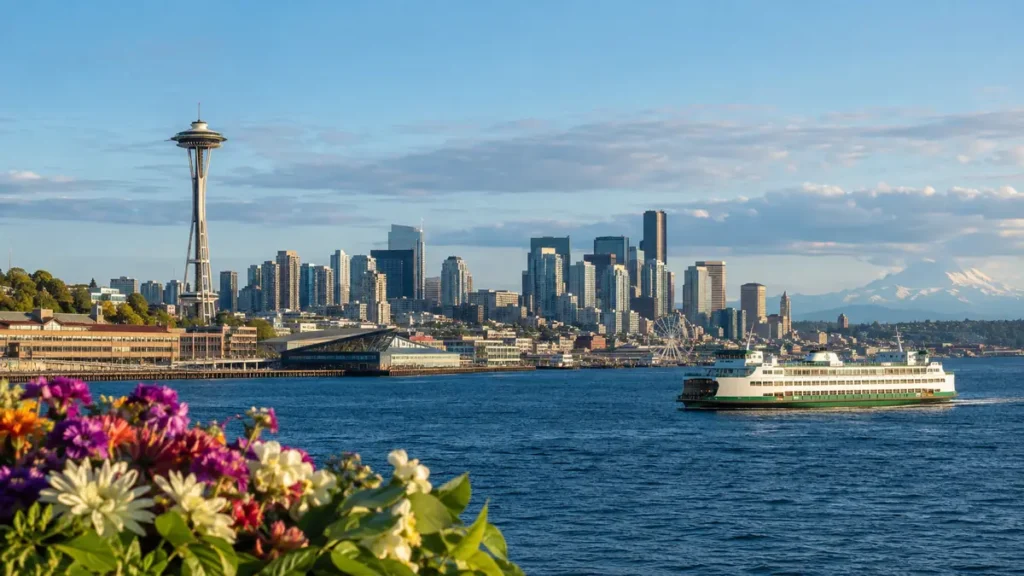
If you only want the views, ride across and return on a later sailing. Stand on an outdoor deck as the ferry leaves Seattle—the skyline, stadiums, port, and surrounding mountains gradually open into a wide panorama.
Schedules are affected by weather, vessel availability, and seasonal demand. Review the official schedule on the day of travel and arrive early if you are taking a vehicle.
Quick Takeaway: Pike Place Market, Overlook Walk, the waterfront, and a ferry ride fit naturally into one day because they are connected on foot.
Things to Do in Seattle Center
Seattle Center was created for the 1962 World’s Fair. Today, its 74-acre campus contains several of the city’s most recognizable attractions, along with public art, performance venues, gardens, fountains, and family spaces.
The Seattle Center Monorail connects the campus with downtown’s Westlake Center. The short ride is useful when you want to avoid walking uphill.
5. See Seattle from the Space Needle
The 605-foot Space Needle is Seattle’s defining landmark. Its observation level provides a 360-degree view of downtown, Lake Union, Puget Sound, the Olympic Mountains, and the Cascade Range. Mount Rainier may also be visible when the weather is clear.
The Loupe, a rotating glass floor, offers a direct view toward the structure and ground below. Visitors uncomfortable with glass floors can remain on solid flooring and still enjoy the panorama.
Book a timed entry near sunset if you want daylight and nighttime views in a single visit. Weather matters more than the hour, however. Low clouds can obscure the mountains and much of the surrounding landscape.
Kerry Park is a better choice if your priority is photographing the Space Needle as part of the skyline rather than looking out from it.
6. Experience Chihuly Garden and Glass
Chihuly Garden and Glass displays the work of Washington-born artist Dale Chihuly. Large-scale glass installations fill indoor galleries, a glasshouse, and an outdoor garden where colorful sculptures are integrated with plants.
The glasshouse is the visual centerpiece: a suspended installation of red, orange, and yellow forms stretches beneath a transparent roof, with the Space Needle visible above it.
The museum is compact enough to combine with the Space Needle. Allow approximately 60 to 90 minutes, or longer if you enjoy photography and glassmaking demonstrations.
7. Discover Music and Film at MoPOP
The Museum of Pop Culture, commonly called MoPOP, occupies a curving, colorful building designed by architect Frank Gehry. Its exhibitions explore music, science fiction, fantasy, horror, film, games, and popular culture.
Seattle’s musical identity appears throughout the museum, particularly in material connected with Jimi Hendrix, Nirvana, grunge, and the wider Pacific Northwest music scene.
Exhibitions rotate, so check what is available before buying a ticket. This is one of the best rainy-day activities in Seattle and can easily occupy two or three hours.
8. Enjoy the Free Spaces at Seattle Center
You do not need attraction tickets to enjoy Seattle Center. Walk around the grounds to see public art, the International Fountain, and the outdoor sculptures surrounding MoPOP.
Families can visit Artists at Play, an imaginative playground with climbing structures and a long tube slide. The Seattle Center Armory contains casual dining options and indoor seating, making it a practical rest stop during wet weather.
Seasonal festivals, cultural celebrations, concerts, and sporting events are held throughout the year. Check the Seattle Center calendar before your trip because a free public event may coincide with your visit.
Explore Seattle’s Museums, History, and Cultural Attractions
Seattle’s cultural institutions cover art, aviation, Indigenous history, technology, natural history, and the city’s transformation from a timber town into a major Pacific Rim port.
9. Visit the Seattle Art Museum
The Seattle Art Museum, often shortened to SAM, is located downtown near Pike Place Market. Its collection spans global art traditions, contemporary work, decorative arts, and important pieces from Native communities of the Pacific Northwest.
SAM operates more than one location. The downtown museum is the primary indoor institution, while the Olympic Sculpture Park provides a free outdoor experience. The Seattle Asian Art Museum occupies an Art Deco building in Volunteer Park.
Checking the exhibition calendar in advance is worthwhile because temporary shows may influence how much time you want to spend inside.
10. Walk Through the Olympic Sculpture Park
The nine-acre Olympic Sculpture Park combines contemporary art, landscaped paths, and Elliott Bay views. Admission is free, and the park remains one of the easiest outdoor attractions to reach from downtown.
A sloping path passes monumental sculptures before connecting with Myrtle Edwards Park. The setting works particularly well near sunset, when the Olympic Mountains may be visible across the water.
Continue north along the shoreline path for a longer walk. Cyclists and runners also use this route, so remain aware of shared sections.
11. Learn About Aviation at the Museum of Flight
The Museum of Flight is one of the city’s strongest attractions, yet many short itineraries overlook it because it lies south of downtown.
Its extensive collection includes historic aircraft, spacecraft, aviation artifacts, and exhibits explaining commercial flight and space exploration. The museum also highlights the Seattle region’s deep relationship with Boeing and the aerospace industry.
Aviation enthusiasts can spend most of a day here. Other visitors should reserve at least three hours. Public transportation is possible, but driving or using a ride service generally makes the trip simpler.
12. Go Beneath Pioneer Square
Pioneer Square preserves Romanesque Revival buildings, brick streets, and stories from Seattle’s early development. After the Great Seattle Fire of 1889, parts of the city were rebuilt at a higher street level, leaving old storefronts and passages below.
Guided underground tours explain how these spaces were created and how residents adapted during the rebuilding process. The experience is more engaging when treated as a history lesson rather than simply a walk through tunnels.
Above ground, explore Occidental Square, independent galleries, bookstores, and the Klondike Gold Rush National Historical Park. The park’s visitor center explains Seattle’s role as a supply hub during the Klondike Gold Rush and is typically free to visit.
13. Visit the Burke Museum
Located on the University of Washington campus, the Burke Museum focuses on natural history and culture. Collections cover fossils, geology, biology, archaeology, and Indigenous art and knowledge.
The museum’s visible working spaces allow visitors to observe researchers and collection managers. This makes the Burke particularly interesting for families and travelers who enjoy seeing how museum work happens behind the exhibits.
Afterward, walk through the University of Washington campus. The Quad is famous for spring cherry blossoms, while the Gothic-style Suzzallo Library is impressive throughout the year.
14. Tour the Wing Luke Museum
The Wing Luke Museum in the Chinatown–International District explores the histories and experiences of Asian American, Native Hawaiian, and Pacific Islander communities.
Exhibitions connect personal stories with immigration, labor, discrimination, art, neighborhood life, and cultural identity. Guided neighborhood or historic-building tours can provide a deeper understanding of the district than a self-guided visit alone.
Combine the museum with lunch in Chinatown–International District. The neighborhood offers Chinese, Japanese, Vietnamese, Filipino, and other Asian cuisines within a compact area.
Outdoor Things to Do in Seattle
Seattle’s nickname, the Emerald City, makes sense once you enter its parks. Forests, beaches, wetlands, freshwater lakes, and saltwater shorelines all exist inside the city limits.
15. Hike Through Discovery Park
Discovery Park is Seattle’s largest city park and one of the best places to experience local scenery without leaving town. Trails cross open meadows and forest before descending toward the shoreline and West Point Lighthouse.
The full Loop Trail is manageable for most reasonably active visitors, although reaching the beach adds elevation and distance. Wear footwear with reliable grip after rain because unpaved sections can become muddy.
The park also contains the Daybreak Star Indian Cultural Center, a cultural and community space operated by United Indians of All Tribes Foundation. Visitors should respect signs, events, and areas used for community programs.
16. Watch the Sunset at Kerry Park
Kerry Park is small, but its viewpoint delivers the classic postcard composition of downtown Seattle and the Space Needle. When visibility is exceptional, Mount Rainier rises behind the skyline.
The park is located on Queen Anne Hill, and the approach is steep if you walk from Seattle Center. A bus or ride service makes access easier.
Arrive before sunset to claim a good viewing position. The nearby neighborhood is residential, so keep noise low and avoid blocking driveways.
17. Relax at Alki Beach
Alki Beach in West Seattle offers a long waterfront promenade with views toward downtown and across Elliott Bay. Walking, jogging, cycling, beach volleyball, and casual picnics are popular during warmer months.
The water remains cold even in summer. Many visitors prefer to walk the promenade, eat near the beach, or watch the sunset rather than swim.
A water taxi from downtown provides a scenic route to West Seattle. From the terminal, use a local shuttle, bus, bicycle, or ride service to reach the main beach area.
18. See the Ballard Locks
The Hiram M. Chittenden Locks—usually called the Ballard Locks—allow boats to travel between the freshwater Lake Washington Ship Canal and the saltwater of Puget Sound.
Visitors can watch vessels rise or fall as water levels change. A fish ladder provides viewing windows for migrating salmon, although activity varies by season and species.
The surrounding Carl S. English Jr. Botanical Garden adds quiet lawns and landscaped paths. Admission to the grounds is free, making this one of the best budget-friendly things to do in Seattle.
19. Walk Around Green Lake
Green Lake Park has a popular loop used by walkers, runners, skaters, and cyclists. The mostly level path is accessible and suitable for travelers who want outdoor time without committing to a hike.
In warmer weather, visitors rent paddleboats or boards, use designated swimming areas, and picnic on the grass. Early mornings are calmer; afternoons and weekends can become busy.
20. Explore Washington Park Arboretum
Washington Park Arboretum contains 230 acres of gardens, woodland paths, and plant collections beside Lake Washington. Azalea Way is one of its most pleasant walking routes, particularly during spring.
The nearby Seattle Japanese Garden charges separate admission and offers a more formal landscape of water, stone, bridges, and carefully maintained plantings.
For another free garden experience, visit Kubota Garden in South Seattle. Its 20-acre landscape blends Japanese design principles with Pacific Northwest plants.
Quick Takeaway: Discovery Park is best for a substantial urban hike, Green Lake for an easy loop, and the Arboretum or Kubota Garden for a slower garden walk.
Fun Things to Do in Seattle’s Neighborhoods
Downtown contains major attractions, but Seattle’s personality is spread across its neighborhoods. Choose two or three rather than trying to cross the entire city in one day.
21. Discover Fremont’s Quirky Side
Fremont embraces its unofficial identity as the “Center of the Universe.” Public art includes the Fremont Troll beneath the Aurora Bridge, the Waiting for the Interurban sculpture, and other unexpected installations.
The neighborhood also offers vintage shops, cafés, breweries, and access to the Burke-Gilman Trail. The Fremont Sunday Market is a good stop for food, crafts, and secondhand finds when its operating schedule matches your visit.
Walk west along the canal or continue toward Ballard for an easy neighborhood combination.
22. Spend an Afternoon in Ballard
Ballard’s Scandinavian heritage, maritime history, restaurants, and walkable commercial streets make it one of Seattle’s most rewarding neighborhoods.
Historic Ballard Avenue contains boutiques, cafés, bars, and preserved brick buildings. On Sundays, the Ballard Farmers Market fills the street with regional produce and prepared food.
Pair central Ballard with the Ballard Locks, the National Nordic Museum, or Golden Gardens Park. Golden Gardens is particularly appealing at sunset, with beach access and views of the Olympic Mountains.
23. Experience Capitol Hill
Capitol Hill is known for nightlife, live music, LGBTQ+ culture, restaurants, independent shops, and dense residential streets.
Browse Elliott Bay Book Company, explore Pike and Pine, or relax in Volunteer Park. The park contains the Seattle Asian Art Museum, a conservatory, and the Black Sun sculpture by Isamu Noguchi. From the right angle, the sculpture frames the Space Needle.
Capitol Hill becomes livelier at night. Travelers seeking quieter streets may prefer a daytime visit, while those interested in bars, performances, and music venues should return after dinner.
24. See Lake Union from Gas Works Park
Gas Works Park occupies the site of a former gasification plant on the north shore of Lake Union. Preserved industrial structures create a dramatic contrast with the lawns, water, and downtown skyline.
The park is popular for picnics, kite flying, and watching boats or seaplanes. Its hill provides one of the best free views of Lake Union and the city.
Combine the park with Fremont or a walk along part of the Burke-Gilman Trail. Avoid climbing on fenced industrial structures, even if they appear accessible.
What to Eat and Drink in Seattle
Food is not a side activity here. The city’s location, immigrant communities, farming regions, and maritime economy have created a dining culture closely tied to place.
25. Taste Pacific Northwest Specialties
Seattle is a strong destination for salmon, oysters, Dungeness crab, chowder, and other seafood. Menus often feature ingredients from Puget Sound, the Washington coast, and nearby farms.
Teriyaki also holds a special place in the city’s food history. Seattle-style teriyaki shops typically serve grilled meat with a sweet-savory sauce, rice, and salad. It is a practical, inexpensive meal between attractions.
Other foods and drinks worth seeking out include:
- Washington apples and seasonal berries
- Beecher’s Flagship cheese
- Filipino food in Beacon Hill and other neighborhoods
- Vietnamese coffee and bánh mì
- Fresh pastries from neighborhood bakeries
- Craft beer from Ballard and Fremont breweries
- Washington wine from the Columbia Valley and Woodinville
Seattle’s coffee identity extends from classic espresso counters to modern specialty roasters. Try locally established businesses rather than limiting the experience to the original Starbucks storefront.
Free and Rainy-Day Things to Do in Seattle
Rain in Seattle is often light or intermittent, but a flexible plan makes the trip easier. Carry a water-resistant jacket and shoes rather than depending only on an umbrella, particularly on windy waterfront streets.
Good rainy-day options include:
- Museum of Pop Culture
- Seattle Art Museum
- Museum of Flight
- Burke Museum
- Wing Luke Museum
- Seattle Aquarium
- Pike Place Market’s covered arcades
- Seattle Central Library
The Seattle Central Library is worth seeing for its striking glass-and-steel architecture, public spaces, and unusual interior circulation.
For a low-cost day, combine Pike Place Market, Overlook Walk, Olympic Sculpture Park, Kerry Park, the Ballard Locks, Fremont’s public art, and neighborhood exploration. Public parks and viewpoints provide some of the city’s most memorable experiences without admission fees.
Things to Do in Seattle with Kids
Seattle works well for families because major attractions are grouped together and outdoor spaces provide room between museum visits.
Seattle Center is the easiest family base. Children can visit MoPOP, the Space Needle, Artists at Play, the International Fountain, or the Seattle Children’s Museum without crossing busy parts of the city.
Other strong family choices include:
- Watching boats at the Ballard Locks
- Seeing marine animals at the Seattle Aquarium
- Exploring aircraft at the Museum of Flight
- Walking around Green Lake
- Visiting Woodland Park Zoo
- Riding the Monorail
- Taking a ferry across Puget Sound
- Seeing interactive science exhibits at Pacific Science Center
For younger children, avoid packing more than two ticketed attractions into one day. Travel times, hills, and crowded entrances can make an ambitious itinerary tiring.
How to Plan One, Two, or Three Days in Seattle
Seattle looks compact on a map, but water, hills, bridges, and traffic can make cross-city trips slower than expected. Grouping attractions by area saves time.
One Day in Seattle
- Visit Pike Place Market early.
- Walk through Overlook Walk to the waterfront.
- See the Seattle Aquarium or ride the Great Wheel.
- Continue to Olympic Sculpture Park.
- Visit the Space Needle around sunset.
Two Days in Seattle
Follow the first-day route, then:
- Explore MoPOP or Chihuly Garden and Glass.
- Visit the Ballard Locks.
- Walk along Ballard Avenue.
- Watch sunset at Golden Gardens or Kerry Park.
Three Days in Seattle
Use the third day for a deeper local experience:
- Hike in Discovery Park.
- Visit Fremont or Capitol Hill.
- Tour the Museum of Flight or Burke Museum.
- Take an evening ferry ride if weather and schedules allow.
Do not schedule Pike Place Market, the Museum of Flight, Discovery Park, and Capitol Hill back-to-back. They are spread across different parts of the city and work better on separate days.
Easy Day Trips from Seattle
If you have more than three days, Seattle provides access to islands, mountains, waterfalls, forests, and wine country.
Bainbridge Island
Bainbridge is the simplest car-free day trip. Take the ferry from downtown, walk into Winslow, browse local shops, eat lunch, and return with an evening view of Seattle.
Snoqualmie Falls
Snoqualmie Falls drops 268 feet and can be viewed from developed overlooks. It is relatively close to Seattle by car and can be combined with hiking or a visit to the town of Snoqualmie.
Mount Rainier National Park
Mount Rainier is visible from Seattle on clear days, but visiting the national park requires a full day. Travel times, road conditions, seasonal closures, parking rules, and entry requirements should be checked before departure.
Olympic National Park
Olympic National Park contains mountains, temperate rainforest, lakes, and a rugged Pacific coastline. Its size makes a multi-day trip preferable. A single-day excursion is possible, but much of the time will be spent traveling.
Woodinville Wine Country
Woodinville contains tasting rooms representing wineries from across Washington State. It is closer than the primary wine-growing areas east of the Cascade Range and works as a half-day or full-day trip.
Practical Tips for Visiting Seattle
Seattle’s terrain and climate affect how a day feels more than many first-time visitors expect.
- Wear comfortable shoes: Downtown, Queen Anne, Capitol Hill, and waterfront connections involve hills.
- Use public transportation: Link light rail connects Seattle-Tacoma International Airport with downtown and other neighborhoods.
- Group nearby attractions: Pike Place and the waterfront pair well; Seattle Center attractions belong together; Ballard and Fremont can share a day.
- Check timed-entry rules: The Space Needle, aquarium, museums, and special exhibitions may require advance reservations.
- Prepare for changing weather: A cool morning can become sunny, while waterfront wind may make temperatures feel lower.
- Avoid relying on a car downtown: Parking can be expensive, and walking or transit is often easier.
- Check event calendars: Mariners, Seahawks, Sounders, Kraken, and Storm games can affect traffic and transit.
- Respect the landscape: Stay on marked trails, follow beach-fire rules, and give wildlife space.
- Verify seasonal access: Mountain roads, gardens, ferry schedules, and salmon viewing conditions change throughout the year.
Late spring through early fall usually provides the driest conditions and longest daylight hours, but it also brings larger crowds and higher accommodation prices. Autumn and winter suit museum visits, coffee stops, live performances, and uncrowded neighborhood exploration.
The most satisfying things to do in seattle combine famous landmarks with everyday local experiences. See Pike Place Market and the Space Needle, but also ride a ferry, walk beside the water, explore a neighborhood, and spend time in one of the city’s remarkable parks. That mixture reveals the Seattle beyond its skyline.