Ask ten people why is California so popular and you’ll get ten different answers — the beaches, the tech money, the movies, the mountains twenty minutes from the ocean. That’s actually the honest answer: it’s not one thing. It’s that California is one of the only places on Earth where all of those things are true at once, in the same afternoon if you plan your drive right.
California is popular because it combines dramatic natural diversity (deserts, coastline, and nine national parks), a $4 trillion economy anchored by Silicon Valley and Hollywood, a genuinely multicultural population, and a mild climate that makes almost any month a good time to visit — a rare combination no other single U.S. state offers.
The Weather Really Is That Good
Start with the thing every local mentions first, because it’s the thing that makes everything else possible. Most of California sits under a Mediterranean climate: dry summers, mild wet winters, and none of the multi-week deep freezes that shut down travel plans elsewhere. That doesn’t mean uniform weather, though — that’s the part outsiders miss.
Drive from the coast inland and the climate shifts in hours, not days. Coastal cities like Santa Barbara stay temperate year-round. The Sierra Nevada gets real snowpack for skiing. The deserts around Joshua Tree and Death Valley swing to genuinely extreme heat by midsummer. Napa Valley sits in its own warm, dry microclimate perfect for grape-growing.
Quick takeaway: California isn’t “always sunny” — it’s a state with roughly half a dozen distinct climate zones packed close together, which is exactly why you can ski and surf on the same day if you’re willing to drive.
Nine National Parks — More Than Any Other State
California has more national parks than any other state in the country, and the range between them is the real draw, not just the count.
- Yosemite National Park — the marquee attraction, drawing over 4 million visitors a year for its granite cliffs, waterfalls, and Half Dome.
- Death Valley National Park — the largest and hottest of the group, home to Badwater Basin, the lowest point in North America.
- Joshua Tree National Park — surreal high-desert terrain and twisted namesake trees, straddling two desert ecosystems.
- Redwood National Park — home to some of the tallest trees on the planet.
- Sequoia & Kings Canyon — giant sequoia groves, including trees among the largest living things by volume.
- Channel Islands National Park — a remote marine ecosystem often called “North America’s Galápagos.”
- Pinnacles National Park — volcanic spires and talus caves near the Salinas Valley.
Add the coastline itself — over 800 miles of it, running from the cliffs of Big Sur to the surf breaks near San Clemente — and you’ve got a state where “outdoor destination” and “road trip state” aren’t marketing lines, they’re just accurate.
A $4 Trillion Economy Built on Reinvention
California’s popularity isn’t only about scenery. It’s also about gravity — the state pulls people toward it because of what’s being built there. As of the most recent GDP data, <cite index=”10-1,13-1″>California’s economy is the largest in the United States, with a $4.048 trillion gross state product</cite>, and depending on the year and exchange-rate snapshot, it ranks as the world’s fourth- or fifth-largest economy — <cite index=”9-1″>most 2025–2026 comparisons place the state fourth by nominal GDP, though some analyses still list it fifth depending on data vintage</cite>.
That scale traces back to Silicon Valley and the Bay Area, where some of the world’s most influential technology companies — Apple, Google, Meta, and Nvidia among them — are headquartered. It’s reinforced by a research and education pipeline running through Stanford, Caltech, UC Berkeley, and UCLA that keeps feeding talent into the same region.
It’s also easy to overstate. <cite index=”8-1″>Foreign businesses maintained an estimated 20,000 establishments in the state as of 2026, generating around 850,000 jobs</cite>, and <cite index=”8-1″>California’s economy has grown more slowly since 2020 than states like Texas and Florida</cite>. It’s a giant, not an unchallenged one.
A Genuine Melting Pot, Not Just a Slogan
California’s population sits around 39.5 million — the largest of any U.S. state — and that scale comes with real cultural range, not just a diversity slogan on a tourism website. Los Angeles, San Francisco, and San Diego each have their own distinct identity and food culture, and smaller enclaves — Little India in Artesia, Chinatown in San Francisco, the Mexican food scene across Southern California — genuinely reflect the communities that built them, not a curated tourist version of them.
That’s a big part of why the food scene keeps showing up as a reason people visit: it’s not one “California cuisine,” it’s dozens of regional cuisines coexisting inside one state’s borders.
Hollywood, Landmarks, and the Cultural Export Machine
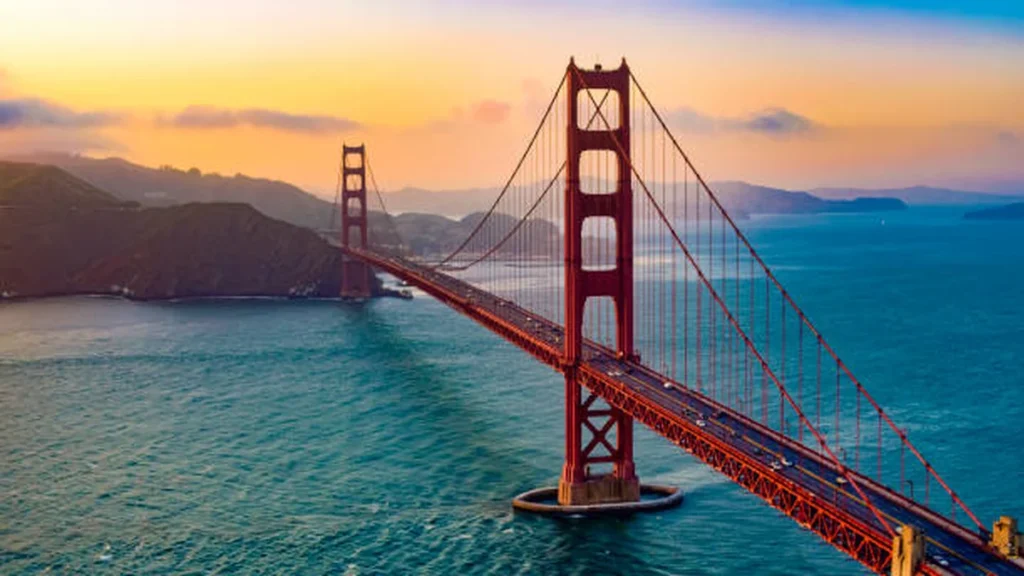
California has spent a century exporting its own image, and it worked. Hollywood turned Los Angeles into shorthand for the entertainment industry worldwide. The Golden Gate Bridge, Disneyland, and the Pacific Coast Highway are recognizable to people who’ve never set foot in the U.S., because they’ve appeared in more films, shows, and songs than almost any other American landmarks combined.
That’s not a small thing for tourism. Landmarks that already live in people’s heads before they arrive create a kind of built-in itinerary — visitors aren’t discovering California, they’re confirming it.
Gold Rush Roots and a State Built on Arrivals
California’s identity as a place people go to reinvent themselves didn’t start with tech IPOs. It started with the 1849 Gold Rush, when the promise of instant wealth pulled in people from across the country and the world almost overnight. Add the earlier Spanish mission era, and you get a state whose entire history is a series of waves of newcomers — which is arguably why “moving to California to start over” still feels like a coherent idea 175 years later.
What Nobody Puts on the Postcard
Here’s the part most “why California is popular” articles skip, and it matters for anyone actually planning a trip or a move.
California is expensive. Housing, dining, and even national park lodging run well above the national average, especially near the coast and in major cities. Traffic in Los Angeles and the Bay Area is genuinely bad, and it eats into itineraries that don’t account for it. Wildfire season, typically late summer into fall, can affect air quality and occasionally close trails or roads — check current conditions before a fall trip to inland or mountain areas. And the wealth gap is real: California has some of the highest income inequality of any state, visible in the same cities that also host its wealthiest neighborhoods.
None of this cancels out the reasons above. It just means “popular” and “easy” aren’t the same thing, and a good trip plan accounts for both.
How to Actually Plan a Trip Around All This
| If you want… | Best season | Where to go |
|---|---|---|
| Yosemite waterfalls at peak flow | Late spring (April–June) | Yosemite Valley |
| Desert hiking without extreme heat | Fall or winter (Oct–March) | Joshua Tree, Death Valley |
| Wine country | Late summer/early fall (harvest) | Napa Valley, Sonoma County |
| Beach weather in Southern California | Almost any month | San Diego, Santa Monica |
| Fewer crowds at national parks | Shoulder season (Sept, Oct, May) | Any of the nine parks |
A realistic first-timer route: fly into Los Angeles or San Francisco, spend 2–3 days in the city, then drive a stretch of the Pacific Coast Highway before turning inland toward one national park rather than trying to hit all nine in one trip.
Before you finalize your trip, browse our California travel guides for additional tips and destinations.
FAQ Section
Q1: Why is California so popular?
California combines dramatic natural variety — deserts, coastline, mountains, and nine national parks — with a massive economy centered on tech and entertainment, a genuinely diverse population, and a mild climate that makes most months workable for travel. Few states offer all four at once.
Q2: Why is California called the Golden State?
The nickname comes from the 1849 Gold Rush, when gold discoveries at Sutter’s Mill drew a massive wave of migration into the territory. The state’s golden poppy and the golden hills of summer reinforced the name afterward.
Q3: How many national parks are in California?
California has nine national parks, more than any other U.S. state, including Yosemite, Death Valley, Joshua Tree, Redwood, and Channel Islands, plus additional national monuments and preserves.
Q4: Is California expensive to visit?
Yes, generally. Coastal cities and national park lodging run above the national average for lodging and dining, particularly during peak summer season. Booking shoulder-season travel and inland lodging can meaningfully cut costs.
Q5: What is California best known for?
Most commonly: Hollywood and the entertainment industry, Silicon Valley and tech, its national parks and coastline, and its year-round mild climate. Beyond that, it’s known for agriculture, wine country, and cultural diversity.
Q6: Why do so many people move to California?
Job opportunities in tech, entertainment, and other major industries remain the biggest draw, alongside climate and lifestyle. That said, cost of living has slowed migration growth compared with faster-growing states like Texas and Florida in recent years.
Q7: Is California’s economy really bigger than most countries?
Yes — California’s gross state product reached $4.048 trillion in 2024, making it the largest state economy in the U.S. and placing it among the world’s top four or five economies depending on the year’s exchange rates and data revisions.
Q8: What’s the best time to visit California?
It depends on the region: late spring for Yosemite’s waterfalls, fall/winter for desert parks like Joshua Tree, and nearly any month for Southern California beaches. Shoulder seasons (September, October, May) generally mean fewer crowds statewide.