Looking for the best things to do in Napa Valley? Most guides reduce it to a single idea — rows of vines, a glass of Cabernet, done. Spend two days here and you realize that’s barely the surface.
Napa Valley’s best things to do include wine tasting at boutique and historic wineries, a scenic ride on the Napa Valley Wine Train, hot air balloon flights at sunrise, browsing Oxbow Public Market, and exploring Calistoga’s Old Faithful Geyser and Petrified Forest — all within a 30-mile stretch of vineyards.
Wine Tasting: The Essential Things to Do in Napa Valley
Yes, you’re here for the wine, so let’s get the obvious out of the way properly. Napa Valley is home to more than 250 wineries, and the trick isn’t finding one — it’s picking the right ones for your visit.
If you want spectacle, Castello di Amorosa is a medieval Tuscan-style castle and winery on a hillside above Calistoga, and it’s genuinely one of the more unusual buildings you’ll find anywhere in the valley. For a more classic Napa setting, Pine Ridge Vineyards sits in the Stags Leap District among terraced vineyards and dramatic ridgelines.
Ask around locally, and you’ll hear different favorites depending on what you’re after. Travelers have pointed to Del Dotto for its historic cave tour and to Quintessa for a tasting experience that feels quintessentially Napa, despite the higher price tag. If Pinot Noir is your thing, Hyde Vineyards and Hudson Ranch in Carneros come up often, while Caldwell and Bouchaine offer smaller, more intimate settings — think charcuterie pairings inside a wine cave rather than a crowded tasting bar.
Mistake most first-timers make: showing up without reservations. Most popular tasting rooms — especially anything with a cave tour or a chef-driven pairing — book out days or weeks ahead, particularly on weekends.
Quick Takeaway: Book your headline wineries first, then fill gaps with walk-in-friendly tasting rooms downtown.
Non-Wine Things to Do in Napa Valley
If someone in your group doesn’t drink, or you just want variety, Napa still delivers plenty of things to do beyond the tasting room.
The Napa Valley Wine Train is the classic non-hiking way to see the valley. It’s a restored vintage train that runs a roughly 36-mile round trip from Napa to St. Helena and back, with a multi-course meal served on board over about three hours.
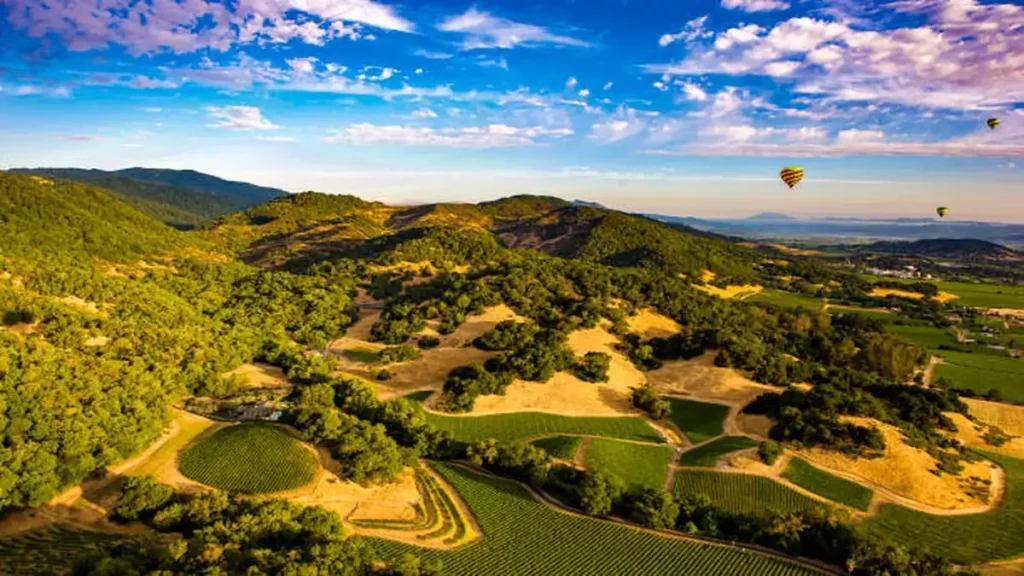
A hot air balloon ride is the other signature experience, and it’s not subtle about being a splurge — expect $200 and up per person. But sunrise flights over the vineyards, with views stretching toward Mt. St. Helena and Old Faithful Geyser, are the kind of thing people remember for years. Most operators, including Napa Valley Balloons and Balloons Above the Valley, include a champagne toast or brunch add-on.
For something quirky, Calistoga’s Old Faithful Geyser shoots water dozens of feet into the air at fairly regular intervals — admission runs about $15 for adults, making it one of the more affordable stops on this list. Nearby, the Petrified Forest shows off trees preserved by an ancient volcanic eruption, with a small on-site museum explaining the geology.
Quick Takeaway: Balloon rides and the Wine Train need advance booking; the geyser and Petrified Forest are easy same-day stops.
Outdoor Things to Do in Napa Valley: Hikes and Bike Trails
Napa isn’t just tasting rooms — it’s also genuinely good for getting outside.
The Napa Valley Vine Trail offers flat, mostly separated paths ideal if you’d rather pedal between wineries than drive. It’s an easy way to burn off a big lunch without needing serious cycling experience.
For a proper view, locals often head to Westwood Hills Park in the Browns Valley area — a short hike rewards you with a wide view over Napa, and on a clear day you can see all the way to San Pablo Bay and San Francisco. It’s the kind of spot most tourists never find because it’s not on the typical winery-hopping route.
Quick Takeaway: If your itinerary is wall-to-wall tastings, budget half a day for the Vine Trail or Westwood Hills — your palate (and your legs) will thank you.
Food and Market Things to Do in Napa Valley
Oxbow Public Market in downtown Napa is the easiest stop to recommend to literally anyone. It’s a mixed indoor-outdoor marketplace along the Napa River with local produce, artisan cafes, and wine merchants — a good option when you want lunch without another reservation.
For something more memorable, book well ahead for The French Laundry, the world-renowned Yountville restaurant known for French technique and farm-to-table ingredients. On the more casual end, Bouchon Bakery in Yountville is a reliable breakfast stop — pain au chocolat, sticky buns, quiche — before a day of activities. Downtown, Don Giovanni Bistro and Angele are solid picks for a vineyard-view lunch or a classic French dinner, while Compline is popular for its wine list (and its duck fat fries).
Don’t skip the Napa Riverwalk either — strolling along the river in downtown Napa, with stops for coffee or a glass of local wine, is a low-key way to spend an evening.
Quick Takeaway: Reserve French Laundry-tier restaurants months out; everything else can be planned same-week.
Family and Budget-Friendly Things to Do in Napa Valley
Napa has a reputation as an adults-only wine destination, which isn’t entirely fair. Crane Park in St. Helena has a skate park, playground, tennis and bocce courts, and horseshoes — a genuinely good spot to let kids burn energy. Nimbus Arts, also in St. Helena, runs hands-on workshops (ceramics, painting, various crafts) for ages ranging from toddlers to teens.
Budget-conscious travelers can lean on free or low-cost options: walking the Riverwalk, browsing Oxbow Market without buying much, hiking Westwood Hills, or timing a visit around the Saturday farmers market. Wine tasting fees add up fast — many tasting rooms charge $40–$75 per person — so picking two or three wineries rather than five keeps costs (and your palate) in check.
Quick Takeaway: Families and budget travelers should anchor the day around one paid activity and fill the rest with free outdoor stops.
Planning Your Napa Valley Trip: Timing and Logistics
Most first-time visitors underestimate how spread out Napa Valley actually is — it runs roughly 30 miles from the town of Napa up through Yountville, Oakville, Rutherford, St. Helena, and finally Calistoga.
Two to three days is realistic if you want wine tasting, one signature experience (balloon ride or Wine Train), and time for food and a hike without rushing. A single day works if you’re doing a day trip from San Francisco and sticking close to downtown Napa and Yountville.
Fall (September–October, harvest season) draws the biggest crowds and highest prices; late spring is a strong alternative with fewer crowds and similar weather. If your dates line up with BottleRock Napa Valley, a three-day music, food, and wine festival held every spring, expect lodging to book up early.
One logistics note competitors gloss over: designate a driver, book a private tour, or use a service like the Wine Train or a guided SUV tour if your group plans to taste at more than two wineries in a day.
Quick Takeaway: Plan for 2–3 days, book your headline experiences first, and build tastings and food around them — not the other way around.
There are more things to do in Napa Valley than most people plan for. Book your must-do reservations — a standout winery, the Wine Train or a balloon ride, one splurge dinner — and let the rest of the day fill in with a market stroll, a short hike, or a stop you found on the drive. That’s usually how the best Napa trips actually happen.
For more inspiration like this, take a look at our California travel guides.
FAQ Section
What is Napa Valley best known for?
Napa Valley is best known for wine tasting, especially Cabernet Sauvignon, alongside the Napa Valley Wine Train, hot air balloon rides, and destination restaurants like The French Laundry. It’s the top wine-tourism region in the U.S.
How many days do you need in Napa Valley?
Two to three days covers wine tasting, one signature experience, and dining without rushing. A single day works for a San Francisco day trip focused on downtown Napa and Yountville.
Is Napa Valley walkable?
Downtown Napa and Yountville are walkable, but the valley overall spans about 30 miles between towns, so you’ll need a car, bike, tour, or the Wine Train to reach wineries outside town centers.
What is free to do in Napa Valley?
Free or low-cost options include the Napa Riverwalk, Oxbow Public Market browsing, hiking Westwood Hills Park, and visiting the Saturday farmers market.
What are good things to do in Napa Valley besides wine tasting?
The Napa Valley Wine Train, hot air balloon rides, Old Faithful Geyser, the Petrified Forest, biking the Vine Trail, and hiking Westwood Hills Park are all popular non-wine activities.
When is the best time to visit Napa Valley?
Fall (harvest season, September–October) is the most popular but busiest and priciest. Late spring offers similar weather with smaller crowds and easier reservations.
Is Napa Valley good for families?
Yes — Crane Park, Nimbus Arts workshops, and outdoor spots like the Vine Trail make it workable for families, though many wineries are 21-and-up only.
How much does a Napa Valley hot air balloon ride cost?
Expect $200 and up per person, often including a champagne toast or post-flight brunch.