Miami is easy to stereotype as beaches, nightclubs, and expensive cars. Spend a little time beyond South Beach, however, and you will find Cuban cafés, contemporary art, historic estates, mangrove forests, tropical gardens, and two nearby national parks.
The best things to do in Miami include exploring South Beach’s Art Deco Historic District, tasting Cuban food in Little Havana, viewing murals in Wynwood, visiting Vizcaya Museum and Gardens, cruising Biscayne Bay, and discovering Everglades National Park. Three to five days gives first-time visitors enough time to combine beaches, culture, food, and nature.
This guide covers Miami’s essential attractions, quieter alternatives, family activities, free experiences, and practical planning details. Hours, admission policies, and tour availability can change, so verify them directly before visiting.
Best Things to Do in Miami for First-Time Visitors
If this is your first trip, concentrate on experiences that reveal Miami’s different personalities. South Beach provides the famous coastal scenery, Little Havana introduces the city’s Cuban heritage, Wynwood represents its creative side, and Biscayne Bay explains why water shapes daily life here.
1. Walk through the Art Deco Historic District
South Beach contains one of the country’s most recognizable collections of Art Deco architecture. More than 800 historic buildings stand within the wider district, which stretches roughly from 5th Street to 23rd Street along Ocean Drive, Collins Avenue, and Washington Avenue.
Begin near the Art Deco Welcome Center on Ocean Drive. A self-guided walk is free, but a tour led by the Miami Design Preservation League gives valuable context about the geometric façades, pastel colors, nautical details, and neon signs.
The district also includes examples of Mediterranean Revival and Miami Modern, commonly called MiMo, architecture. Walk in the morning for cooler temperatures and quieter sidewalks, then return after sunset to see the hotels illuminated.
2. Spend a morning on South Beach
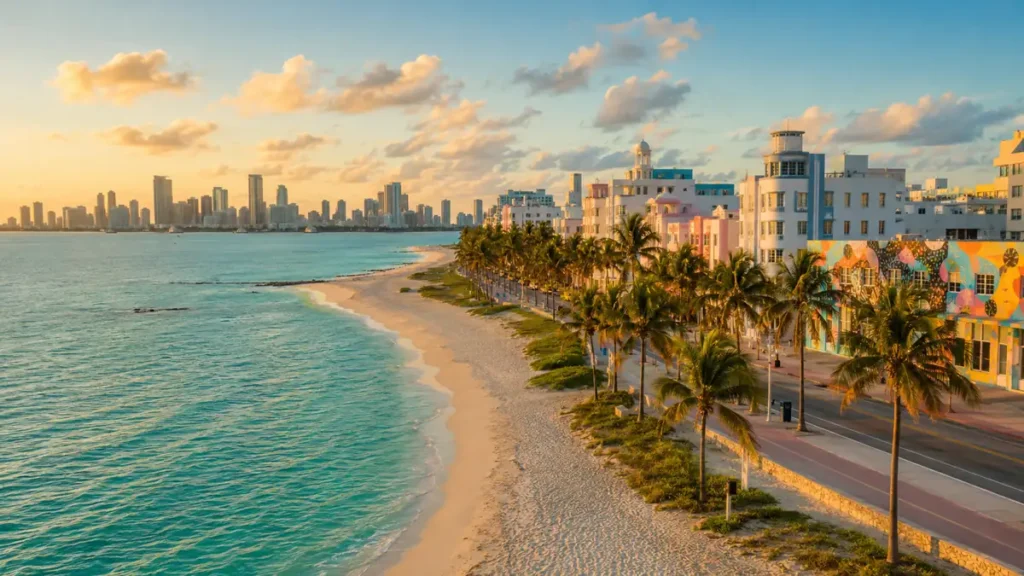
South Beach is popular for a reason: broad sand, turquoise water, colorful lifeguard towers, and immediate access to cafés and historic streets. Arrive early if you want a peaceful swim, especially on weekends.
Lummus Park runs between the beach and Ocean Drive, making it useful for walking, cycling, people-watching, or resting beneath the palms. The liveliest stretch sits around central Ocean Drive. Travelers wanting more space can continue north toward Mid-Beach.
Remember that Miami Beach and the City of Miami are separate municipalities. South Beach is in Miami Beach, across Biscayne Bay from Downtown Miami.
3. Watch the sunset at South Pointe Park
At the southern end of Miami Beach, South Pointe Park offers walking paths, lawns, a fishing pier, beach access, and views across Government Cut. Large cruise ships often pass surprisingly close on their way to and from PortMiami.
Follow the waterfront promenade before sunset and continue north along the beach afterward. The park feels calmer than central Ocean Drive and is one of the best free places for skyline and ocean views.
4. Explore Little Havana and Calle Ocho
Little Havana is the cultural heart of Miami’s Cuban community. Its main corridor, Southwest Eighth Street—or Calle Ocho—is lined with bakeries, restaurants, cigar shops, galleries, and walk-up coffee windows.
Visit Máximo Gómez Park, better known as Domino Park, where local players gather for dominoes and conversation. Nearby, the Tower Theater recalls the neighborhood’s history, while the Calle Ocho Walk of Fame honors Latin artists and public figures.
Try a strong cafecito, guava pastry, Cuban sandwich, croquetas, or a plate of ropa vieja. A guided food tour can explain migration, music, and culinary traditions, but independent visitors can build their own tasting route by ordering one small item at several stops.
Treat Little Havana as a living neighborhood rather than an outdoor exhibit. Ask before photographing people, particularly around Domino Park.
5. See street art in Wynwood
Wynwood evolved from a warehouse district into one of Miami’s major art and entertainment neighborhoods. Large murals cover buildings throughout the area, while galleries, restaurants, breweries, and design businesses fill former industrial spaces.
Wynwood Walls is the best-known attraction, presenting large-scale works by international street artists within a managed outdoor complex. Admission may be required, but plenty of public murals can be seen around the surrounding streets for free.
Go in daylight to appreciate the artwork and return in the evening if you want restaurants and nightlife. Stay aware of traffic while taking photographs; many murals face active roads and parking areas.
6. Cruise Biscayne Bay
A boat trip reveals a side of Miami that cannot be understood from land. Common routes pass Downtown Miami, Brickell, PortMiami, Miami Beach, and waterfront homes on islands in Biscayne Bay.
Large sightseeing cruises are affordable and social. Smaller vessels provide a quieter experience, while sailing trips and sunset cruises focus more on scenery. Kayaking and paddleboarding are better for travelers who want to explore shallow water and mangrove edges.
Check what the advertised price includes. Fuel charges, port fees, gratuities, and drinks are not always part of the initial rate.
Cultural Things to Do in Miami
Miami’s identity developed through Caribbean, Latin American, Indigenous, Black, and immigrant influences. Its museums and historic neighborhoods make far more sense when visited alongside its beaches and entertainment districts.
7. Tour Vizcaya Museum and Gardens
Vizcaya Museum and Gardens is a waterfront estate in Coconut Grove built during the early 20th century for industrialist James Deering. Its elaborate interiors combine European antiques, decorative arts, and architectural elements arranged around an Italian-inspired villa.
The formal gardens contain fountains, sculptures, geometric hedges, and views of the stone barge in Biscayne Bay. Allow at least two hours, and wear comfortable shoes because much of the experience involves walking outdoors.
Vizcaya is especially rewarding for architecture, history, garden, and photography enthusiasts. Booking ahead is sensible during weekends and holidays.
8. Visit Pérez Art Museum Miami
Pérez Art Museum Miami, commonly known as PAMM, focuses on international modern and contemporary art, with particular attention to the Americas, the Caribbean, and the African diaspora.
The waterfront building is part of the attraction. Shaded verandas, hanging gardens, and views across Biscayne Bay create a welcome break from Downtown’s heat. PAMM stands in Maurice A. Ferré Park, next to the Phillip and Patricia Frost Museum of Science, so both museums can be combined in one day.
Exhibitions rotate, making the museum worth checking even if you have visited Miami before.
9. Discover science at Frost Science
The Phillip and Patricia Frost Museum of Science combines a science museum, aquarium, and planetarium in one Downtown complex. Exhibits address South Florida ecosystems, the human body, aviation, physics, and space.
Its multi-level aquarium follows marine habitats from the surface toward deeper water. The Gulf Stream Aquarium’s large oculus gives visitors a dramatic view from beneath rays, sharks, and other sea life.
Families can spend half a day here, especially if they include a planetarium show. Reserve timed programs early when possible.
10. Learn local history at HistoryMiami Museum
HistoryMiami Museum explains how geography, migration, trade, and major events shaped South Florida. Its collections cover Indigenous communities, early settlement, transportation, hurricanes, tourism, and the arrival of people from Cuba, Haiti, the Bahamas, and elsewhere.
This is one of the most useful attractions for understanding why Miami looks, sounds, and tastes the way it does. The museum also organizes walking tours that explore architecture and neighborhood history.
11. Experience the Design District
The Miami Design District blends contemporary architecture, public art, galleries, luxury fashion, and destination dining. Shopping is prominent, but buying something is not necessary to enjoy the neighborhood.
Walk through Palm Court, view outdoor installations, and visit the Institute of Contemporary Art, Miami. ICA Miami has historically offered free general admission, although reservations and exhibition policies should be checked before arrival.
The district works well as a quieter cultural stop before or after Wynwood.
12. Explore Coconut Grove
Coconut Grove is one of Miami’s oldest neighborhoods, known for tropical vegetation, marinas, sidewalk cafés, and a relaxed village atmosphere. It feels noticeably different from the towers of Brickell and neon scenery of South Beach.
Walk around CocoWalk, follow the waterfront near Dinner Key Marina, or visit The Barnacle Historic State Park. The park preserves the 1891 home of yacht designer Ralph Middleton Munroe and offers a glimpse of Biscayne Bay before intensive urban development.
13. Understand Miami’s Black heritage in Historic Overtown
Historic Overtown was once called the “Harlem of the South” because of its thriving Black business, music, and cultural scene. Performers including Ella Fitzgerald, Louis Armstrong, and Nat King Cole appeared in Miami Beach but often stayed and socialized in Overtown because of segregation.
Important places include the Lyric Theater and the Black Police Precinct and Courthouse Museum. Visiting with a knowledgeable local guide helps connect surviving landmarks to the neighborhood’s broader history and the disruption caused by highway construction.
Outdoor Things to Do in Miami
Miami’s outdoor appeal extends beyond sunbathing. Coral reefs, mangroves, hardwood hammocks, wetlands, and tropical gardens surround the metropolitan area.
14. Take a day trip to Everglades National Park
Everglades National Park protects approximately 1.5 million acres of wetland, forest, and marine habitat. It was established in 1947 with an emphasis on protecting a complete ecosystem rather than a single scenic feature.
Shark Valley is a practical entry point from Miami. Its 15-mile loop passes sawgrass wetlands where visitors may see alligators, turtles, anhingas, herons, and other wildlife. You can explore by tram, bicycle, or on foot, although walking the complete loop is demanding in hot weather. An observation tower provides a broad view of the River of Grass.
Airboat rides are widely associated with the Everglades, but most operate outside the national park because airboats are restricted within much of it. Choose between an airboat experience and the quieter national-park environment based on your priorities.
Winter’s drier, milder conditions generally make wildlife viewing and outdoor activity more comfortable. In every season, carry water, insect repellent, sun protection, and rain gear. Review current conditions through the National Park Service.
15. Explore Biscayne National Park
Biscayne National Park lies within sight of Miami yet feels remote. Because approximately 95 percent of the park is water, its coral reefs, shipwrecks, mangrove shoreline, and islands are best experienced by boat.
Activities include snorkeling, paddling, fishing, sailing, and guided trips to places such as Boca Chita Key. The Dante Fascell Visitor Center offers exhibits and shoreline views, but arriving without a boat excursion limits how much of the park you can see.
Reserve authorized tours in advance and understand that weather can change marine itineraries. The National Park Service publishes current conditions and visitor guidance.
16. Visit Fairchild Tropical Botanic Garden
Fairchild Tropical Botanic Garden in Coral Gables contains extensive collections of palms, cycads, flowering trees, orchids, and other tropical plants. Paths wind through open lawns, rainforest environments, conservatories, and lakes.
Plan two or three hours and start early during warmer months. A tram can reduce walking, but exploring on foot makes it easier to notice butterflies, birds, unusual fruits, and smaller plant displays.
17. Swim at the Venetian Pool
The Venetian Pool is a historic public swimming facility in Coral Gables, created in the 1920s from a former coral-rock quarry. Waterfalls, bridges, palm trees, and Mediterranean-style structures make it look unlike a conventional municipal pool.
Admission, operating days, and age restrictions vary, and the pool sometimes closes for maintenance or private events. Check the City of Coral Gables schedule before making the trip.
18. Relax on Key Biscayne
Cross the Rickenbacker Causeway for beaches and green space within easy reach of central Miami. Crandon Park offers a broad beach, picnic areas, nature features, and family facilities.
Farther south, Bill Baggs Cape Florida State Park contains trails, shoreline, and the historic Cape Florida Lighthouse. The water can appear calm, but currents and conditions still require attention. Arrive early on sunny weekends because parking areas may fill.
19. Walk through Matheson Hammock Park
Matheson Hammock Park provides a quiet alternative to Miami Beach. Its best-known feature is a man-made atoll pool refreshed by the tides of Biscayne Bay.
The park also contains mangroves, marina views, picnic areas, and access to natural landscapes near Fairchild Tropical Botanic Garden. Water conditions can be affected by weather and environmental factors, so observe posted swimming notices.
Free and Affordable Things to Do in Miami
Miami can be expensive, but several of its most memorable experiences cost little or nothing. Beaches, historic streets, parks, public art, and neighborhood walks can fill an entire itinerary.
20. Ride the free Metromover
Metromover is a free elevated transit system serving Downtown Miami, Brickell, and the Omni area seven days a week. It connects places such as Bayside Marketplace, the Kaseya Center, Government Center, and the museum district.
Besides being useful transportation, it provides elevated views of the skyline and Miami River. Temporary construction and service changes occur, so consult Miami-Dade County transit information before traveling.
Metrorail is separate and normally requires a fare. It connects Miami International Airport and several mainland areas but does not run directly to Miami Beach.
21. Walk the Miami Beach Boardwalk
The Miami Beach Boardwalk provides a long, mostly flat route beside the oceanfront. It connects South Beach with Mid-Beach and areas farther north, passing hotels, dunes, parks, and beach access points.
Walk early in the morning, rent a bicycle, or use the path for a sunset outing. Pay attention to marked lanes and local rules because some sections carry a mixture of pedestrians and cyclists.
22. Browse Lincoln Road and Española Way
Lincoln Road is a pedestrian-oriented shopping and dining promenade in Miami Beach. Although restaurants and boutiques can be costly, walking the street, browsing stores, and watching performers costs nothing.
Nearby Española Way has Mediterranean Revival architecture, narrow pedestrian spaces, restaurants, and an intimate evening atmosphere. Combine both with Ocean Drive rather than making a separate journey.
23. Enjoy Bayfront Park and the Miami Riverwalk
Bayfront Park offers open waterfront space in the center of Downtown Miami. From here, visitors can walk toward Bayside Marketplace, catch a boat tour, or use nearby Metromover stations.
The Miami Riverwalk reveals another side of Downtown, following portions of the Miami River past bridges, restaurants, boats, and high-rise buildings. Its segments are not always continuous, so check your walking route before setting out.
24. Visit a farmers’ market or public event
Miami regularly hosts outdoor markets, cultural celebrations, concerts, art walks, and seasonal festivals. Coconut Grove, Coral Gables, Legion Park, and Miami Beach are common locations for community events.
Art Basel Miami Beach and Miami Art Week transform the region each December, while Miami Spice offers seasonal restaurant promotions. Large events can change hotel prices, traffic, and museum schedules, so consult an official events calendar before choosing travel dates.
25. Find a quieter beach
South Beach is not the only place to swim. Surfside, North Beach, and Mid-Beach often feel less intense, while Virginia Key and Key Biscayne provide access to beaches with more surrounding greenery.
No beach is quiet at every hour. Weekday mornings usually offer the best combination of easier parking, lighter crowds, and lower temperatures.
Things to Do in Miami with Kids
Families should balance outdoor time with air-conditioned attractions. Miami’s midday heat and sudden rain can be tiring for children, particularly in summer.
Frost Science is the strongest all-weather choice because the aquarium, interactive galleries, and planetarium serve different age groups. Zoo Miami offers large, open-air habitats but requires substantial walking, so arrive early and consider the available cycles or transport options.
Other useful choices include:
- Miami Children’s Museum on Watson Island
- Fairchild Tropical Botanic Garden
- Crandon Park Beach
- Venetian Pool, subject to age rules
- A short Biscayne Bay cruise
- South Pointe Park and its playground
- The shaded paths and animals at Jungle Island
- A gentle wildlife outing near the Everglades
Do not schedule every hour. A museum in the morning, a long lunch or hotel break, and beach time later in the afternoon usually works better than three major attractions in one day.
What to Do in Miami Besides Party
Miami’s nightlife is famous, but clubs are only one part of the city. Travelers uninterested in parties can build an excellent trip around architecture, food, art, nature, and history.
A non-nightlife itinerary could include an early Art Deco walk, Cuban lunch in Little Havana, an afternoon at PAMM, sunset in South Pointe Park, and dinner in Coconut Grove. Another day might pair Vizcaya with Coral Gables, while a third could be reserved for Everglades or Biscayne National Park.
For an evening without clubs, consider a performance at the Adrienne Arsht Center, a waterfront walk, a rooftop cinema, live Latin music, or dinner in a neighborhood away from South Beach.
Unique Things to Do in Miami Away from the Crowds
Visitors willing to leave the standard route will find quieter historic and natural sites.
The Deering Estate preserves an important stretch of Biscayne Bay shoreline along with archaeological, architectural, and ecological resources. Pinecrest Gardens combines tropical landscaping with family programs and cultural events. The Kampong in Coconut Grove holds a collection of tropical fruit and flowering trees associated with plant explorer David Fairchild.
For coastal history, visit Historic Virginia Key Beach Park, which became an important recreational beach for Miami’s Black community during segregation. For a slower urban afternoon, explore Coral Gables’ tree-lined streets and Mediterranean Revival landmarks.
These places are spread across a large metropolitan area. Group nearby attractions instead of crossing Miami repeatedly: combine The Kampong with Coconut Grove, Pinecrest Gardens with Fairchild, and the Deering Estate with a South Dade outing.
How Many Days Do You Need in Miami?
Three days is enough for the major highlights, while five days allows a national-park excursion and a less hurried pace.
| Trip length | Practical itinerary |
|---|---|
| One day | South Beach, Art Deco District, Little Havana, and a Biscayne Bay sunset |
| Two days | Add Wynwood, Downtown museums, and Brickell |
| Three days | Add Vizcaya, Coconut Grove, or Coral Gables |
| Four days | Take an Everglades National Park day trip |
| Five days | Add Key Biscayne, Biscayne National Park, or a slower beach day |
For one day, do not attempt to cover South Beach, the Everglades, Wynwood, Little Havana, and multiple museums. Miami traffic and distances make that plan frustrating rather than efficient.
Best Time to Visit Miami
December through April generally brings lower humidity, less rain, and comfortable outdoor conditions. It is also the busiest and often most expensive period.
May and November can provide a useful compromise between weather, crowds, and accommodation rates. Summer is hot, humid, and stormy, but museums, restaurants, and lower seasonal prices can still make a trip worthwhile.
Atlantic hurricane season officially runs from June through November. A visit during these months does not mean a storm will occur, but flexible bookings and travel insurance deserve consideration.
Miami’s rain often arrives in intense bursts rather than lasting all day. Keep one indoor attraction available for each day and avoid abandoning plans solely because a weather app shows a thunderstorm icon.
Getting Around Miami
Miami is too spread out to explore entirely on foot. The most efficient strategy is to divide the trip into geographic clusters.
- South Beach: Walk, cycle, or use local transit.
- Downtown and Brickell: Use Metromover and walk between nearby stops.
- Wynwood and Design District: Use a rideshare, bus, or car, then explore each area on foot.
- Little Havana: A rideshare or bus is often easier than searching for parking.
- Everglades, Key Biscayne, and South Dade: A rental car or organized tour is usually most practical.
- From Miami International Airport: Metrorail, taxis, rideshares, and rental cars are available.
Metrorail generally operates from early morning until midnight, and a standard one-way trip costs $2.25 as of August 2026. Confirm current fares and any service alerts before departure.
Parking charges can turn a short stop into an expensive one, especially in South Beach, Brickell, and Downtown. Read signs carefully, use official payment systems, and never assume a hotel, restaurant, or beach provides complimentary parking.
Practical Tips for Visiting Miami
A little planning prevents the most common Miami travel problems.
- Group attractions by neighborhood. Visit PAMM and Frost Science together, or combine Vizcaya with Coconut Grove.
- Start outdoor activities early. Heat, humidity, and crowds increase around midday.
- Reserve limited-capacity experiences. Boat tours, popular restaurants, guided national-park trips, and major exhibitions may sell out.
- Carry sun and rain protection. Sunscreen, water, a hat, and a compact umbrella are useful year-round.
- Check beach conditions. Observe lifeguard flags and warnings about currents, lightning, marine life, or water quality.
- Expect traffic. Crossing between mainland Miami and Miami Beach can take much longer during rush hour or major events.
- Add taxes, fees, and gratuities to your budget. Displayed prices may not represent the final amount.
- Do not leave valuables in a vehicle. Keep belongings out of sight, even during brief stops.
- Learn a few Spanish phrases. English is widely spoken, but Spanish is part of everyday life throughout the city.
- Verify details before leaving. Tropical weather, special events, construction, and seasonal schedules can affect access.
A Balanced Three-Day Miami Itinerary
Day 1: South Beach and the oceanfront
Begin with an early swim, walk through Lummus Park, and explore the Art Deco Historic District. Continue to Lincoln Road or Española Way for lunch, then finish at South Pointe Park around sunset.
Day 2: Culture and neighborhoods
Start at Vizcaya Museum and Gardens before the hottest part of the day. Eat lunch in Little Havana and walk along Calle Ocho. Spend the late afternoon viewing murals in Wynwood, followed by dinner there or in the Design District.
Day 3: Nature or Downtown museums
Choose Everglades National Park for wildlife and wetlands, or take a marine excursion into Biscayne National Park. If you prefer to remain in the city, combine Frost Science, PAMM, Maurice A. Ferré Park, and a free Metromover ride through Downtown and Brickell.
Making the Most of the Best Things to Do in Miami
The most rewarding things to do in miami show how dramatically the city changes from one neighborhood to another. Ocean Drive’s neon façades, Little Havana’s ventanitas, Wynwood’s murals, Coconut Grove’s tree canopy, and the Everglades’ open wetlands belong to the same destination, but none offers the same experience.
For a first visit, choose one beach area, two cultural neighborhoods, one museum or historic property, and one water or nature experience. That combination delivers a richer picture of Miami than racing through a long checklist—and leaves enough time to enjoy the city at its natural pace.