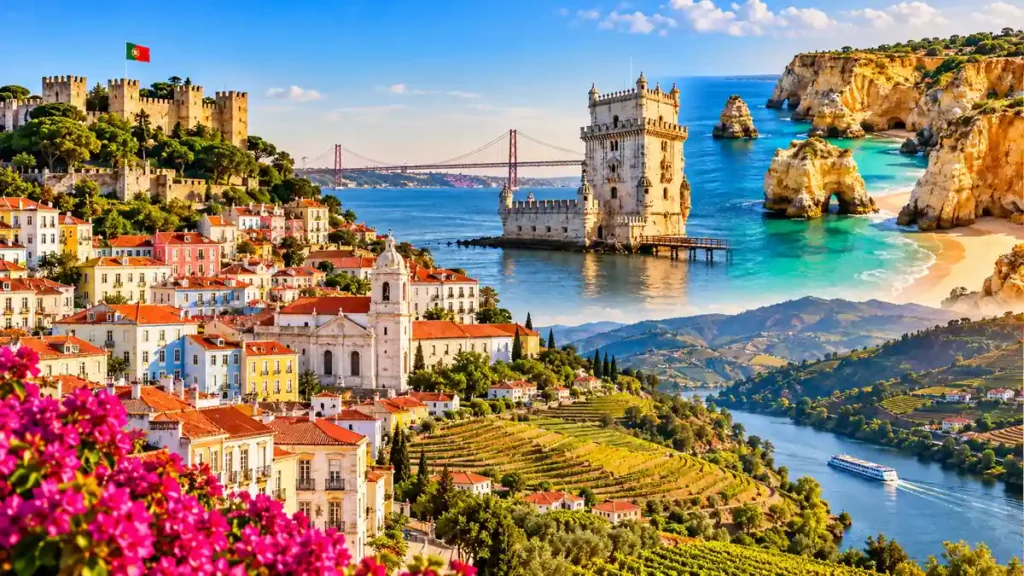
Portugal packs an extraordinary variety of experiences into a relatively small country. You can explore medieval castles in the morning, wander through historic neighborhoods in the afternoon, and watch the Atlantic sunset from a dramatic clifftop. Yet choosing where to go can be surprisingly difficult when every region offers something different.
The best places to visit in portugal include Lisbon, Porto, Sintra, the Algarve, Douro Valley, Madeira, the Azores, Évora, Coimbra, and several lesser-known coastal towns. Lisbon and Porto are ideal for culture and architecture, while the Algarve offers beaches, Madeira provides mountain scenery, and the Douro Valley is famous for vineyards and river landscapes.
From first-time visitors planning a weeklong itinerary to returning travelers seeking quieter corners, this guide explores Portugal’s most rewarding destinations, what makes each special, and how to plan a trip around your interests.
1. Best Places to Visit in Portugal for History and Culture
Portugal’s cities and historic towns reveal centuries of maritime exploration, Roman influence, Moorish architecture, and distinctive Portuguese traditions. These destinations are particularly rewarding for travelers interested in monuments, museums, local food, and atmospheric streets.
Lisbon – Best for First-Time Visitors


Lisbon is an excellent starting point for exploring Portugal. Built across hills overlooking the Tagus River, the capital combines historic neighborhoods with contemporary restaurants, museums, and waterfront public spaces.
Alfama, one of Lisbon’s oldest districts, is a maze of narrow streets, tiled buildings, and small squares. Nearby, São Jorge Castle provides sweeping views across the city’s red rooftops.
In Belém, the Jerónimos Monastery and Belém Tower reflect Portugal’s maritime history. Both are UNESCO-listed landmarks associated with the country’s Age of Discoveries.
Other worthwhile experiences include exploring Praça do Comércio, visiting the National Tile Museum, and listening to traditional fado music.
Top attractions: São Jorge Castle, Alfama, Jerónimos Monastery, Belém Tower, and Praça do Comércio.
Recommended stay: 3–4 days.
Travel tip: Lisbon’s hills can be tiring. Group attractions by neighborhood and use the metro, trams, or funiculars when practical. Tram 28 is famous but can become extremely crowded.
Lisbon is particularly suitable for visitors who want a mix of sightseeing, Portuguese cuisine, architecture, and nightlife.
Portugal, Europe
+1
Porto – Best for Riverside Views and Architecture


Located in northern Portugal, Porto offers a different atmosphere from Lisbon. Its historic center rises above the Douro River, with colorful buildings, stone churches, and narrow streets leading toward the waterfront.
The Ribeira district is one of Porto’s most recognizable areas. Its riverside restaurants and historic façades create a memorable setting, especially in the evening.
Cross the Dom Luís I Bridge to Vila Nova de Gaia for panoramic views and the traditional port wine cellars. Visitors can also explore São Bento railway station, famous for its decorative azulejo tile panels.
The Clérigos Tower, Livraria Lello, and Palácio da Bolsa are other notable landmarks.
Top attractions: Ribeira, Dom Luís I Bridge, São Bento Station, Clérigos Tower, and Vila Nova de Gaia.
Recommended stay: 2–3 days.
Travel tip: Porto is compact but steep. Comfortable shoes are essential, particularly when walking between Ribeira and the upper city.
Porto is especially rewarding for architecture lovers, food enthusiasts, and travelers who prefer exploring a historic city on foot.
Portugal, Europe
Sintra – Best for Fairy-Tale Palaces


Less than an hour from Lisbon by train, Sintra feels remarkably different from the capital. Forested hills, extravagant palaces, and romantic gardens make it one of Portugal’s most distinctive destinations.
The colorful Pena Palace stands above the town, combining architectural styles in a dramatic hilltop setting. The nearby Moorish Castle offers views across the surrounding countryside.
Quinta da Regaleira is another highlight, particularly its gardens, tunnels, and famous Initiation Well.
Sintra’s cultural landscape is recognized by UNESCO, reflecting the historical relationship between its architecture and natural surroundings.
Top attractions: Pena Palace, Moorish Castle, Quinta da Regaleira, and Sintra National Palace.
Recommended stay: 1–2 days.
Travel tip: Start early and avoid scheduling too many palaces in one day. The attractions are spread across steep hills, and transport queues can be significant.
Although Sintra is a popular Lisbon day trip, staying overnight allows more time to enjoy its quieter streets after many day visitors leave.
Coimbra – Best for University Heritage

Coimbra is a historic university city between Lisbon and Porto. Its academic traditions and medieval streets make it an appealing stop for travelers interested in Portuguese intellectual and cultural history.
The University of Coimbra, established in 1290, is among Europe’s oldest universities. Its historic university complex is UNESCO-listed.
The magnificent Joanina Library is a major attraction, known for its elaborate Baroque interiors and historic book collection.
Beyond the university, visitors can explore Coimbra’s old cathedral, riverside paths, and botanical garden.
Top attractions: University of Coimbra, Joanina Library, Old Cathedral, and Botanical Garden.
Recommended stay: 1–2 days.
Travel tip: Coimbra works well as an overnight stop when traveling between Lisbon and Porto. Staying longer gives you time to explore the lower town and university district without rushing.
Évora – Best for Roman History and Alentejo Culture

Situated in the Alentejo region, Évora is known for its preserved historic center, whitewashed buildings, and monuments representing different periods of Portuguese history.
The Roman Temple of Évora is one of the city’s most recognizable landmarks. Nearby, Évora Cathedral provides an impressive example of medieval religious architecture.
The Chapel of Bones, decorated with human bones and skulls, offers a striking and contemplative experience.
Évora is also an excellent introduction to Alentejo cuisine, including regional bread dishes, olive oil, cheeses, and traditional stews.
Top attractions: Roman Temple, Évora Cathedral, Chapel of Bones, and Giraldo Square.
Recommended stay: 1–2 days.
Travel tip: Summer afternoons in Alentejo can be extremely hot. Spring and autumn are generally more comfortable for walking around the historic center.
2. Best Places to Visit in Portugal for Beaches and Coastal Scenery
Portugal’s coastline ranges from sheltered sandy bays to dramatic cliffs and powerful Atlantic surf. The ideal beach destination depends on whether you prefer swimming, walking, water sports, or quiet coastal villages.
Algarve – Best for Golden Beaches and Coastal Adventures


8
The Algarve is Portugal’s most famous beach region, stretching along the country’s southern coast.
Its landscape includes golden limestone cliffs, sandy coves, fishing towns, and lively seaside resorts. Some beaches are sheltered by rock formations, while others face more exposed stretches of the Atlantic.
Lagos is particularly popular for its historic center and spectacular coastal scenery. Nearby Ponta da Piedade features towering rock formations, arches, and sea caves.
Praia da Marinha is another celebrated beach, while the Benagil area is known for its remarkable coastal cave formations.
Farther east, Tavira offers a quieter atmosphere and access to the sandy islands of the Ria Formosa lagoon.
Top attractions: Lagos, Ponta da Piedade, Praia da Marinha, Benagil, Tavira, and Ria Formosa Natural Park.
Recommended stay: 4–6 days.
Travel tip: July and August are the busiest months. May, June, September, and early October often provide a more comfortable balance of weather and crowds.
Access to caves and beaches can be affected by sea conditions and local safety rules. Check current restrictions before planning water activities.
The Algarve is particularly suitable for families, beach lovers, and travelers seeking a relaxed coastal holiday.
Lonely Planet
Cascais – Best for an Easy Coastal Escape

Cascais is a seaside town west of Lisbon that combines beaches, elegant architecture, and a walkable historic center.
Once associated with Portuguese royalty, Cascais retains an attractive mix of traditional buildings, coastal promenades, and modern cafés.
Praia da Rainha and Praia da Conceição are convenient beaches close to the town center. The nearby Boca do Inferno is a rocky coastal formation where waves crash against dramatic cliffs.
For a longer excursion, Guincho Beach is known for its winds and surf.
Top attractions: Cascais Old Town, Boca do Inferno, Praia da Rainha, and Guincho Beach.
Recommended stay: 1–2 days.
Travel tip: Cascais is easily reached from Lisbon by train, making it a practical day trip without needing a rental car.
Nazaré – Best for Giant Waves and Surfing Culture

Nazaré is a traditional coastal town internationally recognized for enormous Atlantic waves.
Its reputation comes largely from Praia do Norte, where underwater geography helps create exceptional wave conditions during powerful winter swells.
The Forte de São Miguel Arcanjo is a famous viewpoint for watching the ocean, although giant waves are not guaranteed on any particular day.
Away from the surf, Nazaré has a broad sandy town beach, seafood restaurants, and a historic upper district called Sítio.
Top attractions: Praia do Norte, Sítio, Nazaré Beach, and Forte de São Miguel Arcanjo.
Recommended stay: 1–2 days.
Travel tip: The most famous big-wave conditions typically occur between autumn and early spring. Always follow local safety restrictions and observe from designated viewpoints.
Costa Vicentina – Best for Wild Beaches and Coastal Hiking

The Costa Vicentina, along Portugal’s southwestern coastline, offers a more rugged alternative to the developed beach resorts of the central Algarve.
This area is known for high cliffs, windswept beaches, small fishing villages, and protected natural landscapes.
Towns such as Vila Nova de Milfontes, Zambujeira do Mar, and Odeceixe provide convenient bases for exploring the coast.
The Rota Vicentina walking network includes coastal and inland trails, with sections offering extraordinary views of the Atlantic Ocean.
Top attractions: Odeceixe Beach, Zambujeira do Mar, Vila Nova de Milfontes, and the Fishermen’s Trail.
Recommended stay: 2–4 days.
Travel tip: A car provides greater flexibility because public transport between smaller coastal settlements can be limited.
This region is ideal for travelers who prioritize nature, photography, hiking, and uncrowded landscapes over resort amenities.
3. Best Places to Visit in Portugal for Nature and Outdoor Adventures
Portugal’s natural attractions extend far beyond its coastline. Volcanic islands, mountain ranges, and vineyard-covered valleys provide opportunities for hiking, scenic drives, wildlife watching, and rural exploration.
Madeira – Best for Mountain Landscapes and Hiking


7
Madeira is an Atlantic island renowned for steep mountains, lush vegetation, and dramatic coastal scenery.
Its capital, Funchal, offers historic streets, botanical gardens, markets, and oceanfront promenades.
Away from the city, Madeira’s famous levadas—historic irrigation channels accompanied by walking paths—provide access to forests, valleys, and waterfalls.
Pico do Arieiro and Pico Ruivo are among the island’s best-known mountain destinations. On clear days, their high-altitude landscapes create spectacular views above the clouds.
The Laurisilva forest, a UNESCO World Heritage Site, preserves an important example of subtropical laurel forest.
Top attractions: Funchal, Pico do Arieiro, Pico Ruivo, Laurisilva Forest, and Cabo Girão.
Recommended stay: 5–7 days.
Travel tip: Mountain weather changes quickly, and some trails close because of rockfalls, maintenance, or severe conditions. Check official trail status before hiking.
Madeira is especially attractive for active travelers who enjoy hiking, mountain photography, and dramatic scenery.
Azores – Best for Volcanic Lakes and Wildlife


7
The Azores are a group of nine volcanic islands in the North Atlantic.
Their landscapes include crater lakes, geothermal springs, waterfalls, green pastures, and rugged coastlines.
São Miguel, the largest island, is a popular introduction to the archipelago. Sete Cidades is famous for its volcanic crater and lakes, while Lagoa do Fogo offers striking mountain scenery.
Furnas is known for geothermal activity, thermal bathing areas, and traditional food prepared using volcanic heat.
The Azores are also associated with whale and dolphin watching, although sightings depend on conditions and season.
Top attractions: Sete Cidades, Lagoa do Fogo, Furnas, and Ponta Delgada.
Recommended stay: 5–7 days for São Miguel; longer for multiple islands.
Travel tip: The weather can change several times in one day. Keep your itinerary flexible and allow extra time for outdoor viewpoints.
The Azores are among Portugal’s most rewarding destinations for travelers interested in geology, wildlife, and nature-based experiences.
Douro Valley – Best for Vineyards and Scenic River Journeys

The Douro Valley is one of Portugal’s most recognizable rural landscapes.
East of Porto, the Douro River winds through steep hillsides covered in terraced vineyards. The Alto Douro Wine Region is recognized by UNESCO for its cultural landscape and centuries of winemaking traditions.
Pinhão is a particularly scenic town and a convenient base for exploring the valley.
Visitors can enjoy river cruises, scenic train journeys, vineyard walks, and viewpoints overlooking the river.
Although the region is famous for port wine, it also produces a wide range of still wines.
Top attractions: Pinhão, Peso da Régua, Douro River viewpoints, and historic wine estates.
Recommended stay: 2–3 days.
Travel tip: The railway between Porto and the Douro Valley offers attractive river scenery. For more remote viewpoints, a car is useful, although some roads are narrow and winding.
The grape harvest season, generally around September and sometimes extending into October, can be especially atmospheric.
Lonely Planet
Peneda-Gerês National Park – Best for Mountains and Waterfalls

Peneda-Gerês National Park is Portugal’s only national park, situated in the mountainous north near the Spanish border.
The park protects granite peaks, forests, rivers, traditional villages, and wildlife habitats.
Hiking trails lead through landscapes that feel very different from Portugal’s urban and coastal regions. Stone-built settlements, historic agricultural terraces, and mountain viewpoints add cultural interest.
Waterfalls and natural swimming areas attract visitors during warmer months, although water conditions and access restrictions vary.
Top attractions: Pedra Bela viewpoint, traditional mountain villages, forest trails, and waterfalls.
Recommended stay: 2–3 days.
Travel tip: A rental car is useful for reaching dispersed trailheads and villages. Choose walking routes suited to your fitness and check local conditions before setting out.
4. Best Places to Visit in Portugal for Charming Towns and Hidden Gems
Some of Portugal’s most memorable destinations are smaller towns that preserve traditional architecture, local customs, and a slower pace of life. These places are excellent additions to a longer itinerary.
Óbidos – Best for Medieval Streets and Romantic Atmosphere

Óbidos is a beautifully preserved walled town in central Portugal.
Its narrow cobbled streets wind between whitewashed houses decorated with colorful flowers and painted borders.
The medieval walls and castle dominate the town, offering a glimpse into Portugal’s fortified past.
Small shops sell local handicrafts and ginjinha, a traditional sour cherry liqueur sometimes served in chocolate cups.
Top attractions: Óbidos Castle, medieval walls, Porta da Vila, and historic streets.
Recommended stay: Half a day to one day.
Travel tip: Visit early in the morning or later in the afternoon to enjoy quieter streets. Walking along the town walls requires care because some sections have steep, exposed edges.
Aveiro – Best for Canals and Art Nouveau Architecture

Aveiro is a small coastal city known for its canals, colorful traditional boats, and Art Nouveau architecture.
The city’s moliceiro boats were historically used to collect seaweed from the nearby lagoon. Today, they are among Aveiro’s most recognizable symbols.
Visitors can explore the canal-side streets, admire decorative façades, and sample ovos moles, a traditional sweet made with egg yolks and sugar.
Nearby Costa Nova is famous for its striped wooden houses and coastal scenery.
Top attractions: Aveiro canals, Art Nouveau buildings, Costa Nova, and the Aveiro Museum.
Recommended stay: 1–2 days.
Travel tip: Aveiro is accessible by train from Porto and Coimbra, making it a convenient stop during a journey through central Portugal.
Tomar – Best for Templar History

Tomar is one of the country’s most fascinating destinations for medieval history.
Its main attraction is the Convent of Christ, a UNESCO World Heritage Site associated with the Knights Templar and the Order of Christ.
The complex combines Romanesque, Gothic, Manueline, and Renaissance architectural elements.
The historic center is pleasant to explore, with traditional streets, riverside areas, and cafés.
Top attractions: Convent of Christ, Tomar Castle, Church of São João Baptista, and Nabão River.
Recommended stay: 1–2 days.
Travel tip: Allow several hours for the Convent of Christ. Its extensive architectural details and historic spaces deserve more than a brief visit.
5. How to Choose the Best Places to Visit in Portugal
Portugal’s variety is one of its strengths, but trying to visit too many destinations can make a holiday unnecessarily rushed.
The most useful approach is to select places based on your travel interests, available time, and preferred season.
Best Portugal Destinations by Travel Style
| Travel interest | Recommended destinations |
|---|---|
| First-time visitors | Lisbon, Porto, Sintra |
| Beaches and swimming | Algarve, Cascais, Tavira |
| History and architecture | Évora, Coimbra, Tomar, Óbidos |
| Hiking and mountains | Madeira, Peneda-Gerês |
| Volcanic scenery | Azores |
| Wine landscapes | Douro Valley |
| Surfing | Nazaré, Ericeira, Costa Vicentina |
| Romantic getaways | Sintra, Porto, Óbidos |
| Family holidays | Algarve, Lisbon, Cascais |
| Quieter rural travel | Alentejo, Costa Vicentina, northern Portugal |
Which Part of Portugal Is the Most Beautiful?
There is no single answer because Portugal’s landscapes differ considerably.
The Algarve is particularly impressive for golden cliffs and turquoise coastal waters. Madeira offers dramatic mountains and lush forests, while the Azores are known for volcanic lakes and green landscapes.
The Douro Valley stands out for its terraced vineyards and winding river.
For architectural beauty, Sintra’s palaces and Porto’s historic riverside neighborhoods are especially memorable.
Travelers seeking natural scenery may prefer Madeira or the Azores, while those interested in picturesque towns may find Sintra, Óbidos, and Porto more appealing.
What Is the Best Place to Visit in Portugal for the First Time?
Lisbon is generally the most practical starting point for a first visit.
The capital provides access to major historical attractions, public transportation, traditional cuisine, and nearby destinations such as Sintra and Cascais.
For a broader introduction to Portugal, combining Lisbon with Porto creates a balanced itinerary covering two distinct urban environments.
Travelers with additional time can include the Douro Valley or Algarve.
6. Best Time to Visit Portugal
Portugal is a year-round destination, but the best time to travel depends on the activities and regions you want to explore.
Spring and autumn are particularly appealing for city sightseeing, while summer is popular for beach holidays.
Portugal’s Travel Seasons
| March–May | Spring flowers, comfortable sightseeing temperatures, hiking, and fewer crowds than peak summer. |
| June–August | Beach holidays, festivals, long daylight hours, and peak visitor numbers. |
| September–October | Warm early-autumn weather, wine harvest activities, and generally pleasant sightseeing. |
| November–February | Quieter cities, cooler weather, increased rainfall in many regions, and potential big-wave conditions at Nazaré. |
Is Portugal Better in Summer or Winter?
Summer is usually preferable for travelers planning a traditional beach holiday, especially in the Algarve. However, accommodation can be more expensive, popular attractions become crowded, and inland temperatures can be uncomfortable.
Winter is generally quieter and can suit travelers interested in city breaks, museums, and cultural experiences.
Lisbon and the Algarve often have milder winters than much of northern Europe, although rain and cool evenings are still possible.
Madeira is attractive throughout the year, but mountain conditions can vary significantly regardless of the season.
For many travelers, May, June, September, and early October offer the best overall balance between weather, crowds, and sightseeing opportunities.
Europe
+1
7. How to Plan a Portugal Itinerary
The ideal Portugal itinerary depends more on how much time you have than on the total number of attractions you want to see.
Although mainland Portugal is relatively compact, travel between cities, rural regions, and islands still requires planning.
5-Day Portugal Itinerary
A five-day trip is best focused on Lisbon and its surroundings.
| Day | Destination | Main activities |
|---|---|---|
| 1 | Lisbon | Alfama, São Jorge Castle, city viewpoints |
| 2 | Lisbon | Belém, Jerónimos Monastery, waterfront |
| 3 | Sintra | Pena Palace, Quinta da Regaleira |
| 4 | Cascais | Historic center, beaches, Boca do Inferno |
| 5 | Lisbon | Museums, local neighborhoods, food experiences |
This itinerary avoids unnecessary long-distance transfers and provides a balanced introduction to Portuguese culture and coastal scenery.
7-Day Portugal Itinerary
With seven days, travelers can explore Lisbon, Sintra, and Porto.
| Day | Destination | Main activities |
|---|---|---|
| 1–2 | Lisbon | Historic neighborhoods, castles, Belém |
| 3 | Sintra | Palaces, gardens, medieval architecture |
| 4 | Coimbra | University, historic center |
| 5–6 | Porto | Ribeira, bridges, architecture |
| 7 | Porto | Museums, riverfront, nearby Gaia |
For travelers more interested in beaches, Coimbra and Porto can be replaced with several days in the Algarve.
10-Day Portugal Itinerary
Ten days allows a more varied journey without changing accommodation every night.
A practical route is:
- Days 1–3: Lisbon, including a day trip to Sintra.
- Days 4–5: Porto and its historic center.
- Days 6–7: Douro Valley, with time for scenic viewpoints and river landscapes.
- Days 8–10: Algarve, focusing on Lagos and nearby beaches.
This itinerary requires a longer transfer between the Douro region and the Algarve. Travelers who dislike frequent travel days may prefer to stay within northern and central Portugal.
14-Day Portugal Itinerary
Two weeks provides enough time to explore several regions more comfortably.
A suggested mainland route includes Lisbon, Sintra, Cascais, Coimbra, Porto, Douro Valley, Évora, and the Algarve.
Rather than spending one night in every destination, choose three or four bases and explore nearby attractions through day trips.
Madeira and the Azores are also excellent choices for a two-week holiday, but including them requires flights and additional travel time. They are often better enjoyed as separate island-focused trips.
8. Getting Around Portugal
Portugal has a useful combination of railways, buses, highways, and domestic flights.
The best transportation option depends on whether you plan to visit major cities or remote natural attractions.
Traveling by Train
Portugal’s national railway operator, Comboios de Portugal (CP), connects major cities and numerous smaller destinations.
The Alfa Pendular and Intercidades services provide intercity connections, including routes between Lisbon, Coimbra, and Porto.
Regional trains serve additional towns, while suburban rail networks connect Lisbon with Sintra and Cascais.
Train travel is particularly convenient for visitors focusing on Portugal’s major urban destinations.
Traveling by Car
A rental car offers greater flexibility in rural areas such as the Douro Valley, Alentejo, Costa Vicentina, and Peneda-Gerês.
However, driving is less convenient in historic city centers where streets can be narrow and parking limited.
Some Portuguese highways use electronic toll systems, so visitors should understand their rental vehicle’s toll arrangements.
Traveling by Bus
Long-distance buses connect many cities and towns, including destinations with limited railway service.
Operators such as Rede Expressos provide intercity services across mainland Portugal.
Buses can be useful for reaching towns such as Nazaré, Évora, and smaller coastal destinations.
Traveling to Madeira and the Azores
Madeira and the Azores are reached primarily by air from mainland Portugal.
Inter-island transportation in the Azores may involve flights or ferries, depending on the islands and season.
Because weather can disrupt island transportation, avoid scheduling tight connections between separate flights.
9. Practical Travel Tips for Visiting Portugal
A few simple decisions can make traveling through Portugal considerably easier.
Plan Around Geography
Lisbon, Sintra, and Cascais form a convenient cluster. Porto and the Douro Valley are another natural combination.
The Algarve is farther south, while Madeira and the Azores require separate island travel arrangements.
Grouping nearby destinations reduces transport time and creates more opportunities to explore each place properly.
Allow Time for Popular Attractions
Major landmarks such as Pena Palace, Jerónimos Monastery, and Porto’s most famous historic attractions can become crowded.
Advance reservations may be useful where timed-entry systems are available.
Check official attraction websites for current opening hours, restoration work, and access requirements.
Expect Different Weather Across Regions
Northern Portugal is generally wetter than the south, while inland Alentejo can become extremely hot in summer.
Coastal locations may be windy even on sunny days.
Mountain areas in Madeira and Peneda-Gerês can experience sudden weather changes, making suitable footwear and extra clothing important.
Understand Local Customs
Portuguese is the official language, although English is widely spoken in many tourist areas.
Learning a few basic phrases can improve everyday interactions:
- Olá — Hello
- Obrigado/Obrigada — Thank you
- Por favor — Please
- Bom dia — Good morning
Portugal uses the euro, and card payments are common, although carrying some cash is useful for smaller establishments.
Explore Portuguese Food
Food is an essential part of the travel experience.
Bacalhau, or salted cod, appears in numerous traditional dishes. Pastéis de nata are famous Portuguese custard tarts, while grilled sardines are especially associated with summer.
Porto is known for francesinha, a rich sandwich covered in sauce, while Alentejo offers hearty regional dishes.
In coastal towns, fresh seafood is a major highlight.
Conclusion: Discover the Best Places to Visit in Portugal
The best places to visit in portugal depend on the experiences you want from your journey.
Lisbon and Porto offer an excellent introduction to Portuguese history, architecture, and food. Sintra brings romantic palaces and forested hills, while Coimbra and Évora reveal the country’s academic and ancient heritage.
For natural beauty, the Algarve provides spectacular beaches, Madeira offers mountain adventures, and the Azores deliver volcanic landscapes. The Douro Valley is ideal for scenic river journeys, while smaller destinations such as Óbidos, Aveiro, and Tomar reward travelers who enjoy exploring beyond the busiest tourist routes.
For a first visit, start with Lisbon, Sintra, and Porto. With more time, add a coastal region, a rural landscape, or an island destination according to your interests.
Portugal is best appreciated when you leave enough time to experience each place rather than simply moving from one landmark to the next.