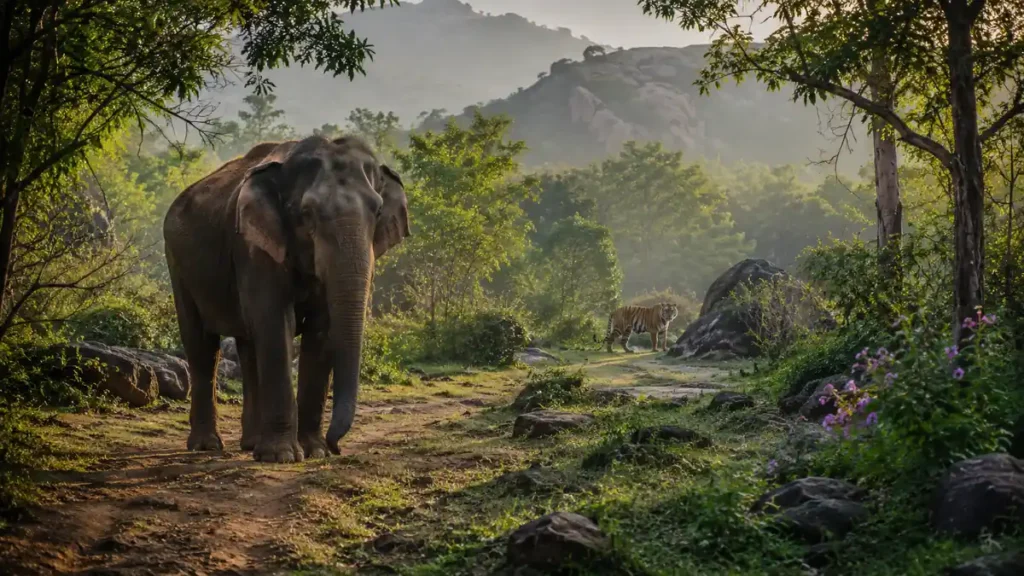
A protected wildlife landscape survives remarkably close to Bengaluru’s busy southern suburbs. Yet many visitors arrive at bannerghatta national park without realizing that the national park and the popular zoo-and-safari complex are two different, though closely connected, places.
bannerghatta national park is a protected forest near Bengaluru, Karnataka, known for Asian elephants, leopards, sloth bears, birds, and dry deciduous habitat. Most tourists visit the adjoining Bannerghatta Biological Park, which contains a zoo, managed wildlife safari, Butterfly Park, and conservation facilities. A complete visit generally takes four to six hours.
This distinction matters when checking maps, buying tickets, and deciding what kind of wildlife experience to expect. Here is everything you need to plan an informed visit.
bannerghatta national park at a Glance
Bannerghatta National Park lies in the Anekal region south of Bengaluru. Established in 1974, the protected landscape contains rocky hills, valleys, seasonal streams, scrubland, and dry deciduous forest.
The main public attraction is Bannerghatta Biological Park, commonly shortened to BBP. This organized visitor complex operates alongside the wider national park and provides controlled access to wildlife exhibits and safari zones.
| Visitor information | Details |
|---|---|
| Location | Bannerghatta, Bengaluru, Karnataka |
| National park established | 1974 |
| Approximate protected area | Around 260 square kilometres |
| Main tourist facility | Bannerghatta Biological Park |
| Distance from central Bengaluru | Approximately 22–25 kilometres |
| Regular visitor hours | Around 9:30 a.m. to 5:00 or 5:30 p.m. |
| Weekly closure | Tuesday |
| Recommended visit duration | 4–6 hours |
| Best general season | October to February |
| Major attractions | Zoo, safari, Butterfly Park and wildlife education |
| Suitable for | Families, students, photographers and nature enthusiasts |
Timings, tariffs, available vehicles, and animal exhibits can change. Confirm them through the official Bannerghatta Biological Park website before travelling.
National Park vs. Biological Park: What Is the Difference?
Travel websites and map listings frequently use the two names interchangeably. In practice, they refer to different parts of the same broader conservation landscape.
Bannerghatta National Park
The national park is the larger protected natural area. It supports native vegetation and free-ranging wildlife, including elephants, leopards, gaur, deer, wild boar, and sloth bears.
It is not an unrestricted tourism zone. Visitors cannot normally drive independently through its forests or wander along unapproved trails. Access to sensitive areas is controlled to protect animals and their habitat.
Bannerghatta Biological Park
Bannerghatta Biological Park is the designated public attraction. It is managed under the Zoo Authority of Karnataka and includes:
- Bannerghatta Zoo
- Wildlife safari enclosures
- Butterfly Park
- Rescue and Rehabilitation Centre
- Veterinary and animal-care facilities
- Educational exhibits and visitor amenities
When someone searches for Bannerghatta safari tickets, zoo timings, entry fees, or online booking, the information usually concerns Bannerghatta Biological Park rather than unrestricted entry into the national park.
Quick takeaway: The national park is the protected forest ecosystem. The biological park is the organized zoo, safari, education, and conservation complex that most tourists visit.
Things to Do at bannerghatta national park
The visitor complex is divided into several attractions. Planning their order is worthwhile because safari capacity is limited and exploring the zoo requires substantial walking.
Take the Wildlife Safari
The wildlife safari is the park’s headline attraction. Visitors travel in an authorized bus, jeep, electric vehicle, or other secured safari vehicle through large, fenced habitats.
Depending on current operations, the safari route may include:
- Herbivore safari
- Bear safari
- Lion safari
- Tiger safari
- White tiger habitat
- Leopard safari
Visitors may see spotted deer, sambar, gaur, nilgai, sloth bears, lions, tigers, white tigers, and leopards. Sightings depend on the time of day, temperature, vegetation, and animal movement, so no specific encounter is guaranteed.
The route passes through hilly, forested terrain associated with the Bannerghatta and Ragihalli Reserve Forest landscapes. Only approved vehicles can enter the safari area.
Is It a Wild Jungle Safari?
Not in the same sense as a game drive through Bandipur, Nagarhole, or another tiger reserve.
Bannerghatta’s safari takes place inside managed zoological enclosures designed to provide animals with more space and naturalistic surroundings. The experience offers close observation and wildlife education, but the animals are not being tracked across an unrestricted wilderness.
This difference is sometimes omitted from travel guides. Knowing it beforehand helps visitors arrive with realistic expectations.
Explore the Leopard Safari
Bannerghatta Biological Park introduced a dedicated leopard safari across a large forested enclosure. Visitors remain inside secured vehicles while leopards move within the managed habitat.
Leopards are naturally secretive. Even inside a safari enclosure, they may rest behind rocks, trees, or vegetation. An early visit can improve comfort and visibility, but it never guarantees an active sighting.
The attraction also provides an opportunity to explain why rescued leopards cannot always be released. Injuries, prolonged captivity, human dependence, or conflict history can make permanent managed care necessary.
Walk Through Bannerghatta Zoo
Bannerghatta Zoo began as a small picnic and wildlife area in 1971. It later developed into a recognized zoological facility containing Indian and exotic mammals, reptiles, and birds.
Animals commonly associated with its exhibits include:
- Elephants
- Tigers and leopards
- Himalayan black bears
- Deer and antelope
- Bonnet macaques
- Crocodiles
- King cobras and other reptiles
- Indigenous and exotic birds
The zoo requires more walking than many first-time visitors expect. Exploring it properly may involve covering two to three kilometres, especially when smaller exhibits are included.
Battery-operated vehicles are sometimes available for an additional charge. They are particularly useful for senior citizens, visitors with limited mobility, and families with young children. Availability can become limited during busy periods.
Visit India’s First Butterfly Park
Bannerghatta’s Butterfly Park opened in 2006 and is widely recognized as India’s first dedicated butterfly park. It covers approximately 7.5 acres and includes a conservatory, museum, landscaped habitat, and educational spaces.
The enclosed conservatory recreates humid tropical conditions using host plants, nectar-rich vegetation, shelter, and an artificial waterfall. It is designed to support multiple butterfly species and demonstrate the relationship between insects and plants.
Visitors can learn about:
- Butterfly eggs and caterpillars
- The pupal stage
- Metamorphosis
- Host plants and nectar plants
- Pollination
- Camouflage and mimicry
- Habitat conservation
- The effects of pesticides
Butterfly activity changes with sunlight, temperature, rainfall, and plant cycles. Warm, bright periods are generally better for observing active butterflies than cool or heavily overcast conditions.
Allow 30–60 minutes if you enjoy macro photography, natural history, or reading the museum displays.
Understand the Rescue and Rehabilitation Work
The Rescue and Rehabilitation Centre began operating in 2000. It cares for orphaned, injured, confiscated, abandoned, or otherwise displaced wild animals.
The facility reflects the National Zoo Policy of 1998, which requires recognized zoos to support the rescue and care of wild animals when suitable accommodation is available.
This centre is not a standard public exhibit. Limiting access protects recovering animals from crowd noise and stress while allowing veterinary teams to manage treatment, quarantine, rehabilitation, and long-term care.
Its presence shows that Bannerghatta Biological Park is more than a recreational attraction. Its wider responsibilities include:
- Wildlife rescue
- Veterinary treatment
- Rehabilitation
- Conservation breeding
- Scientific animal management
- Environmental education
- Public awareness
Animals and Biodiversity of Bannerghatta
The animals living freely in the national park are different from those maintained inside the zoo and safari enclosures. The wider landscape supports native wildlife adapted to southern Karnataka’s dry forest environment.
Mammals Found in the Landscape
Wild mammals associated with Bannerghatta include:
- Asian elephant
- Indian leopard
- Sloth bear
- Gaur
- Sambar
- Spotted deer
- Barking deer
- Wild boar
- Jackal
- Bonnet macaque
- Hanuman langur
- Small Indian civet
- Indian grey mongoose
- Indian crested porcupine
Asian elephants are central to Bannerghatta’s ecological importance. The landscape forms part of a broader zone used by elephants moving between forest patches. Roads, farms, settlements, quarries, and construction can interrupt these routes, increasing the likelihood of human–elephant conflict.
Wild leopards also inhabit the broader region. They are elusive, mostly avoid crowded areas, and should not be confused with the animals visible in managed zoo or safari habitats.
Birds, Reptiles and Insects
Bannerghatta provides habitat for woodland birds, raptors, waterbirds, and seasonal visitors. Birds seen in and around the landscape may include:
- Indian peafowl
- Parakeets
- Kingfishers
- Bee-eaters
- Drongos
- Egrets and herons
- Owls
- Eagles and other raptors
Reptiles include snakes, lizards, crocodilians, and turtles. Butterflies, bees, beetles, and other insects contribute to pollination and support the wider food web.
Forest and Plant Life
The region is dominated by southern tropical dry deciduous forest, scrub, and thorny vegetation. Bamboo, sandalwood, neem, tamarind, eucalyptus, grasses, and native shrubs occur across different parts of the landscape.
Its appearance changes sharply with the seasons. Monsoon rainfall produces greener hills and fuller streams, while the dry season reduces vegetation around water sources and makes some animal movement easier to observe.
bannerghatta national park Timings and Weekly Closure
Bannerghatta Biological Park generally opens from Wednesday through Monday and remains closed every Tuesday for maintenance and animal-care work.
The zoo and Butterfly Park typically operate from approximately 9:30 a.m. until 5:00 or 5:30 p.m. Safari boarding usually begins later in the morning and ends before the main park closes.
Because safari tickets are limited, arriving before the final entry time does not guarantee a seat. Tickets may sell out much earlier on weekends, government holidays, and school vacations.
A practical itinerary is:
- Reach the entrance between 9:00 and 9:30 a.m.
- Confirm or collect safari tickets immediately.
- Take an early available safari.
- Explore the zoo before the afternoon heat.
- Stop for lunch or a short rest.
- Visit Butterfly Park before leaving.
Four hours is enough for a focused trip. Allow five to six hours if you want to explore the zoo slowly, take the safari, visit Butterfly Park, and include rest breaks.
Ticket Prices and Safari Options
Bannerghatta Biological Park offers separate admission and combination packages. Based on the official published tariff available at the time of writing, standard prices include:
| Ticket category | Adult | Child | Senior citizen |
|---|---|---|---|
| Zoo only | ₹120 | ₹60 | ₹70 |
| Butterfly Park only | ₹50 | ₹30 | ₹30 |
| Zoo + Butterfly Park | ₹170 | ₹90 | ₹100 |
| Non-AC bus safari package, weekday | ₹370 | ₹210 | ₹260 |
| Non-AC bus safari package, weekend or holiday | ₹420 | ₹260 | ₹310 |
| AC bus safari package, weekday | ₹690 | ₹480 | Verify current rate |
| AC bus safari package, weekend or holiday | ₹740 | ₹530 | Verify current rate |
The non-AC bus package includes zoo and safari admission. The published AC bus package includes the zoo, safari, Butterfly Park, and camera access.
Private safari vehicles are charged per vehicle. Options may include:
- Six-seat non-AC jeep
- Six-seat AC jeep
- Eight-seat jeep
- Innova or Scorpio
- Four-seat electric vehicle
Prices vary by vehicle capacity, air-conditioning, and whether the visit falls on a weekday, weekend, or government holiday. Private vehicles generally cost several thousand rupees per trip.
Additional charges may apply for:
- Still cameras
- Video cameras
- Battery-operated zoo vehicles
- Boating
- Parking
- Other optional facilities
Children’s rates depend on the age classification used by the park. Carry identification when claiming a child, senior citizen, school-group, or accessibility concession.
Prices can be revised without old third-party travel pages being updated. Verify the current tariff on the official website before budgeting.
Bus Safari vs. Jeep Safari
The bus safari is the best-value choice for most visitors. It covers the main route at a relatively affordable per-person price.
Its disadvantages are larger groups, fixed seating, and limited visibility when animals appear on the opposite side.
A jeep or smaller private vehicle provides:
- Fewer passengers
- More viewing space
- Better photography angles
- Easier communication with the driver
- Greater comfort
- A considerably higher cost
A private vehicle does not guarantee additional sightings. Choose it for comfort and flexibility rather than expecting a different collection of animals.
Quick takeaway: Book the bus for affordability. Consider a jeep when travelling as a group and when unobstructed viewing matters enough to justify the higher price.
Best Time to Visit bannerghatta national park
October through February provides the most comfortable overall conditions. Temperatures are generally more pleasant for walking, and the landscape may retain post-monsoon greenery.
October to February
This period is ideal for families, photographers, and visitors planning to spend several hours outdoors. Mornings are cooler, but weekends and public holidays can be crowded.
March to May
Summer brings high temperatures, particularly around midday. Some animals rest in shaded areas during the hottest hours.
Arrive early, use sunscreen, wear a hat, and carry drinking water in an approved reusable bottle.
June to September
Monsoon rain refreshes the vegetation and makes the surrounding hills greener. Visitors should expect humidity, slippery paths, occasional heavy rain, and possible operational interruptions.
A lightweight raincoat is generally easier to manage than a large umbrella in crowded zoo paths or boarding queues.
Is a Weekday Better Than a Weekend?
Yes. A weekday morning is normally the most comfortable option.
Weekend crowds can affect:
- Entry queues
- Safari ticket availability
- Boarding times
- Parking
- Food counters
- Battery-vehicle availability
- Visibility around popular enclosures
No time guarantees active animals, but cooler morning conditions are generally better for both walking and wildlife observation.
How to Reach bannerghatta national park
The public entrance is approximately 22–25 kilometres south of central Bengaluru. Actual travel time depends heavily on traffic and may be much longer than the distance suggests.
When using a map application, search for “Bannerghatta Biological Park” rather than selecting an arbitrary point inside Bannerghatta National Park. This should direct you toward the public entrance and ticketing area.
By Car or Taxi
A private car or taxi is the simplest choice for families and groups. Bannerghatta Road is the main approach from Bengaluru, but congestion is common near major junctions and developing suburbs.
Leave early, particularly on weekends. A journey that appears short on the map can take well over an hour during peak traffic.
Parking is available near the visitor complex, subject to capacity and current charges.
By BMTC Bus
Bengaluru Metropolitan Transport Corporation services connect different parts of the city with Bannerghatta and nearby stops.
Bus routes and frequencies can change, so check the current BMTC journey planner before departure. Some journeys require a transfer.
If staying until closing, confirm the return schedule in advance rather than assuming direct buses will run frequently throughout the evening.
By Metro and Connecting Transport
Namma Metro does not run directly to the biological park. Visitors can travel to a convenient station in southern Bengaluru and complete the journey by BMTC bus, taxi, or auto-rickshaw.
The most practical station depends on your starting point and the active metro network. Check real-time navigation rather than relying on an older article that names one station as permanently “nearest.”
From Kempegowda International Airport
Kempegowda International Airport is more than 50 kilometres away by road. Traffic can make the journey lengthy, so visiting between closely timed flights is risky.
A prepaid taxi or app-based cab is usually the simplest option. Allow a generous buffer for the return journey.
From Bengaluru Railway Stations
KSR Bengaluru City, Bengaluru Cantonment, and Yeshwanthpur railway stations are all some distance from Bannerghatta. Taxis provide the most direct connection, while metro-and-road combinations may reduce the cost.
Avoid travelling with luggage if possible. Cloakroom availability should be verified before relying on it.
What to Carry and Wear
Comfortable preparation makes a noticeable difference because the trip involves walking, waiting outdoors, and boarding safari vehicles.
Bring:
- Comfortable closed shoes
- Refillable water bottle
- Hat or cap
- Sunscreen
- Lightweight raincoat during monsoon
- Small backpack
- Essential medication
- Mobile power bank
- Binoculars
- Valid identification
- Digital or printed ticket confirmation
Wear breathable clothing in neutral or subdued colours. The park discourages fluorescent and unusually bright clothing because it promotes a quiet, nature-focused visitor environment.
Single-use plastic covers and similar disposable items are prohibited. Use reusable containers and check the current rules before bringing outside food.
Visitor Facilities and Accessibility
Available facilities generally include:
- Toilets
- Resting areas
- Drinking-water points
- Cloakroom
- Wheelchairs
- Food outlets near visitor zones
- Battery-operated vehicles
- Parking
- Boating, when operational
Facility availability can vary with maintenance, weather, crowd levels, and operating conditions.
Visitors using wheelchairs should expect that some outdoor paths may be uneven or crowded. Contacting the park before travelling can clarify current wheelchair access, battery-vehicle availability, and assistance arrangements.
Practical Tips That Actually Improve the Visit
Book Safari Tickets in Advance
Safari seats are limited and can sell out. Online booking is particularly useful for weekends and holidays.
Save the confirmation offline or take a screenshot. Mobile connectivity or website access may be unreliable when you reach the entrance.
Secure the Safari Before Exploring the Zoo
A common mistake is entering the zoo first and trying to buy a safari ticket later. By that point, the remaining slots may be inconvenient or sold out.
Confirm the safari reservation as soon as you arrive, then organize the other attractions around the boarding time.
Prepare for Two to Three Kilometres of Walking
The zoo feels manageable near the entrance, but the total walking distance adds up. Take breaks before fatigue becomes a problem.
Families with young children and older adults should enquire about battery-operated transport early because availability may decrease later in the day.
Keep Animal-Sighting Expectations Realistic
Animals do not perform on schedule. Heat, shade, feeding routines, enclosure design, and individual behaviour determine what visitors see.
A quiet animal resting behind vegetation is not necessarily absent or poorly managed. Move slowly, observe carefully, and avoid shouting to attract attention.
Follow Photography Rules
Still cameras and video equipment may require separate tickets. Some combination packages include camera access, while other tickets do not.
Avoid flash photography, especially around nocturnal animals, reptiles, and indoor exhibits. Flash can disturb animals and often produces poor images through glass.
Plan Meals Before Entering
Food choices can be limited or concentrated near specific visitor areas. Eat breakfast before arrival and carry only permitted refreshments in reusable packaging.
Never display food near monkeys, feed zoo animals, or throw leftovers into enclosures.
Respect the Silent-Zone Approach
Keep music, speakerphone calls, and loud conversation to a minimum. Headphones are more appropriate than external speakers.
Quiet behaviour improves the experience for wildlife, staff, and other visitors.
Rules Visitors Should Follow
Responsible behaviour is essential in any zoological or protected wildlife setting.
Do not:
- Feed or tease animals
- Throw objects into enclosures
- Tap enclosure glass
- Pluck flowers or damage plants
- Leave a safari vehicle
- Extend hands or cameras outside the vehicle
- Carry prohibited plastic items
- Play loud music
- Cross barriers
- Enter restricted forest trails
- Leave food or litter behind
Follow the driver’s instructions during the safari. Barriers and closed zones exist for animal welfare and visitor safety, not merely crowd control.
Conservation Importance and Environmental Challenges
Bannerghatta is ecologically unusual because a significant wildlife landscape survives beside one of India’s largest metropolitan areas.
That proximity creates serious pressure. Roads, residential development, farms, quarries, electrical infrastructure, and commercial construction can divide habitat and narrow animal movement routes.
Elephant Corridors and Human–Wildlife Conflict
Asian elephants need connected landscapes to reach food, water, seasonal habitat, and other herds. When traditional routes become blocked, elephants may enter farms and settlements.
The result can include:
- Crop damage
- Property loss
- Road accidents
- Human injury
- Elephant injury or death
- Retaliatory conflict
Protecting ecological corridors is therefore as important as protecting isolated blocks of forest.
Other Threats
The landscape also faces pressure from:
- Forest fires
- Plastic waste
- Noise pollution
- Road collisions
- Illegal grazing
- Water shortages
- Invasive plant species
- Unregulated tourism
- Disturbance near forest boundaries
Visitors cannot solve these challenges alone, but responsible tourism still has value. Following park rules, reducing waste, using authorized services, and respecting restricted areas help prevent additional pressure.
Education and Rescue
Bannerghatta Biological Park connects millions of urban visitors with wildlife conservation. Its educational displays, rescue work, veterinary facilities, and naturalistic safari habitats can help people understand why animals need secure habitats beyond zoo boundaries.
The strongest visitor experience is not merely seeing a tiger or leopard. It is leaving with a clearer understanding of habitat protection, animal welfare, and the consequences of fragmented forests.
Nearby Attractions
Visitors with additional time sometimes combine Bannerghatta with places elsewhere in the Anekal and southern Bengaluru region.
Frequently mentioned locations include:
- Champakadhama Temple
- Suvarnamukhi temple and hill area
- Thottikallu Falls, subject to season and legal access
- Rural landscapes south of Bengaluru
Access rules can change. Some trails shown on informal maps may cross protected forests, private property, elephant habitat, or temporarily restricted areas.
Do not enter remote forest roads or hiking routes without confirming that public access is permitted.
Is bannerghatta national park Worth Visiting?
bannerghatta national park is worth visiting for families, students, wildlife learners, butterfly enthusiasts, and travellers seeking a nature-oriented day trip from Bengaluru.
Its biggest strengths are the combination of a zoo, managed safari, Butterfly Park, conservation education, and proximity to the city. The main drawbacks are traffic, weekend crowds, extensive walking, limited safari capacity, and the controlled nature of the wildlife experience.
For a smoother trip, visit on a weekday morning, verify the Tuesday closure, book the safari before travelling, and arrive close to opening time. Most of all, remember what makes Bannerghatta significant: it is not simply a tourist attraction but a living conservation landscape under intense pressure from the city surrounding it.