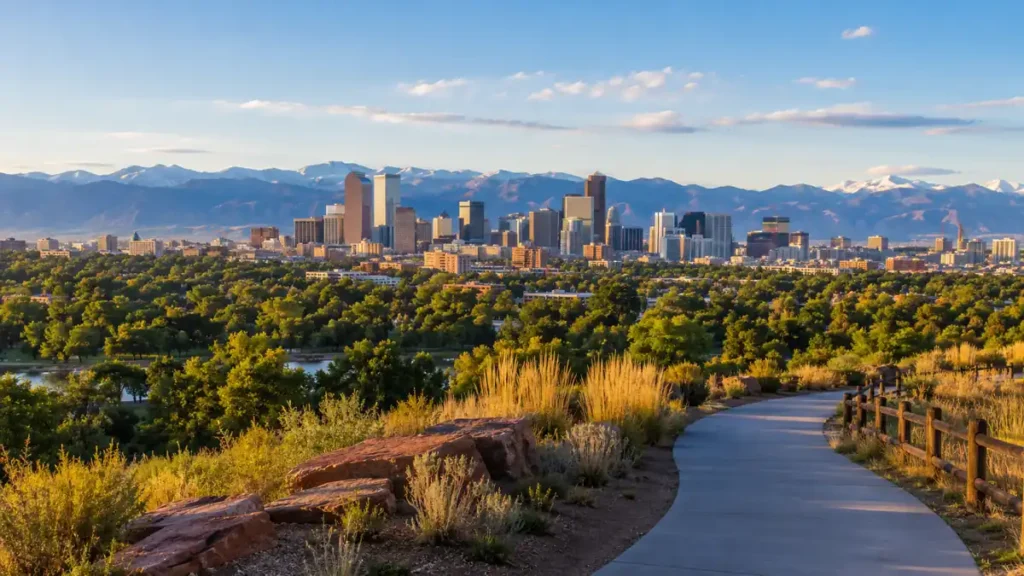
Denver can feel like two destinations in one. It has the museums, restaurants, sports venues, and creative neighborhoods of a major city, yet the Rocky Mountain foothills begin just beyond its western edge.
The best things to do in denver include exploring Union Station and RiNo, seeing a concert or hiking at Red Rocks, visiting major museums, relaxing in urban parks, attending a professional sports game, and taking a day trip into the mountains. First-time visitors should allow at least three days for the city and one additional day for the surrounding scenery.
This guide focuses on experiences that reveal Denver’s character—not simply attractions that happen to appear on every tourist map.
Best things to do in denver for first-time visitors
If you only have a weekend, prioritize experiences that combine Denver’s history, culture, food, and outdoor setting.
| Experience | Best for | Suggested time | Cost level |
|---|---|---|---|
| Denver Union Station and LoDo | Architecture, dining, history | 2–3 hours | Free–Moderate |
| Red Rocks Park & Amphitheatre | Scenery, hiking, music | 3–5 hours | Free unless attending an event |
| Denver Art Museum | Art and architecture | 2–4 hours | Moderate |
| RiNo Art District | Murals, food, nightlife | 2–4 hours | Free–Moderate |
| Denver Botanic Gardens | Nature and photography | 2–3 hours | Moderate |
| City Park and science museum | Families, skyline views | Half day | Free–Moderate |
| Colorado State Capitol | History and city views | 1–2 hours | Free |
| Coors Field or another sports venue | Live entertainment | 3–4 hours | Varies |
1. Start at Denver Union Station
Denver Union Station is more than a railway terminal. Its restored Great Hall functions as an elegant public living room surrounded by restaurants, cafés, shops, and hotel spaces.
Look up at the arched windows and ornate chandeliers before walking through Lower Downtown, usually called LoDo. The surrounding blocks contain some of Denver’s best-preserved historic warehouses, many now occupied by restaurants, galleries, and breweries.
Union Station is also a practical starting point. RTD’s A Line connects Denver International Airport with the station in approximately 37 minutes, making downtown accessible without renting a car. Check current schedules before traveling because services and fares can change.
2. Walk through LoDo and Larimer Square
LoDo is one of the easiest parts of Denver to explore on foot. A relaxed route can include Union Station, Wynkoop Street, McGregor Square, Coors Field, and Larimer Square.
Larimer Square occupies a particularly important place in local history. Its Victorian buildings stand along Denver’s oldest commercial block, while overhead lights give the street a warm atmosphere after sunset.
The area is polished and visitor-friendly, but prices can be higher than in surrounding neighborhoods. Walk through for the architecture, then compare dining options in RiNo, Highland, or South Broadway if you want a more local feel.
3. Explore the renewed 16th Street
Denver’s mile-long 16th Street connects Union Station with Civic Center Park and the Colorado State Capitol. The promenade provides access to shops, restaurants, public spaces, and several downtown attractions.
Free electric 16th Street FreeRide buses travel along the corridor, which is useful when weather, altitude, or tired feet make walking less appealing. Stops near each intersection allow visitors to move between downtown areas without repeatedly paying for transportation.
Go during the day for architecture and people-watching. Return in the evening if you want restaurants, performances, or the illuminated façade of Union Station.
4. Visit Red Rocks Park & Amphitheatre
Red Rocks is Denver’s defining outdoor attraction, even though it is located in Morrison, roughly 15 miles southwest of downtown. Two enormous sandstone formations create a natural setting around the amphitheatre, with wide views across the Front Range.
A concert here is unforgettable, but you do not need an event ticket to enjoy the park. Daytime visitors can:
- Walk through the amphitheatre when it is open to the public
- Explore the Visitor Center and Performers Hall of Fame
- Hike the Trading Post Trail
- Study the Fountain Formation geology
- Watch locals exercise on the amphitheatre steps
- Visit the historic Trading Post
Red Rocks Park covers approximately 868 acres, and general daytime admission to the park is free. Access can be restricted while crews prepare for concerts, so check the official calendar before leaving Denver.
Arrive early for cooler temperatures, softer light, and easier parking. Bring water even for a short visit; the elevation and exposed terrain make dehydration surprisingly common.
Museums, art, and cultural attractions in Denver
Denver’s cultural institutions are concentrated around Civic Center, City Park, and several walkable arts districts. Choose two major museums rather than rushing through four in a single day.
5. See Indigenous, Western, and global art at the Denver Art Museum
The Denver Art Museum is known for its Indigenous Arts of North America holdings, Latin American art, Western American art, textile collections, and bold architecture.
The angular Frederic C. Hamilton Building, designed by Daniel Libeskind, is an attraction in itself. Across the campus, the renovated Martin Building presents additional galleries inside a dramatically different architectural setting.
Visitors aged 18 and younger receive free general admission, although special exhibitions may require separate tickets. Hours, admission policies, and exhibitions change, so review the museum’s official visitor page when planning.
Allow at least two hours. Art enthusiasts can easily spend half a day here.
6. Visit the Clyfford Still Museum
Located next to the Denver Art Museum, the Clyfford Still Museum is devoted to one of the leading figures of Abstract Expressionism.
Still retained control of most of his work rather than selling it widely. As a result, the museum can present his artistic development in unusual depth, from early landscapes to monumental abstract canvases.
The building uses textured concrete and carefully controlled natural light, creating a quiet contrast to the busier attractions nearby. It is compact enough to pair with the Denver Art Museum, but distinctive enough to justify its own visit.
7. Explore the Denver Museum of Nature & Science
The Denver Museum of Nature & Science overlooks City Park and is one of the best things to do in Denver with kids. Permanent exhibitions cover dinosaur fossils, wildlife, gems, space science, human cultures, and the natural history of Colorado.
The complex also includes a planetarium and the Infinity Theater, although these experiences may involve separate schedules or tickets. Most visitors need three or four hours, especially when attending a show.
The museum generally operates during daytime hours and stays open later on many Fridays, but closures and special-event schedules vary. Confirm current details directly before visiting.
8. Enter the surreal world of Meow Wolf Denver
Meow Wolf’s Convergence Station combines large-scale art installations, hidden passages, sound, light, and interactive storytelling. It feels closer to exploring a science-fiction environment than walking through a conventional gallery.
Visitors can simply enjoy the visual spectacle or follow clues connecting the rooms and fictional worlds. The experience is suitable for families during the day, while later sessions tend to attract more adults.
Allow at least two hours, wear comfortable shoes, and reserve a timed entry when visiting during a weekend or holiday. Anyone sensitive to flashing lights, enclosed spaces, or intense sound should review the accessibility information beforehand.
9. Tour the Molly Brown House Museum
The Molly Brown House Museum preserves the former home of Margaret “Molly” Brown, a philanthropist, social activist, and survivor of the RMS Titanic disaster.
Guided tours provide a richer story than the popular “Unsinkable Molly Brown” nickname. They examine Brown’s political involvement, charitable work, travels, family life, and the social conditions of early-20th-century Denver.
The Capitol Hill property is smaller than Denver’s main museums, making it easy to combine with the Colorado State Capitol or Civic Center.
10. Discover Black history in Five Points
Five Points was once called the “Harlem of the West.” Musicians including Billie Holiday, Louis Armstrong, and Miles Davis performed in its jazz clubs when discriminatory lodging practices prevented many Black artists from staying elsewhere in Denver.
Today, the neighborhood’s history can be explored through cultural landmarks, public art, local businesses, and the Blair-Caldwell African American Research Library.
Five Points also connects naturally with the nearby RiNo Art District. Walking between the two reveals how Denver’s historic neighborhoods continue to change—and why visitors should look beyond murals and new restaurants to understand the communities that shaped them.
Outdoor activities and parks in Denver
You do not need to drive deep into the Rockies to spend time outside. Denver has large parks, paved trails, waterways, gardens, and wildlife habitats within or near the city.
11. Spend a few hours in City Park
City Park covers approximately 330 acres east of downtown. It contains lakes, lawns, walking paths, the Denver Zoo Conservation Alliance, and the Denver Museum of Nature & Science.
One of the best views appears near the western side of the museum, where the Denver skyline can align with the Rocky Mountains on a clear day. Morning typically provides the best visibility before clouds or haze build over the Front Range.
The park works well for picnics, running, photography, and an inexpensive break between ticketed attractions.
12. Walk through the Denver Botanic Gardens
The Denver Botanic Gardens at York Street presents themed gardens, conservatory spaces, water features, and collections adapted to Colorado’s semi-arid climate.
Spring brings bulbs and flowering trees, summer produces the fullest displays, and autumn adds warm color. Winter is quieter but can still be rewarding, particularly during seasonal light events.
The gardens are compact enough for a two-hour visit, though photographers and plant enthusiasts may stay longer. Shade can be limited in some sections, so bring sun protection during warmer months.
13. Relax at Washington Park
Washington Park—usually called Wash Park by locals—is one of Denver’s most popular everyday recreation spaces. Its loop attracts runners, cyclists, dog walkers, and families throughout the year.
The park contains two lakes, broad lawns, flower gardens, sports facilities, and mature trees. It is less about sightseeing than experiencing how Denver residents use the outdoors.
Visit in the morning for a peaceful walk or later in the day for a livelier atmosphere. Nearby South Gaylord Street has independent cafés, shops, and restaurants.
14. Follow the Cherry Creek Trail
The Cherry Creek Trail runs through central Denver and provides a mostly separated route for walking and cycling. It passes below street level through portions of downtown before continuing southeast.
A useful short section begins near Confluence Park and follows Cherry Creek past downtown. Longer rides can continue toward Cherry Creek State Park.
Pay attention at crossings and keep right when faster cyclists approach. Rental bikes can be convenient, but check the return rules and designated parking areas before beginning.
15. Visit Confluence Park
Denver developed near the meeting point of Cherry Creek and the South Platte River. Confluence Park now marks that location with paths, lawns, river access, and pedestrian connections.
It is a pleasant stop between downtown and the Highland neighborhood. From here, walk across the Highland Bridge toward cafés and restaurants or follow the riverfront paths.
Water conditions can change quickly, and urban currents are stronger than they appear. Enjoy the river from designated areas and observe posted warnings.
16. Look for wildlife at Rocky Mountain Arsenal
Rocky Mountain Arsenal National Wildlife Refuge protects prairie, wetlands, woodlands, and wildlife on the northeastern edge of Denver.
Visitors may see bison, deer, prairie dogs, raptors, coyotes, and waterfowl. The wildlife drive is useful for travelers with limited mobility, while trails provide a closer look at the landscape.
Keep a safe distance from every animal, especially bison. Stay inside your vehicle where required and never stop in a position that blocks or pressures wildlife.
Unique things to do in Denver neighborhoods
Denver becomes more interesting when you leave the central business district. Its neighborhoods have different architectural styles, food scenes, cultural histories, and evening personalities.
17. See murals in the RiNo Art District
The River North Art District, known as RiNo, is filled with murals, studios, galleries, breweries, food halls, and music venues.
Start near the Denver Central Market, then explore Larimer Street and the surrounding blocks. Some of the most interesting artwork appears in alleys, but remain aware of traffic and private property.
Murals change frequently. That impermanence is part of the appeal, though it also means an image seen online may no longer exist when you arrive.
RiNo is enjoyable during daylight for photography and after dark for restaurants and live music. First Friday events can be energetic but crowded.
18. Browse Cherry Creek
Cherry Creek combines an indoor shopping center with the boutiques, galleries, restaurants, and salons of Cherry Creek North.
It is one of Denver’s more polished districts and a good choice when weather makes outdoor sightseeing difficult. The neighborhood also sits near the Cherry Creek Trail and the Denver Botanic Gardens, so it can be added to a broader itinerary.
Parking can be expensive or limited. Walking, cycling, or using a rideshare may be simpler during busy periods.
19. Explore South Broadway
South Broadway offers a less manicured side of Denver, with vintage stores, music venues, bookstores, bars, restaurants, and the historic Mayan Theatre.
The Baker section is particularly good for browsing independent businesses. Continue south toward Antique Row if vintage furniture, collectibles, and unusual shops appeal to you.
This area is best explored slowly. Choose a few stores, stop for food, and check venue calendars for comedy, films, or live performances.
20. Cross into Highland and LoHi
Highland and Lower Highland—LoHi—sit across the South Platte River from downtown. Pedestrian bridges connect the area with Union Station and Confluence Park.
The neighborhood offers hillside skyline views, older homes, restaurants, ice cream shops, and bars. It is especially pleasant around sunset, when downtown begins to light up.
A simple route is to walk from Union Station to Confluence Park, cross the Highland Bridge, eat in LoHi, and return after dark.
Denver food, breweries, sports, and evening activities
Food and live entertainment are central to the city’s identity. Instead of treating dinner as an afterthought, build at least one evening around a neighborhood, game, or performance.
21. Try Denver’s local food specialties
Denver does not have one single defining cuisine. Its food identity draws from Mexican and Mexican American traditions, Western ingredients, immigrant communities, craft brewing, and modern regional cooking.
Foods and experiences to look for include:
- Green chile served over burritos, eggs, or fries
- Mexican food along Federal Boulevard
- Bison dishes and other Rocky Mountain ingredients
- Breakfast burritos
- Food halls with several local vendors
- Palisade peaches when they are in season
- Colorado craft beer and locally produced spirits
The often-mentioned “Denver omelet” is less meaningful to the local food scene than green chile or the city’s diverse neighborhood restaurants.
22. Visit a craft brewery responsibly
Denver’s beer culture extends from nationally known breweries to small neighborhood taprooms. RiNo, LoDo, South Broadway, and the Highland area all make it possible to visit several without driving.
A brewery experience is more enjoyable when you choose one or two places rather than racing through a long checklist. Order a flight if you want to compare styles, drink water, eat beforehand, and use public transportation or a rideshare.
Non-drinkers are not excluded from Denver’s beverage scene. The city also has coffee roasters, kombucha producers, distilleries, and an increasing number of alcohol-free options.
23. Attend a professional sports game
Denver supports teams across the major professional leagues:
| Team | Sport | Main venue |
|---|---|---|
| Colorado Rockies | Baseball | Coors Field |
| Denver Broncos | American football | Empower Field at Mile High |
| Denver Nuggets | Basketball | Ball Arena |
| Colorado Avalanche | Ice hockey | Ball Arena |
| Colorado Rapids | Soccer | Dick’s Sporting Goods Park |
Coors Field is the easiest sports venue to add to a downtown itinerary. Even visitors with little interest in baseball may enjoy the mountain views, architecture, and relaxed atmosphere.
Stadium tours may be available outside game times. Event dates, security policies, and permitted-bag rules should always be checked with the venue.
24. See a performance or concert
The Denver Performing Arts Complex hosts Broadway productions, ballet, opera, theater, and orchestral performances. Smaller venues throughout Colfax, RiNo, and South Broadway offer indie music, jazz, comedy, and experimental shows.
For a distinctly Colorado experience, pair an evening concert at Red Rocks with a daytime park visit. Remember that temperatures at the amphitheatre can drop sharply after sunset, even when downtown Denver feels warm.
Free things to do in denver
Denver can become expensive once museum tickets, meals, parking, and events are added together. Fortunately, several worthwhile experiences cost nothing.
25. Build a free Denver sightseeing day
A strong free itinerary can include:
- Walk through Union Station’s Great Hall.
- Explore LoDo and Larimer Square.
- Ride the 16th Street FreeRide.
- Tour the Colorado State Capitol if tours are operating.
- See public art around Civic Center.
- Walk through RiNo’s mural-covered streets.
- Relax at City Park or Washington Park.
- Visit Red Rocks during public daytime access.
Additional possibilities include the Colorado Sports Hall of Fame Museum, Denver Central Library, CSU Spur at the National Western Center, and scheduled free museum days. The official visitor bureau maintains a broader list, but availability and reservation requirements should be verified before arrival. Visit Denver
Can you tour the Colorado State Capitol for free?
Free public tours are commonly offered at the Colorado State Capitol, subject to government schedules, closures, and security procedures.
The building is known for its gold-covered dome, historic chambers, and the exterior step marking an elevation of one mile above sea level. The most interesting tours explain Colorado’s government, architecture, and mining-era materials rather than focusing only on the view.
Bring identification if current entry policies require it, arrive early for security screening, and confirm tour availability on the day of your visit.
Things to do in Denver with kids
Families should combine one large attraction with a park or flexible outdoor activity. Trying to cover several major museums in a day usually leads to tired children and rushed adults.
The strongest family choices include:
- Denver Museum of Nature & Science
- Denver Zoo Conservation Alliance
- Downtown Aquarium
- Children’s Museum of Denver at Marsico Campus
- City Park
- Meow Wolf Denver
- Denver Botanic Gardens
- Dinosaur Ridge near Morrison
- CSU Spur
- A Colorado Rockies game
Dinosaur Ridge is particularly appealing to children interested in fossils. Visitors can see dinosaur tracks and geological features near the foothills, making it a natural companion to Red Rocks.
For younger children, the Children’s Museum provides more hands-on play than a traditional museum. Reserve several hours and bring a change of clothes if water-based exhibits are operating.
Day trips from Denver
Denver is a gateway to the mountains, but distances and elevation are easy to underestimate. Choose one region per day rather than trying to combine several distant landmarks.
Rocky Mountain National Park
Rocky Mountain National Park offers alpine lakes, wildlife, hiking, and high-elevation scenery. Estes Park is the main gateway from Denver.
The drive can take around 90 minutes or longer depending on traffic and weather. Timed-entry reservations may be required during busy periods, and mountain roads can close because of snow or other hazards.
Start early, pack layers, and do not schedule a flight immediately after an ambitious mountain day.
Golden and Lookout Mountain
Golden is closer and easier than Rocky Mountain National Park. Visitors can explore its walkable center, Clear Creek paths, museums, and foothill scenery.
Lookout Mountain overlooks the region and contains the Buffalo Bill Museum and Grave. The broader Lariat Loop Scenic and Historic Byway connects Golden, Morrison, Evergreen, and several historic attractions along a roughly 40-mile route.
Boulder
Boulder combines a walkable downtown, the Pearl Street Mall, restaurants, university culture, and immediate access to the Flatirons.
Chautauqua Park is the classic starting point for foothill views and hiking. Trails become busy, parking fills early, and summer storms can develop quickly. Use designated transit where available and carry more water than you expect to need.
Garden of the Gods and Colorado Springs
Garden of the Gods contains dramatic red-rock formations near Colorado Springs. Admission to the city park is generally free, and its road loop, overlooks, and trails accommodate different ability levels.
Because Colorado Springs lies well south of Denver, this is a full-day excursion. It may be combined with selected nearby attractions, but adding too many stops creates more driving than sightseeing.
How many days do you need in Denver?
Three days is a practical minimum for a first visit:
- Day one: Union Station, LoDo, 16th Street, Civic Center, and the Colorado State Capitol
- Day two: Denver Art Museum, RiNo, and an evening game or performance
- Day three: Red Rocks, a city park, and a neighborhood dinner
- Day four: Rocky Mountain National Park, Boulder, Golden, or Colorado Springs
With only one day, focus on downtown and Red Rocks. With five days, add a second neighborhood day and one full mountain excursion.
Best time to visit Denver
Denver is a year-round destination, but each season changes what is practical.
Spring
Spring brings mild days, occasional heavy snow, and rapidly changing conditions. It is a good period for museums and lower-elevation trails, provided you keep a flexible schedule.
Summer
Summer offers concerts, patios, baseball, gardens, and access to high mountain roads. Afternoon thunderstorms are common, particularly in elevated terrain. Begin hikes early and leave exposed areas when clouds build.
Fall
September and early October often provide comfortable temperatures and clear skies. Mountain foliage can be beautiful, but popular leaf-viewing roads become crowded.
Winter
Winter supports skiing day trips, museums, performing arts, and seasonal events. Denver itself can experience sunny, relatively mild periods between snowstorms. Mountain driving requires more preparation than city driving.
Practical Denver travel tips
Denver’s elevation, strong sunlight, sprawling metro area, and changing weather affect even simple itineraries.
Adjust to the altitude
Denver sits approximately 5,280 feet above sea level, earning its Mile High City nickname. Some visitors notice headaches, fatigue, dry skin, or shortness of breath during the first day.
Drink water, moderate alcohol, use sunscreen, eat regular meals, and avoid scheduling your hardest hike immediately after landing. Persistent or severe symptoms require medical attention rather than another sightseeing stop.
Do you need a car in Denver?
A car is not necessary for a downtown-focused visit. Union Station, LoDo, Civic Center, RiNo, and several attractions can be reached by walking, bus, rail, or rideshare.
A vehicle becomes useful for Red Rocks, Golden, mountain parks, and destinations outside central Denver. If renting one, account for downtown parking fees and winter driving conditions.
Dress in layers
Temperatures can shift considerably between sun and shade or between Denver and the foothills. A warm afternoon does not guarantee a comfortable evening at Red Rocks.
Carry a light layer, sun protection, and a refillable water bottle. In winter, check road and weather conditions rather than relying only on the downtown forecast.
Reserve the experiences that matter most
Red Rocks concerts, popular museum exhibitions, Meow Wolf time slots, sporting events, and national park entry can sell out or require reservations.
Book fixed-time experiences first. Keep parks, neighborhoods, murals, and shopping as flexible activities around them.
Making the most of the best things to do in denver
The most rewarding Denver itinerary balances three sides of the city: cultural attractions, neighborhood life, and access to the outdoors. Spend one day around Union Station and Civic Center, another exploring museums and RiNo, and reserve a third for Red Rocks or the foothills.
Do not treat Denver solely as a place to sleep before driving into the Rockies. Walk its historic blocks, learn the story of Five Points, try green chile, watch the skyline from City Park, and leave room for an unplanned neighborhood stop. That combination turns a basic list of things to do in denver into a trip that actually feels connected to the city.