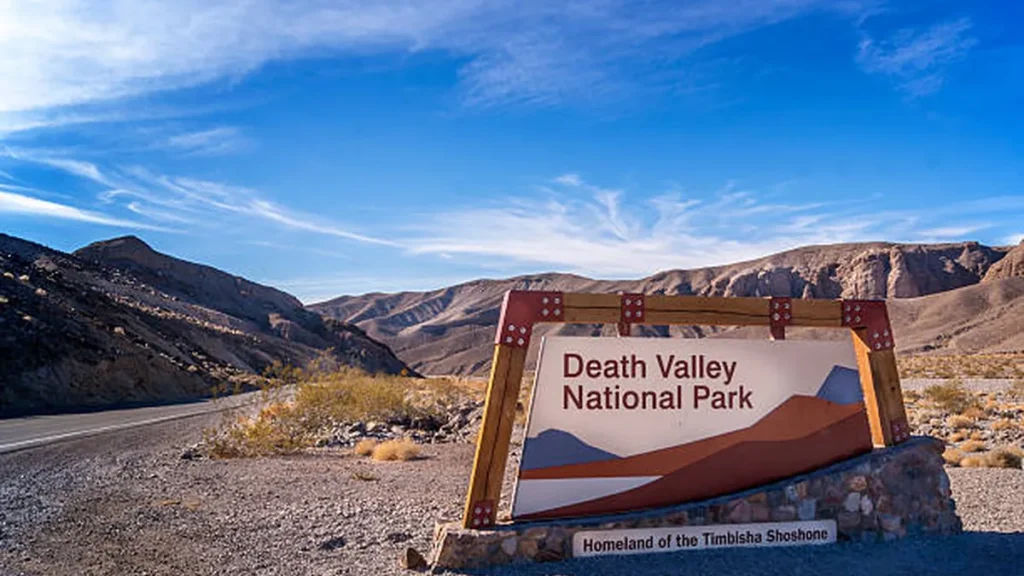
I’ve driven into Death Valley in November at a comfortable 75°F, and I’ve also made the mistake of stepping out of an air-conditioned car at noon in July. One of those trips was memorable for the right reasons. Death Valley doesn’t punish bad planning gently — it’s the hottest, driest, and lowest national park in the country, and that combination is exactly what makes it worth seeing.
Quick answer: The best time to visit Death Valley is late October through April, when daytime temperatures sit between 60–80°F. A 7-day vehicle pass costs $30. Don’t-miss stops include Badwater Basin (282 feet below sea level), Zabriskie Point, Artists Drive, and Mesquite Flat Sand Dunes — most visitors need 2–3 days to see the highlights properly.
When to Visit Death Valley (Season by Season)
Timing isn’t a preference here — it’s a safety question. Death Valley holds the record for the hottest air temperature ever measured on Earth, at 134°F, and summer conditions genuinely put visitors at risk.
Fall (October–November): Temperatures start easing off in October, though it can still feel uncomfortably warm early in the month. By November, hiking becomes genuinely pleasant, and this is when the Death Valley Dark Sky Festival and the ’49ers Encampment at Furnace Creek draw crowds who want events alongside scenery.
Winter (December–February): This is the quiet season. Days are mild, nights drop close to freezing, and if you want the park without the crowds, book a trip between Thanksgiving and Christmas.
Spring (March–April): The most popular window of the year. Wildflowers can bloom into a genuine super bloom in good rain years, and weather is close to ideal — but March is the single busiest month in the park, so expect full parking lots at Badwater Basin and Golden Canyon and book lodging early.
Summer (May–September): Avoid it unless you have a specific reason not to — extreme heat photography, for instance. Highs regularly clear 120°F, and the park sees a smaller but steady stream of European visitors during these months who plan around early-morning activity only.
Quick takeaway: Aim for November through March. If you can only make spring work, arrive early in the day and book accommodations months ahead.
Entrance Fees, Hours, and How to Get There
Death Valley National Park is open 24 hours a day, year-round, and there’s no staffed gate at most entrances — you pay at a self-service kiosk, the visitor center, or online in advance.
| Pass Type | Cost | Valid For |
|---|---|---|
| Private vehicle | $30 | 7 days, covers all passengers |
| Motorcycle | $25 | 7 days |
| Foot or bicycle | $15 per person | 7 days |
| Children under 16 | Free | — |
The Furnace Creek Visitor Center runs 8 AM to 5 PM and is the best place to check road conditions before heading anywhere remote — flooding has repeatedly damaged park roads, and some routes, including access tied to Scotty’s Castle, have faced extended closures for infrastructure and flood repair. Always confirm current conditions with the park directly before you commit to a route, since this changes year to year.
Death Valley sits roughly two hours from Las Vegas and about four hours from Los Angeles, which makes both cities workable bases for a day trip, though an overnight stay lets you see far more without rushing. Cell service is limited through most of the park, so download offline maps before you arrive.
The Best Things to Do in Death Valley
Badwater Basin
This is the lowest point in North America, sitting 282 feet below sea level, and it’s the single most photographed spot in the park. A paved lot off Badwater Road puts you right at the edge of a vast salt flat with a hexagonal crust pattern that looks soft but is actually sharp underfoot — thick-soled shoes are worth it. Walk out past the boardwalk crowds for cleaner patterns, and look up the cliff face behind the parking area to spot the small “sea level” sign far above you. Best light is sunrise or sunset; avoid midday entirely in summer.
Zabriskie Point & Golden Canyon
Zabriskie Point is a short paved walk from the parking lot off Highway 190, and it’s arguably the best sunrise spot in the park — the eroded golden badlands and the dark ridge of Manly Beacon glow at first light. Arrive at least 30 minutes before sunrise to get a spot, since photographers pack the overlook. From here, Golden Canyon offers a moderate 3-mile loop through golden badlands beneath the Red Cathedral formation, with an option to extend into Gower Gulch for a longer 7-mile day.
Artists Drive and Dante’s View
Artists Drive is a one-way, roughly 9-mile scenic loop through hills colored by oxidized minerals — greens, pinks, and purples that culminate at the Artists Palette pullout. Dante’s View, meanwhile, sits more than 5,000 feet above the valley floor and looks straight down on Badwater Basin while tracing the horizon to 11,049-foot Telescope Peak. The final stretch of road is steep and narrow, so it’s not ideal for large vehicles or trailers, but the payoff — seeing the park’s lowest and highest points in one sweep — is worth the drive.
Mesquite Flat Sand Dunes
The most accessible dunes in the park, right off the road near Stovepipe Wells. Climb them in the late afternoon or evening for long shadows and cooler temperatures, and listen for the low “booming” sound the dunes sometimes make when wind shifts the sand — locals call it singing sand.
Off the Beaten Path: Racetrack Playa & Ubehebe Crater
If you have an extra day and a high-clearance vehicle, Ubehebe Crater and the remote Racetrack Playa reward the extra driving. The Racetrack is famous for its “sailing stones” — rocks that leave long trails across the dry lakebed, a phenomenon eventually explained by thin ice sheets and wind. These roads are rough and largely unmaintained, so check conditions at the visitor center first.
Quick takeaway: If you only have one day, prioritize Badwater Basin, Zabriskie Point, Artists Drive, and the dunes — they’re close together and cover the park’s signature landscapes.
How Many Days Do You Need? Sample Itineraries
| Days | Focus | What You’ll Cover |
|---|---|---|
| 1 day | The classics | Badwater Basin, Artists Drive, Zabriskie Point, Mesquite Flat Dunes |
| 2 days | Classics + hiking | Add Golden Canyon/Gower Gulch loop, Dante’s View, an evening for stargazing |
| 3–4 days | Full park | Add Ubehebe Crater, Racetrack Playa, Titus Canyon, and unhurried photography time at sunrise/sunset spots |
Group your stops by geography each day rather than zig-zagging — the park is large enough that backtracking costs real time.
Staying Safe in the Hottest Park in America
This is the section most guides gloss over, and it’s the one that actually matters. A few non-negotiable rules:
- Limit time outside an air-conditioned vehicle to under 20 minutes between April and October. Ground-level temperatures can exceed the air temperature significantly.
- Carry more water than you think you need, and drink it before you feel thirsty.
- Single-vehicle rollovers are the leading cause of visitor fatalities — shift into low gear on steep downhill grades and don’t ride your brakes.
- Watch for reptiles. Snakes and scorpions shelter in dark crevices and rock piles; don’t put hands or feet where you can’t see.
- Pets are allowed on roads, in campgrounds, and in developed areas, but not on trails or in most buildings, and never left in a parked car — the heat inside a vehicle escalates fast even with windows cracked.
- Backcountry camping is allowed across much of the park, and a free permit registered through the visitor center is recommended.
Where to Stay Near Death Valley
| Area | Best For | Notes |
|---|---|---|
| Furnace Creek | Central location, full amenities | Main visitor center, fuel, dining, the lowest golf course on Earth |
| Stovepipe Wells | Budget-friendlier, close to dunes | Good base for sunrise/sunset dune photography |
| Panamint Springs | Quieter, western side | Closer if arriving from the Panamint Valley side |
| Las Vegas / Pahrump | Day-trip base | Only practical if you’re doing a single long day |
History and Geology in Brief
Death Valley is a graben — a sunken block of the Earth’s crust — squeezed between the Panamint Mountains and the Amargosa Range. Ancient lakes evaporated over millions of years, leaving the vast salt flats you see today. The valley’s grim name dates to 1849, when a group of emigrants seeking a shortcut to California’s goldfields got trapped by the terrain for weeks; one survivor reportedly turned and said “goodbye, Death Valley” on the way out. Later, in the 1880s, the Harmony Borax Works mined the valley’s mineral deposits using the famous twenty-mule teams, before closing by the end of the decade.
Stargazing in an International Dark Sky Park
Death Valley holds International Dark Sky Park status, and it earns it. Away from Furnace Creek’s lights, the Milky Way is visible to the naked eye on clear, moonless nights. Badwater Basin doubles as one of the best stargazing spots in the park, precisely because it’s flat, open, and far from any light pollution.
Final Thoughts
Death Valley rewards visitors who plan around its extremes rather than against them. Go in the cooler months, build your itinerary around 2–3 days if you can, and take the heat warnings seriously even if the drive-through views look tame from an air-conditioned car. Ready to plan the rest of your Southwest road trip? Check out our companion guides to nearby national parks and desert itineraries.
For more inspiration like this, take a look at our Southwest USA travel guides.
FAQ Section
Q1: What is the best time of year to visit Death Valley?
Late October through April, when daytime highs run 60–80°F. Spring brings wildflowers but also the biggest crowds; winter is quieter and cooler.
Q2: How much does it cost to enter Death Valley National Park?
A 7-day vehicle pass is $30, motorcycles are $25, and visitors arriving on foot or bike pay $15 per person. Children under 16 enter free.
Q3: Is Death Valley worth visiting?
Yes — it holds the record for the hottest recorded temperature on Earth and the lowest point in North America, and landscapes like Badwater Basin and Zabriskie Point are unlike anywhere else in the country.
Q4: How many days do you need in Death Valley?
Two to three days covers the main sights comfortably. A single day works if you focus on Badwater Basin, Artists Drive, Zabriskie Point, and the sand dunes.
Q5: Is it safe to drive through Death Valley in summer?
It’s possible but risky. Limit time outside an air-conditioned vehicle to under 20 minutes, carry extra water, and avoid strenuous activity between April and October.
Q6: Is Death Valley closer to Las Vegas or Los Angeles?
Las Vegas, at roughly two hours away, versus about four hours from Los Angeles.
Q7: Do you need a permit to camp in Death Valley?
Backcountry camping is allowed in most of the park, and a free permit registered through the visitor center is recommended.
Q8: What is the hottest temperature ever recorded in Death Valley?
134°F, the highest air temperature ever officially recorded on Earth.