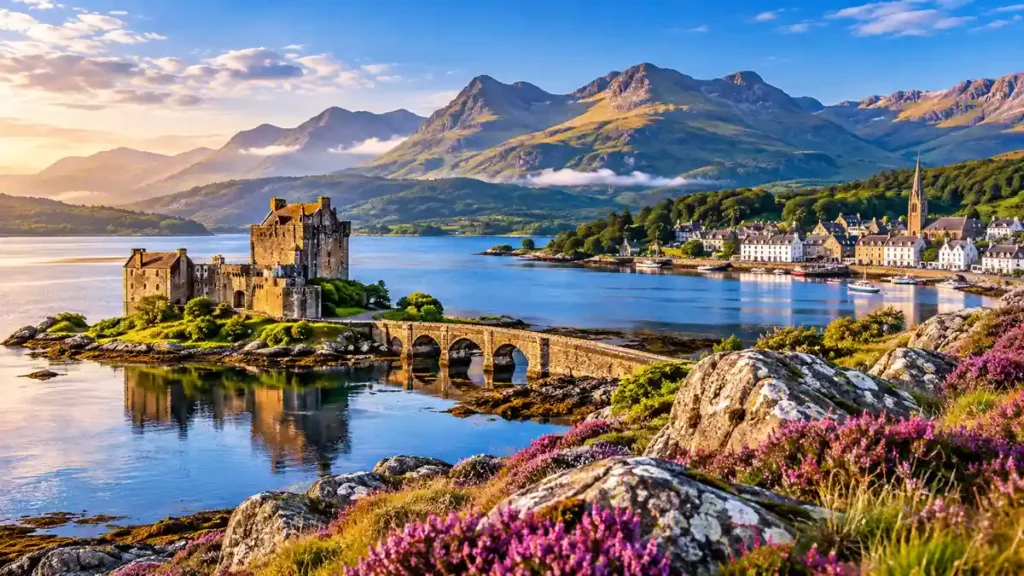
Scotland is a country where medieval castles rise above historic streets, mountains disappear into the clouds, and turquoise beaches look almost tropical on sunny days. The challenge isn’t finding somewhere beautiful to visit. It’s deciding which extraordinary places deserve a spot on your itinerary.
The best places to visit in scotland include Edinburgh, the Isle of Skye, Glencoe, Loch Ness, Glasgow, Loch Lomond, and the Scottish Highlands. First-time visitors can combine historic cities with mountain scenery, while longer trips offer opportunities to explore remote islands, ancient castles, coastal villages, and some of Europe’s most memorable landscapes.
From the cobbled streets of Edinburgh to the windswept beaches of the Outer Hebrides, this guide explores 17 destinations worth visiting in 2026, including what makes each special, the best things to see, and practical advice for planning your journey.
1. Edinburgh – Best for History, Castles, and Culture


Edinburgh is one of Europe’s most atmospheric capitals. Its dramatic skyline, Gothic architecture, historic alleyways, and world-famous festivals make it an excellent starting point for a Scottish adventure.
The city’s Old Town and New Town form a UNESCO World Heritage Site, reflecting centuries of architectural and cultural development.
Top attractions in Edinburgh
- Edinburgh Castle: Explore Scotland’s royal and military history from a fortress overlooking the city.
- Royal Mile: Walk the historic route connecting Edinburgh Castle with the Palace of Holyroodhouse.
- Arthur’s Seat: Climb an ancient volcanic hill for panoramic views across the capital.
- National Museum of Scotland: Discover Scottish history, scientific achievements, and cultural collections.
- Calton Hill: Enjoy one of Edinburgh’s most recognizable skyline viewpoints.
Edinburgh is also home to the annual Edinburgh Festival Fringe, which transforms the city into an international center for comedy, theater, music, and performance.
Best time to visit: May, June, and September offer a good balance of daylight and manageable visitor numbers. August is particularly lively but crowded.
Recommended stay: 2–3 days.
Travel tip: Explore the Royal Mile early in the morning, then wander into quieter neighborhoods such as Stockbridge and Dean Village.
2. Isle of Skye – Best for Dramatic Natural Landscapes


The Isle of Skye is famous for rugged mountains, unusual rock formations, waterfalls, and dramatic coastal scenery.
Connected to mainland Scotland by the Skye Bridge, the island is one of the country’s most photographed destinations.
Must-see places on the Isle of Skye
Old Man of Storr
This towering rock formation on the Trotternish Peninsula is one of Scotland’s most recognizable natural landmarks. The hike rewards visitors with extraordinary views across the surrounding hills and coastline.
The Quiraing
A spectacular landscape shaped by ancient landslides, the Quiraing features steep cliffs, rolling green slopes, and unusual rock formations.
Fairy Pools
Located near the Cuillin Mountains, these clear pools and waterfalls are particularly beautiful after periods of moderate rainfall.
Neist Point Lighthouse
Situated on Skye’s western coastline, this viewpoint offers dramatic cliffs and Atlantic Ocean scenery.
Dunvegan Castle
The historic seat of Clan MacLeod provides insight into centuries of Highland history.
The colorful harbor town of Portree makes a convenient base for exploring the island.
Best time to visit: May, June, or September.
Recommended stay: 2–3 days.
Travel tip: Allow extra driving time on narrow single-track roads. Use designated passing places correctly and avoid parking in passing bays.
3. Glencoe – Best for Mountains and Scenic Drives


6
Glencoe is among the most beautiful places in the Scottish Highlands.
Its steep mountains, deep valleys, waterfalls, and atmospheric landscapes create a sense of wilderness that is difficult to find elsewhere in Britain.
Glencoe also has a tragic history. The 1692 Massacre of Glencoe, in which members of Clan MacDonald were killed by government soldiers, remains an important event in Scottish history.
Things to do in Glencoe
- Admire the Three Sisters mountain ridges.
- Photograph Buachaille Etive Mòr, one of Scotland’s most distinctive peaks.
- Explore scenic walking trails around Glencoe Lochan.
- Visit the Glencoe Visitor Centre to learn about the area’s geology and history.
- Drive through nearby Glen Etive for quieter Highland scenery.
Glencoe is particularly appealing to hikers and photographers, but you don’t need to tackle difficult mountain routes to enjoy its landscapes.
Several viewpoints are accessible directly from the main A82 road.
Best time to visit: May–October, depending on weather and walking conditions.
Recommended stay: 1–2 days.
Travel tip: Mountain weather changes rapidly. Even short walks require suitable footwear, waterproof clothing, and awareness of local conditions.
4. Loch Ness and Inverness – Best for Legends and Highland History


Few Scottish landmarks are as internationally recognized as Loch Ness.
The long, deep freshwater loch is famous for stories about the Loch Ness Monster, affectionately known as Nessie.
Although there is no credible scientific evidence of a mysterious large creature living in the loch, its legend remains a fascinating part of Scottish folklore.
What to see around Loch Ness
Urquhart Castle: Explore medieval ruins overlooking the loch.
Fort Augustus: Watch boats navigate the locks of the Caledonian Canal.
Loch Ness Centre: Learn about the area’s natural history and the origins of the monster legend.
Inverness: Discover the cultural capital of the Highlands, with riverside walks, historic sites, and restaurants.
Nearby Culloden Battlefield provides an opportunity to understand the 1746 battle that ended the Jacobite rising led by Charles Edward Stuart, commonly called Bonnie Prince Charlie.
The prehistoric Clava Cairns, a group of Bronze Age burial monuments, are another worthwhile stop.
Best time to visit: May–September.
Recommended stay: 1–2 days.
Travel tip: Loch Ness is approximately 23 miles long, so visiting multiple attractions around its shores takes longer than many travelers expect.
5. Glasgow – Best for Art, Music, and Urban Culture


Glasgow offers a different experience from Edinburgh.
While Edinburgh is celebrated for its medieval skyline, Glasgow is known for its creative energy, Victorian architecture, live music, museums, and distinctive neighborhoods.
It is Scotland’s largest city and an important center for art, education, and culture.
Best things to do in Glasgow
- Kelvingrove Art Gallery and Museum: Explore art, natural history, and cultural collections.
- Glasgow Cathedral: Visit one of Scotland’s most impressive surviving medieval churches.
- Riverside Museum: Discover the history of transportation and travel.
- University of Glasgow: Admire Gothic Revival architecture and historic courtyards.
- Glasgow Botanic Gardens: Relax among gardens and historic glasshouses.
- West End: Explore independent shops, cafés, and lively streets.
Glasgow’s musical heritage is another major attraction. The city holds UNESCO City of Music status and has an active live-performance scene.
Best time to visit: Year-round, especially during spring and summer.
Recommended stay: 2 days.
Travel tip: Glasgow and Edinburgh are well connected by frequent trains, making it straightforward to experience both cities without renting a car.
6. Loch Lomond and The Trossachs – Best for Lakes and Outdoor Adventures


11
Loch Lomond & The Trossachs National Park is one of the most accessible destinations for experiencing Scotland’s natural beauty.
Located within reach of Glasgow, the park combines freshwater lochs, wooded hills, villages, and mountain scenery.
Loch Lomond is the largest lake in Great Britain by surface area.
Things to experience
Loch Lomond boat trips: Enjoy views of wooded islands and surrounding hills.
Conic Hill: Follow a popular walking trail above Balmaha for panoramic lake views.
Luss: Explore a picturesque village with stone cottages and waterfront scenery.
Ben Lomond: Experienced walkers can tackle one of Scotland’s best-known Munros, mountains measuring at least 3,000 feet.
The Trossachs: Discover forest trails, quiet lochs, and scenic roads around Aberfoyle and Callander.
The national park is particularly suitable for families and visitors who want beautiful scenery without traveling deep into the Highlands.
Best time to visit: April–October.
Recommended stay: 1–2 days.
Travel tip: Popular lakeside parking areas fill quickly on sunny weekends. Arriving early helps avoid congestion.
7. Cairngorms National Park – Best for Wildlife and Outdoor Activities


7
Cairngorms National Park is Britain’s largest national park and one of Scotland’s most rewarding destinations for outdoor enthusiasts.
The park covers a vast landscape of mountains, ancient Caledonian pinewoods, rivers, lochs, and Highland villages.
Its varied habitats support wildlife including red squirrels, golden eagles, mountain hares, and rare woodland birds.
Highlights of the Cairngorms
Aviemore: A popular Highland town offering access to walking, cycling, and outdoor activities.
Loch an Eilein: A peaceful woodland loch featuring a ruined island castle.
Rothiemurchus Forest: Explore ancient pinewoods and walking trails.
Cairn Gorm Mountain: Enjoy mountain scenery and seasonal outdoor activities, subject to weather and facility operations.
Highland Wildlife Park: Discover native Scottish species alongside animals from other cold-climate regions.
The Cairngorms are also among Scotland’s leading destinations for winter sports when snow conditions permit.
Best time to visit: May–September for hiking; winter for seasonal snow activities.
Recommended stay: 2–3 days.
Travel tip: Mountain conditions can be severe even when the valleys feel mild. High-level routes require appropriate experience and equipment.
8. Fort William and Ben Nevis – Best for Hiking and Adventure


6
Known as the outdoor capital of the UK, Fort William sits beneath the mountains of the western Highlands.
Its most famous landmark is Ben Nevis, the highest mountain in the United Kingdom, standing approximately 1,345 meters (4,413 feet) above sea level.
What to explore around Fort William
- Ben Nevis: A challenging mountain hike for suitably prepared walkers.
- Glen Nevis: A beautiful valley with rivers, woodland, and mountain scenery.
- Steall Falls: One of Scotland’s most impressive waterfalls, reached by a rocky walking route.
- Neptune’s Staircase: A remarkable series of locks on the Caledonian Canal.
- West Highland Museum: Learn about Highland life, Jacobite history, and local heritage.
Fort William is also a gateway to the West Highland Way, a long-distance walking route stretching approximately 96 miles from Milngavie to Fort William.
Nearby Glenfinnan Viaduct is famous for its curved railway bridge and appearances in the Harry Potter films.
The Jacobite steam train operates on the West Highland Line during its scheduled season, although visitors should check current services rather than assume daily operation.
Best time to visit: May–September for walking.
Recommended stay: 2 days.
Travel tip: Climbing Ben Nevis is a serious mountain undertaking, not an ordinary sightseeing walk. Snow, poor visibility, and navigation difficulties can occur outside winter.
9. Stirling – Best for Scottish History and Royal Heritage


Stirling played a central role in Scotland’s medieval history.
Located between Edinburgh, Glasgow, and the Highlands, it offers impressive historic attractions within a relatively compact area.
Important historic landmarks
Stirling Castle
One of Scotland’s most significant royal residences, the castle was closely associated with the Stuart monarchy. Mary, Queen of Scots, was crowned here in 1543.
National Wallace Monument
This Victorian tower commemorates William Wallace, a major figure in Scotland’s Wars of Independence.
Battle of Bannockburn Experience
Learn about Robert the Bruce’s victory over English forces in 1314.
Stirling Old Town
Explore historic buildings, winding streets, and views across the surrounding countryside.
Stirling is particularly rewarding for travelers interested in the political events and personalities that shaped Scotland.
Best time to visit: April–October.
Recommended stay: 1 day.
Travel tip: Stirling is easily reached by train from Edinburgh or Glasgow, making it an excellent day trip.
10. Outer Hebrides – Best for Beautiful Beaches and Island Culture


The Outer Hebrides offer some of the most extraordinary coastal landscapes in Europe.
Stretching along Scotland’s Atlantic coastline, this island chain includes Lewis, Harris, North Uist, Benbecula, South Uist, and Barra.
Visitors discover white-sand beaches, turquoise waters, peatland landscapes, traditional crofting communities, and a strong Scottish Gaelic cultural identity.
Best places in the Outer Hebrides
Luskentyre Beach, Harris
A spectacular stretch of pale sand and clear water surrounded by mountains and dunes.
Calanais Standing Stones, Lewis
A prehistoric stone monument dating back thousands of years.
Stornoway
The main town on Lewis, known for its harbor, cultural attractions, and local food traditions.
Barra
An island famous for its beautiful coastline and unusual airport, where scheduled flights use a tidal beach runway.
Uist
A group of islands offering wildlife habitats, traditional communities, and quieter beaches.
The Outer Hebrides are particularly attractive to travelers seeking peaceful destinations away from Scotland’s busiest tourist routes.
Best time to visit: May–September.
Recommended stay: 4–7 days.
Travel tip: Ferry crossings can be affected by Atlantic weather. Build flexibility into your itinerary and check transport updates before traveling.
11. Orkney Islands – Best for Ancient History and Archaeology


The Orkney Islands are among Britain’s most fascinating archaeological destinations.
Located off Scotland’s northern coast, Orkney contains remarkable prehistoric monuments, Viking heritage, dramatic cliffs, and peaceful coastal villages.
Famous Orkney attractions
Skara Brae
A remarkably preserved Neolithic settlement that provides insight into everyday life more than 4,000 years ago.
Ring of Brodgar
A prehistoric stone circle surrounded by expansive island scenery.
Maeshowe
A Neolithic chambered tomb known for its sophisticated construction and later Norse runic inscriptions.
St Magnus Cathedral
A striking medieval cathedral in Kirkwall, built using distinctive red and yellow sandstone.
Old Man of Hoy
A dramatic sea stack rising from the island of Hoy’s coastline.
Several prehistoric monuments form part of the Heart of Neolithic Orkney UNESCO World Heritage Site.
Best time to visit: May–September.
Recommended stay: 3–4 days.
Travel tip: Some archaeological sites require advance reservations or have restricted access. Check the latest visitor arrangements.
12. St Andrews and the East Neuk of Fife – Best for Coastal Villages and Heritage


4
St Andrews is internationally famous for golf, but its appeal extends far beyond the sport.
The historic university town offers medieval ruins, attractive beaches, narrow streets, and a beautiful coastal setting.
What to see in St Andrews
- St Andrews Cathedral: Explore the ruins of what was once Scotland’s largest medieval church.
- St Andrews Castle: Discover the town’s turbulent religious and political history.
- West Sands Beach: Walk along a broad sandy beach famous for its appearance in Chariots of Fire.
- Old Course: See one of the world’s most celebrated golf courses.
- University of St Andrews: Explore the setting of Scotland’s oldest university.
Nearby, the East Neuk of Fife is home to picturesque fishing villages including Anstruther, Crail, and Pittenweem.
These coastal settlements feature traditional harbors, colorful cottages, and seafood restaurants.
Best time to visit: April–September.
Recommended stay: 1–2 days.
Travel tip: Combine St Andrews with an afternoon exploring the East Neuk villages rather than rushing through several separate coastal stops.
13. Isle of Mull and Iona – Best for Wildlife and Peaceful Island Escapes


The Isle of Mull is a rewarding destination for travelers interested in wildlife, coastal scenery, and traditional island communities.
Its landscapes range from rugged mountains to sheltered bays and quiet beaches.
Highlights of Mull and Iona
Tobermory
The island’s main town is recognizable for its brightly painted waterfront buildings.
Duart Castle
A historic castle overlooking the Sound of Mull, associated with Clan Maclean.
Calgary Bay
A beautiful sandy beach surrounded by green hills.
Wildlife watching
Mull is known for white-tailed eagles, golden eagles, otters, red deer, and opportunities to observe marine wildlife.
Iona Abbey
On neighboring Iona, visitors can explore an important religious site associated with St Columba, who established a monastic community there in AD 563.
Boat trips to Staffa offer the opportunity to see Fingal’s Cave, known for its impressive basalt columns. Wildlife sightings and sailings depend on the season and sea conditions.
VisitScotland
+1
Best time to visit: April–September.
Recommended stay: 3–4 days.
Travel tip: Mull’s roads are often narrow and winding. Travel slowly and allow enough time between attractions.
14. Scottish Borders – Best for Hidden Gems and Quiet Countryside


6
The Scottish Borders are often overlooked by visitors heading directly from Edinburgh to the Highlands.
However, this region offers beautiful countryside, historic abbeys, literary connections, and charming market towns.
Places worth visiting in the Scottish Borders
Melrose Abbey
Explore the impressive ruins of a medieval monastery closely associated with Scottish history.
Abbotsford
Visit the former home of Sir Walter Scott, one of Scotland’s most influential writers.
Jedburgh Abbey
Admire the remains of a magnificent medieval Augustinian abbey.
Scott’s View
Enjoy sweeping views across the River Tweed valley and the Eildon Hills.
Peebles
Explore a traditional town surrounded by attractive walking and cycling countryside.
The region is especially appealing to travelers interested in Scottish literature, historic architecture, and rural landscapes without the crowds found at more famous destinations.
Best time to visit: April–October.
Recommended stay: 2 days.
Travel tip: The Borders are well suited to a leisurely road trip, with short distances between many historic towns.
15. North Coast 500 – Best for an Epic Scottish Road Trip


8
The North Coast 500 is one of Britain’s most celebrated road trips.
Beginning and ending in Inverness, the approximately 516-mile route follows Scotland’s northern coastline through remote mountains, fishing villages, beaches, and rugged wilderness.
Highlights along the NC500
Applecross Peninsula
Famous for the spectacular Bealach na Bà mountain road, which features steep gradients and sharp bends.
Torridon
A dramatic Highland landscape of ancient mountains and scenic lochs.
Ullapool
A picturesque harbor town and gateway to the northwestern Highlands.
Achmelvich Beach
A beautiful white-sand beach near Lochinver.
Durness
A remote village known for beaches, dramatic cliffs, and nearby Smoo Cave.
John o’ Groats
A famous landmark near the northeastern tip of mainland Scotland.
VisitScotland recommends allowing at least five to seven days for the route, although additional time makes the journey more enjoyable.
VisitScotland
Best time to visit: May, June, and September.
Recommended stay: 7–10 days for a relaxed experience.
Travel tip: Some sections are unsuitable for inexperienced drivers in large motorhomes. Research vehicle restrictions and road conditions before setting out.
16. Speyside – Best for Whisky Heritage and Scenic Countryside


6
Speyside is one of Scotland’s best-known whisky-producing regions.
Situated around the River Spey in northeastern Scotland, the area combines wooded valleys, picturesque villages, historic distilleries, and attractive walking routes.
Things to explore in Speyside
Malt Whisky Trail
Discover the region’s whisky-making heritage through historic distilleries and visitor centers.
Dufftown
A small town strongly associated with Scotch whisky production.
Glenfiddich Distillery
Learn about traditional whisky-making processes and the history of one of Scotland’s established distilleries.
River Spey
Enjoy riverside walks, scenic landscapes, and opportunities to observe local wildlife.
Speyside Way
Follow sections of a long-distance trail through towns, woodland, and countryside.
Whisky production is an important part of Scottish cultural and economic history, and many distillery experiences explain how malted barley, fermentation, distillation, and maturation contribute to the finished spirit.
Best time to visit: May–September.
Recommended stay: 2–3 days.
Travel tip: The region can also be enjoyed without visiting distilleries, thanks to its walking routes, historic villages, and natural scenery.
17. Perthshire and Pitlochry – Best for Autumn Colors and Highland Villages


9
Perthshire is often called Big Tree Country because of its extensive forests, historic woodland, and beautiful countryside.
It is particularly spectacular in autumn when the landscape turns shades of gold, orange, and deep red.
Beautiful places to explore
Pitlochry
A welcoming Highland town with traditional architecture, riverside walks, and access to surrounding hills.
The Hermitage
A woodland area near Dunkeld featuring towering trees, scenic paths, and Black Linn Falls.
Queen’s View
A famous viewpoint overlooking Loch Tummel and the surrounding Highland landscape.
Dunkeld
A picturesque riverside town known for its cathedral, historic buildings, and woodland walks.
Blair Castle
A historic residence near Blair Atholl with extensive grounds and connections to the Dukes of Atholl.
Perthshire offers an appealing combination of nature, history, and accessible outdoor activities.
Best time to visit: May–June and September–October.
Recommended stay: 2 days.
Travel tip: Mid-to-late October often provides attractive autumn colors, although their timing varies with weather conditions.
How to Choose the Best Places to Visit in Scotland
Scotland offers very different travel experiences depending on the region, available time, and preferred activities.
The following comparison helps identify which destinations best match different interests.
| Destination | Best for | Suggested stay |
|---|---|---|
| Edinburgh | History and architecture | 2–3 days |
| Isle of Skye | Photography and dramatic scenery | 2–3 days |
| Glencoe | Mountains and scenic drives | 1–2 days |
| Loch Ness | Legends and Highland history | 1–2 days |
| Glasgow | Art, museums, and music | 2 days |
| Loch Lomond | Lakes and family activities | 1–2 days |
| Cairngorms | Wildlife and hiking | 2–3 days |
| Fort William | Mountain adventures | 2 days |
| Stirling | Castles and medieval history | 1 day |
| Outer Hebrides | Beaches and island culture | 4–7 days |
| Orkney | Archaeology and ancient monuments | 3–4 days |
| St Andrews | Coastal heritage and golf | 1–2 days |
| Mull and Iona | Wildlife and peaceful islands | 3–4 days |
| Scottish Borders | Quiet countryside and abbeys | 2 days |
| North Coast 500 | Road trips and remote scenery | 7–10 days |
| Speyside | Whisky heritage and walking | 2–3 days |
| Perthshire | Forests and autumn landscapes | 2 days |
For a first visit, Edinburgh, Glencoe, and the Isle of Skye provide a memorable combination of history and natural beauty.
Travelers without a car may prefer Edinburgh, Glasgow, Stirling, and accessible parts of Loch Lomond.
Those seeking quieter experiences should consider the Scottish Borders, Perthshire, or the islands outside peak summer.
Best Places to Visit in Scotland for First-Time Travelers
First-time visitors often want to experience Scotland’s historic cities, Highland scenery, and famous castles without spending their entire holiday traveling.
The most practical approach is to choose a small number of destinations rather than attempting to see the whole country.
A 5-day Scotland itinerary
Day 1–2
Edinburgh: Explore Edinburgh Castle, the Royal Mile, Arthur’s Seat, and the city’s historic neighborhoods.
Day 3
Stirling and Loch Lomond: Visit Stirling Castle and continue toward the national park.
Day 4
Glencoe: Enjoy mountain viewpoints, short walks, and Highland scenery.
Day 5
Glasgow: Discover museums, architecture, and the West End before departure.
This itinerary works best with a car for the Highland sections, although organized excursions can provide alternatives.
A 7-day Scotland itinerary
For a full week, adding the Isle of Skye creates a more varied journey.
| Day | Destination | Main experience |
|---|---|---|
| 1 | Edinburgh | Castle and Old Town |
| 2 | Edinburgh | Arthur’s Seat and museums |
| 3 | Stirling and Glencoe | History and mountain scenery |
| 4 | Isle of Skye | Old Man of Storr and Portree |
| 5 | Isle of Skye | Quiraing and coastal viewpoints |
| 6 | Loch Ness and Inverness | Highland history and loch scenery |
| 7 | Return toward Edinburgh | Scenic journey and departure |
This is an active itinerary with several long driving days. Travelers who prefer a slower pace can omit Skye and spend more time around Glencoe and Loch Lomond.
A 10–14-day Scotland itinerary
With ten days or more, visitors can explore beyond the most popular attractions.
A balanced two-week journey might include Edinburgh, Stirling, Loch Lomond, Glencoe, Fort William, Skye, Inverness, the Cairngorms, and Perthshire.
Alternatively, dedicate several days to the Outer Hebrides, Orkney, or the North Coast 500.
VisitScotland provides official itineraries covering short city breaks, Highland adventures, coastal journeys, and longer island-hopping holidays.
VisitScotland
When Is the Best Time to Visit Scotland?
Scotland is a year-round destination, but the ideal travel season depends on what you want to experience.

Spring (March–May)
Ideal for fresh green landscapes, flowering gardens, longer daylight hours, and generally fewer visitors than midsummer.

Summer (June–August)
Best for long daylight hours, festivals, hiking, island exploration, and outdoor activities. Popular destinations become busier.

Autumn (September–November)
Excellent for photography, colorful forests, quieter countryside, and scenic drives. Daylight decreases and weather becomes more changeable.

Winter (December–February)
Suitable for festive city breaks, atmospheric castles, winter landscapes, and mountain sports when conditions allow.
According to VisitScotland, Scotland’s climate is generally temperate but highly changeable, with different conditions across coastal, island, city, and mountain areas.
VisitScotland
+1
Which month is best for visiting Scotland?
May, June, and September are particularly good choices for many visitors.
May offers spring scenery and relatively long days. June provides extended daylight for sightseeing, while September combines late-summer landscapes with fewer peak-season crowds.
July and August are attractive for festivals and family holidays but can bring higher accommodation demand.
October is especially appealing for woodland scenery in Perthshire and the Trossachs.
How to Travel Around Scotland
Choosing the right transportation is essential because Scotland’s distances can be misleading.
A journey that appears short on a map may take considerably longer on winding Highland roads.
Traveling by train
Scotland’s railway network connects major cities and several Highland destinations.
Useful rail journeys include:
- Edinburgh to Glasgow
- Edinburgh to Stirling
- Glasgow to Fort William
- Edinburgh to Inverness
- Inverness to Aviemore
- Glasgow to Oban
The West Highland Line is particularly celebrated for its mountain, loch, and coastal scenery.
Rail travel works well for city-based holidays and selected Highland destinations, but it does not reach every remote attraction.
Exploring Scotland by car
Renting a car provides greater flexibility for visiting Skye, Glencoe, remote Highland villages, and coastal areas.
However, drivers should prepare for several important differences:
- Vehicles travel on the left side of the road.
- Rural roads may be narrow, winding, or single-track.
- Passing places must remain clear for moving traffic.
- Mountain and coastal weather can affect driving conditions.
- Remote areas may have fewer fuel stations and services.
VisitScotland advises drivers to use passing places responsibly, remain alert on narrow roads, and never park in passing areas.
VisitScotland
Traveling by ferry
Ferries connect mainland Scotland with many islands, including Mull, Arran, the Outer Hebrides, Orkney, and Shetland.
Caledonian MacBrayne, commonly called CalMac, operates numerous west-coast services, while NorthLink Ferries serves routes to Orkney and Shetland.
Because island ferries can be affected by adverse weather, travelers should check current schedules and leave room for delays.
VisitScotland
Practical Travel Tips for Visiting Scotland
A successful Scottish holiday involves more than choosing scenic destinations. Weather, accessibility, transport, and seasonal conditions can all influence the experience.
Prepare for changing weather
Pack waterproof outerwear, comfortable walking shoes, and several clothing layers.
Even summer days can feel chilly in exposed Highland locations.
A lightweight waterproof jacket is more useful than relying on an umbrella in windy mountain areas.
Understand Scottish midges
Midges are tiny biting insects commonly found in parts of Scotland during warmer months.
They are especially noticeable in sheltered, damp areas when conditions are calm.
Insect repellent, suitable clothing, and avoiding prolonged stops in midge-heavy areas can make outdoor activities more comfortable.
Ticks are another consideration when walking through grassland and woodland, so check your clothing and skin after outdoor activities.
VisitScotland
Respect Scotland’s outdoor access rules
Scotland provides broad public access rights to much of its countryside under the Scottish Outdoor Access Code.
These rights depend on responsible behavior and do not mean that every location is open for unrestricted camping, vehicle access, or private activities.
Follow local guidance, respect livestock and property, and take litter away with you.
Allow enough time between destinations
One common travel mistake is trying to combine Edinburgh, Skye, Loch Ness, and the far northern Highlands in just a few days.
Although Scotland is relatively compact, its mountainous geography and rural roads increase journey times.
A more enjoyable approach is to spend at least two nights in major Highland bases and leave flexibility for weather changes.
Check seasonal attraction access
Some castles, historic properties, boat trips, and island attractions operate reduced schedules outside the main tourist season.
Check official opening information before planning an entire day around one attraction.
Which Scottish Destinations Are Best for Different Travelers?
Not every visitor wants the same experience, and Scotland has enough variety to suit very different travel styles.
Best places for couples
Edinburgh, the Isle of Skye, Loch Lomond, and Pitlochry offer atmospheric streets, scenic walks, peaceful accommodation settings, and memorable landscapes.
Best places for families
Edinburgh, Glasgow, Loch Lomond, Aviemore, and St Andrews combine accessible attractions with outdoor activities and educational experiences.
The National Museum of Scotland and Glasgow’s major museums are particularly useful options during rainy weather.
Best places for photographers
The Isle of Skye, Glencoe, Torridon, Luskentyre Beach, and the Cairngorms provide dramatic natural compositions.
Sunrise and sunset can create especially attractive light, although Scottish weather often makes flexibility more valuable than rigid photography schedules.
Best places for history enthusiasts
Edinburgh, Stirling, Orkney, St Andrews, and the Scottish Borders offer a remarkable range of medieval castles, prehistoric monuments, battlefields, abbeys, and historic settlements.
Best places for hiking
Glencoe, Ben Nevis, the Cairngorms, Loch Lomond, and Skye offer trails ranging from easy woodland walks to demanding mountain routes.
Choose routes according to experience, fitness, weather, and daylight rather than scenery alone.
Best places to visit without a car
Edinburgh and Glasgow are the easiest major destinations to explore using public transport.
Stirling, Inverness, Pitlochry, St Andrews, and Fort William can also be reached without driving, although some surrounding attractions require buses, taxis, or guided excursions.
Final Thoughts on the Best Places to Visit in Scotland
The best places to visit in scotland reveal a country with far more variety than its famous castles and Highland landscapes might suggest.
Edinburgh provides an unforgettable introduction to Scottish history, while Glasgow offers museums, music, and creative culture. The Isle of Skye and Glencoe showcase dramatic mountain scenery, and destinations such as Orkney, the Outer Hebrides, and Mull reveal Scotland’s remarkable island heritage.
For first-time travelers, combining Edinburgh with Loch Lomond, Glencoe, and the Isle of Skye creates a well-rounded introduction. Visitors with more time can explore the Cairngorms, ancient sites in Orkney, peaceful villages in the Scottish Borders, or the spectacular North Coast 500.
The most rewarding Scottish journeys aren’t necessarily the ones covering the greatest distance. Choose a few destinations that genuinely interest you, allow time for unexpected discoveries, and give yourself the freedom to enjoy Scotland’s landscapes, history, and culture at a comfortable pace.