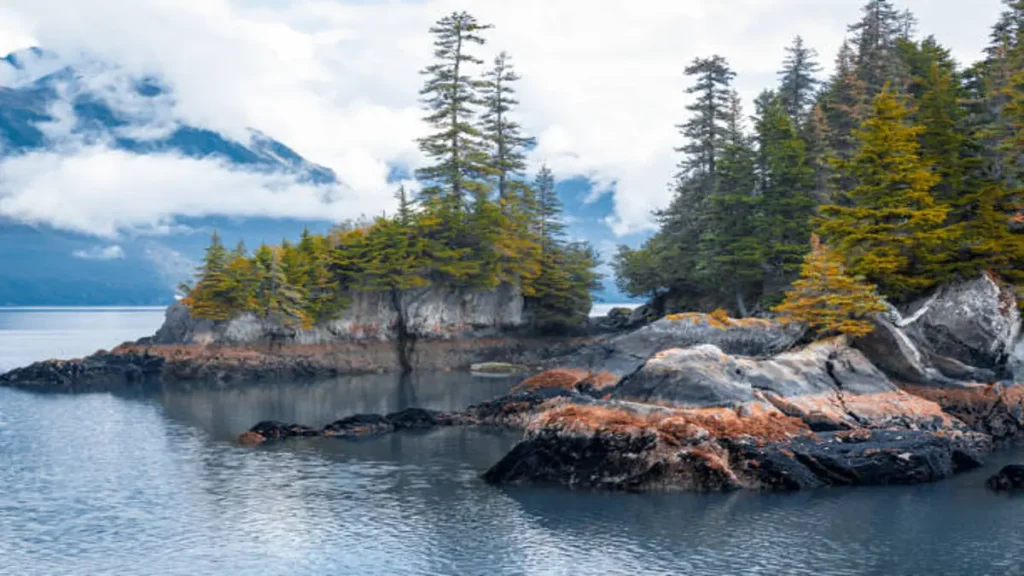
Most people picture Alaska as a place you need weeks and a bush plane to reach. Kenai Fjords blows that up — you can be standing in front of a living glacier less than three hours after landing in Anchorage.
Kenai Fjords National Park sits on Alaska’s Kenai Peninsula near Seward, protecting the Harding Icefield and the 40-plus glaciers that flow from it into fjords along the Gulf of Alaska. There’s no entrance fee, most of the park is only reachable by boat or plane, and the payoff is glaciers, whales, and puffins in one trip.
Where Kenai Fjords Is & How to Get There
Kenai Fjords is on the southeastern edge of the Kenai Peninsula, and the town of Seward sits right at its doorstep. From Anchorage, it’s roughly a 2.5-hour drive south along the Seward Highway (Alaska Route 1), a scenic drive that hugs the coastline and mountains on the way down.
Seward is where the trip actually happens logistically. It has the harbor that boat tours leave from, the hotels, the restaurants, and the only road access into the park — which dead-ends at the Exit Glacier area. The rest of the park is either ice or water, and there’s only one road that actually heads into it. Everything else — the fjords, the tidewater glaciers, the deep-water wildlife viewing — is boat or plane only.
You don’t need a car once you’re in Seward. Cruise ships also stop there, and plenty of visitors do Kenai Fjords as a day trip from an Alaska cruise or from Anchorage.
Best Time to Visit Kenai Fjords National Park
The honest answer: May through mid-September, and if you can swing it, June through August.
The park is technically open year-round, but most of the boat tours, the visitor center hours, and the main attractions shut down for winter because of heavy snow and rough seas. Outside that window, you’re mostly looking at a quiet, snowed-in landscape with almost no services.
Within the summer window:
- June–July — long daylight, peak wildlife activity, warmest water for kayaking, but also the busiest and most expensive.
- August — still excellent wildlife viewing, slightly thinner crowds, salmon runs in full swing.
- Early-to-mid September — fewer people, fall color starting, but weather gets rougher and some tours start cutting back.
Whatever month you pick, summer daytime temperatures typically run from the mid-40s to low 70s°F, with frequent overcast, cool, and rainy days. Pack like it’s going to rain even if the forecast says otherwise — the marine weather changes fast.
Quick takeaway: No single “perfect” week exists. Book earlier in summer for wildlife and warmth, later for fewer crowds and better prices, but always expect weather to shift on you.
Entrance Fees & Permits
Here’s the part that surprises first-time visitors: Kenai Fjords National Park itself has no entrance fee. There’s no cost to enter the park; fees only apply to specific services like tours, camping, or transportation.
That means the “cost” of visiting is really the cost of how you experience it:
- Driving to Exit Glacier and hiking — free (aside from gas and parking).
- Boat tours into the fjords — typically $80–$250+ per person depending on length and route.
- Flightseeing tours — generally the most expensive option, often $300+.
- Backcountry camping — free, but requires you to be self-sufficient and prepared for bear country.
If you’re combining Kenai Fjords with other national parks in 2026, note that the National Park Service has designated several fee-free days that year, plus a new $250 annual pass price for non-U.S. residents — worth knowing if Kenai Fjords is one stop on a bigger multi-park Alaska trip, since it won’t cost you a pass day here but other parks on your route might.
No park-wide timed-entry reservation system is required to visit Kenai Fjords, unlike some Lower 48 parks — you don’t need to book an entry slot months in advance, though popular boat tours absolutely do sell out.
Hiking: Exit Glacier and the Harding Icefield Trail
Exit Glacier is the only part of Kenai Fjords you can drive to, and it’s also the trailhead for both of the park’s official maintained trails. There are only two officially maintained trails in the entire park — everything else is unmarked backcountry travel for experienced navigators.
Exit Glacier Trail (Glacier View Loop)
A flat, paved, roughly 1-mile loop that gets you close to the glacier’s face with minimal effort. It’s the trail nearly everyone does, and it’s genuinely accessible — strollers, wheelchairs (with assistance on some sections), and casual walkers can all manage it. This is the most accessible way to see a glacier up close in the entire park.
Harding Icefield Trail
This is the serious hike. It’s an 8.2-mile (13.2-kilometer) round trip with roughly 3,000–3,800 feet of elevation gain, climbing from forest through alpine meadow to a viewpoint overlooking an ice field the size of a small state. You start among purple lupine, heather, and cottonwood and finish looking out over a seemingly endless ice field above Exit Glacier.
Budget 6–8 hours round trip if you’re reasonably fit, more if you’re stopping often for photos. Bring layers — it’s dramatically colder and windier at the top than at the trailhead — and start early, since afternoon clouds frequently roll in and hide the view.
Mistake people commonly make: underestimating this hike because the first mile is gentle. The middle section is steep, exposed, and can have snow patches well into July.
Boat Tours & Wildlife Cruises
If Kenai Fjords has one signature experience, it’s the boat tour. Since the fjords, tidewater glaciers, and best wildlife viewing are largely inaccessible by land, cruises out of Seward are how most visitors actually see the park.
Tours generally fall into three tiers:
| Tour length | What you see | Typical price range |
|---|---|---|
| Half-day (~4-5 hrs) | Resurrection Bay wildlife, maybe one glacier | $80–$150 |
| Full-day (~8-9 hrs) | Multiple tidewater glaciers, deeper fjord access | $150–$220 |
| Extended full-day (Northwestern Fjord) | 3 glaciers including the actively-calving Northwestern Glacier, Thepostcardtraveler best odds at orcas and puffins | $220–$260+ |
Many of these cruises include narration from a park ranger, which genuinely adds to the trip — you get real context on glacial retreat and wildlife behavior instead of generic tour-guide patter.
Wildlife you’re realistically likely to see: seals, otters, orcas, and seabirds, along with humpback whales, sea lions, and puffins depending on season and route. The fjords are home to sea otters, sea lions, harbor seals, Pacific white-sided dolphins, porpoises, orcas, humpback whales, and gray whales.
Reality check most guides skip: seas can get rough, especially on the longer routes out to Northwestern Fjord. If you get seasick easily, take precautions before boarding, not after. Tours also get cancelled or shortened for weather more often than people expect — build a buffer day into your itinerary if you can.
Kayaking, Flightseeing & Other Ways to Experience the Park
Kayaking: Aialik Bay and Northwestern Lagoon are the classic paddling destinations, but the National Park Service strongly recommends hiring a guide, and for good reason — the open water here is cold and can be treacherous, with swells of 3 feet or more. This isn’t a rent-a-kayak-and-go situation for most visitors; go with an outfitter unless you have real sea-kayaking experience.
Flightseeing: A small-plane tour over the icefield gives you a totally different perspective — you can see more than 30 glaciers from the air in a single flight. It’s pricier than a boat tour but skips the seasickness risk entirely and works well on days when marine weather is bad but skies are clear.
Fishing: Seward’s rivers and coastal waters offer salmon and halibut fishing, and several outfitters combine sightseeing with a few hours of fishing. You’ll need an Alaska state fishing license regardless of tour.
Winter activities: Limited but real — dog sledding and ice climbing are offered by a handful of operators for the small number of visitors who come outside peak season.
Where to Stay in Seward
Seward sits right outside the park and is equipped with the essential services most visitors need — hotels, restaurants, gear shops, and the harbor. Staying here (rather than Anchorage) cuts out the 2.5-hour drive each way and puts you a short walk from the tour docks.
Options range from budget motels and hostels to harborfront hotels and vacation rentals. Campgrounds and RV parks are also available in and around town for a cheaper, more flexible base. If you’re doing the Harding Icefield Trail, staying in Seward means you can start hiking at first light instead of losing hours to the drive down.
Common Mistakes People Make at Kenai Fjords
- Assuming you can “drive through” the park. You can’t. Exit Glacier is the only road-accessible section; everything else requires a boat, plane, or serious backcountry skill.
- Booking only one day for a multi-glacier itinerary. Weather cancellations happen. If seeing Northwestern Fjord or getting a good hike in really matters to you, build in a spare day.
- Underdressing. Cool, wet, and windy is the default summer condition on the water, not the exception.
- Skipping travel insurance or flexible tour bookings. Given how weather-dependent this park is, non-refundable, non-changeable bookings are a real risk.
- Ignoring the ranger programs. They’re free, genuinely informative, and easy to skip if you don’t plan ahead — check the visitor center schedule before you go.
Sample Itineraries
One day: Morning drive to Exit Glacier, hike the Glacier View Loop (or Harding Icefield Trail if you’re fit and starting early), afternoon half-day boat tour on Resurrection Bay.
Two days: Day one — full-day boat tour to Northwestern Fjord or Aialik Bay for glaciers and wildlife. Day two — Harding Icefield Trail hike in the morning, guided kayak paddle or flightseeing in the afternoon.
Final Thoughts
Kenai Fjords rewards people who plan around its two realities: almost everything worth seeing is water or ice, and the weather runs the show. Pick your season, book your boat tour early, respect the Harding Icefield Trail if you take it on, and build in slack for weather. Do that, and this is one of the most accessible “real” Alaska wilderness experiences you can have without a bush plane and a week off work.
Ready to plan the details? Start by locking in your boat tour dates first — they sell out faster than hotel rooms in Seward.
You might also find our Alaska and Hawaii travel guides helpful when planning the rest of your trip.
FAQ Section
Is there an entrance fee for Kenai Fjords National Park?
No. The park itself is free to enter. You only pay for optional services like boat tours, flightseeing, or camping — the park land and Exit Glacier Trail cost nothing.
How do you get to Kenai Fjords National Park?
Fly into Anchorage, then drive about 2.5 hours south on the Seward Highway to Seward, which sits at the park’s edge and is the base for tours and hiking.
What’s the best time to visit Kenai Fjords National Park?
Late May through mid-September, with June through August offering the most daylight and best wildlife viewing. Most tours and services shut down outside this window.
Can you drive into Kenai Fjords National Park?
Only to Exit Glacier — that’s the sole road-accessible part of the park. The rest is reached only by boat, plane, or backcountry travel.
Do you need a guide to kayak in Kenai Fjords?
Officially recommended, not required. The open water is cold with significant swells, and the National Park Service strongly advises hiring a guide unless you’re an experienced sea kayaker.
How long is the Harding Icefield Trail?
It’s an 8.2-mile round trip with roughly 3,000-3,800 feet of elevation gain, typically taking 6-8 hours for a fit hiker.
Is Kenai Fjords National Park worth visiting?
Yes, especially if you want dramatic tidewater glaciers, whale and puffin sightings, and genuine wilderness within a few hours of Anchorage — it’s one of the more accessible “wild Alaska” experiences available.
How much does a Kenai Fjords boat tour cost?
Roughly $80-$150 for a half-day tour, $150-$220 for a full day, and $220-$260+ for extended routes to Northwestern Fjord that include more glaciers and wildlife.