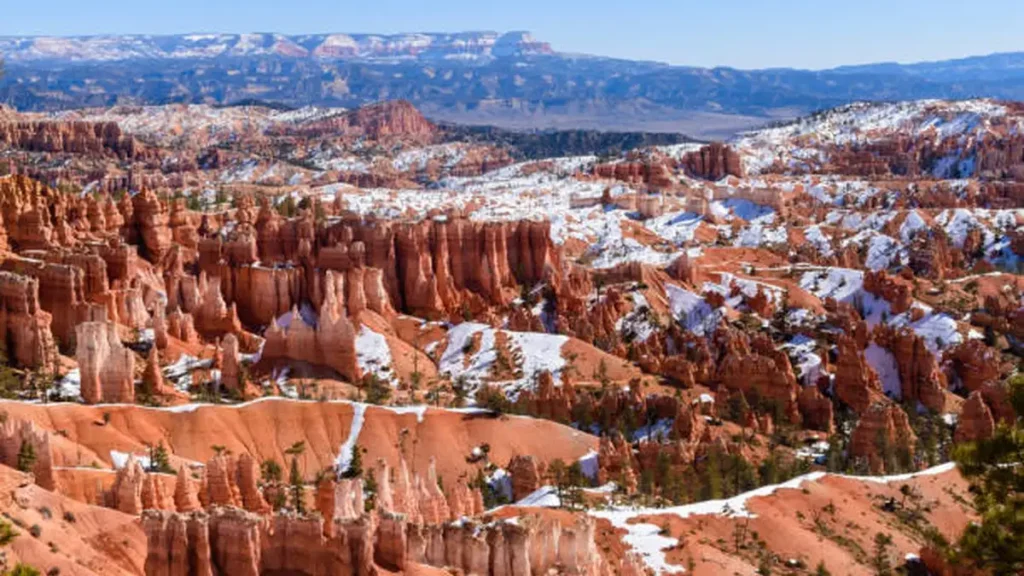
You’ve seen the photos — orange spires standing shoulder to shoulder like a stone army, sunlight cutting through hand-carved tunnels in the rock. What most people don’t realize until they’re standing at Sunrise Point is how quickly you drop into that world. The Queens Garden Trail gets you there in minutes, not hours, which is exactly why it’s the most-hiked trail in the park.
Quick answer: The Queens Garden Trail Bryce Canyon is a 0.9-mile, out-and-back descent from Sunrise Point into the Bryce Amphitheater, dropping about 320 feet through hoodoo formations to a viewpoint of the Queen Victoria hoodoo. Most hikers extend it into a 2.6–2.9 mile loop by connecting with the Navajo Loop Trail, taking roughly 2–3 hours total.
Queens Garden Trail Bryce Canyon: Quick Stats
| Detail | Info |
|---|---|
| Distance (Queens Garden only) | 0.9 miles one-way / 1.6–1.8 miles round trip |
| Distance (combined loop with Navajo) | 2.6–2.9 miles |
| Elevation change | ~320 ft descent (Queens Garden alone); 575–625 ft total on the full loop |
| Trailhead elevation | ~8,000 ft |
| Time needed | 45 min–1 hr for Queens Garden alone; 2–3 hrs for the full loop |
| Difficulty | Easy–moderate |
| Trail type | Out-and-back, or loop when combined with Navajo Loop |
| Starting point | Sunrise Point (or Sunset Point if starting on Navajo Loop) |
This is one of the few places in the park where an easy trail delivers a genuinely dramatic payoff. You don’t need backcountry experience or a full day — you need a couple of hours and decent shoes.
Getting to the Queens Garden Trail Bryce Canyon Trailhead
The trailhead sits just off the Rim Trail, a short walk from Sunrise Point. If you’re driving, head south from the Bryce Canyon Visitor Center — the turnoff for Sunrise Point is well marked, and there’s a parking area right by the point (plus overflow parking nearby, since this lot fills up fast in the morning).
Between mid-April and mid-October, the park runs a free shuttle every 15 minutes or so, from around 8am to 6pm (later in peak summer). If you’re visiting in that window, taking the shuttle to Sunrise Point saves you the headache of hunting for parking — a real issue by mid-morning in summer.
From the parking area, walk toward Sunrise Point and pick up the Rim Trail heading south. The Queens Garden trailhead branches off just before you reach the point itself — it’s clearly signed, so you won’t miss it.
Hiking Queens Garden Trail in Bryce Canyon: Step-by-Step
The trail drops from the rim almost immediately, and within the first few minutes you’re already surrounded by hoodoos on both sides. It’s a broad, well-packed path running down the spine of a ridge — not technical, but it does descend at a steady, moderately steep grade, so trekking poles are worth it if you’re at all cautious on your knees.
About 15–20 minutes in, you’ll pass through the first of several tunnels carved directly through fins of rock — a favorite photo spot, and one of the details that makes this trail feel different from a standard switchback descent. Keep walking and the formations start closing in overhead; what began as an open view across the amphitheater becomes a narrower, more intimate walk between towering spires.
Near the end of the out-and-back section, you’ll reach the actual “Queens Garden” — a cluster of white hoodoos where, if you look carefully, one formation resembles a seated figure. That’s the Queen Victoria hoodoo the trail is named after. It’s not obvious at first glance; give yourself a minute to spot her.
If you’re continuing on to the Navajo Loop, the trail connects here rather than turning back. You’ll pass Thor’s Hammer — the tallest hoodoo in the park and one of its most photographed — before descending (or ascending, depending on direction) through Wall Street, a narrow slot-canyon-like passage with towering walls on either side.
Quick takeaway: If you only have an hour, do the out-and-back to the Queen Victoria hoodoo and skip back up. If you have closer to three, connect it to Navajo Loop — the two together cover far more of what makes Bryce Canyon worth visiting.
Queens Garden vs. Navajo Loop — Which Direction Should You Hike?
This is the part almost nobody explains clearly, and it makes a real difference in how the hike feels.
Clockwise (down Queens Garden, up Navajo Loop): You descend the gentler grade first and climb the steeper, switchback-heavy Navajo Loop on the way out. Most guides — and NPS itself — recommend this direction, for one simple reason: Queens Garden is easier and safer to descend, especially if there’s any ice or loose gravel, while Navajo Loop’s switchbacks are more comfortable to climb than to descend.
Counter-clockwise (down Navajo Loop, up Queens Garden): You get a steeper, more dramatic descent through Wall Street right away, then a gentler climb back to the rim. Some hikers prefer this because it puts the “wow” section first, and the climb out feels less punishing on tired legs.
There’s no wrong answer, but if you’re hiking with kids, in winter, or you’re nervous about steep drop-offs, go clockwise — start at Queens Garden. If you want the most dramatic scenery up front and don’t mind a longer climb at the end, go counter-clockwise from Sunset Point.
One thing to flag that a lot of trail guides skip: Wall Street closes seasonally, typically through the winter months, due to ice and rockfall risk. If you’re visiting between roughly November and March, check current conditions before assuming you can do the full loop through Wall Street — you may need to route back via the Two Bridges connector instead.
Best Time to Hike Queens Garden Trail
Spring (April–May) and fall (September–October) are the sweet spot — daytime temperatures in the 40s to 60s°F, noticeably thinner crowds than summer, and stable footing on the trail.
Summer (June–August) is the busiest season by far. Expect full parking lots by mid-morning, warmer temperatures in the 70s–80s°F, and afternoon thunderstorms that build fast. If you’re hiking in summer, start early — both to beat the heat and to get a parking spot or an early shuttle.
Winter (November–March) is quiet and genuinely striking with snow dusting the hoodoos, but it’s also cold at 8,000 feet, and as noted above, Wall Street typically closes. Trails can be icy, so microspikes are a smart addition to your pack.
As for time of day: early morning or late afternoon consistently beats midday, both for lighter crowds and for the light itself — the hoodoos take on a much richer orange-red color in that low-angle sun.
Queens Garden Trail Bryce Canyon Difficulty: How Hard Is It, Really?
Queens Garden Trail is regularly cited as the easiest way down into the Bryce Amphitheater, and that reputation is earned — the grade is moderate, the path is wide and well-maintained, and there’s nothing technical about it. It’s a genuinely good option for families, first-time hikers, and anyone short on time.
The catch isn’t the trail itself — it’s the elevation. Bryce Canyon sits around 8,000 feet, and the thinner air means you’ll likely feel more out of breath than the distance alone would suggest, especially on the climb back out. This surprises a lot of visitors coming from lower elevations. Pace yourself, take breaks on the way up, and don’t assume “short trail” means “no effort.”
If you’re hiking with young kids, keep them close on the sections near the rim edges — the trail is safe when you stay on the path, but the rock does crumble at the margins, and there’s no railing.
What to Pack, Fees & Passes
Pack light but don’t skip the basics: sturdy shoes with ankle support, a hat, sunglasses, sunscreen, and more water than you think you’ll need — there’s little reliable shade once you’re down in the amphitheater. In winter, add microspikes or crampons for icy sections. Trekking poles help on the descent regardless of season.
Entering Bryce Canyon National Park requires a park pass. A standard vehicle pass runs $35 and covers seven days; if you’re planning to visit more than one or two national parks this year, the $80 America the Beautiful annual pass pays for itself quickly and gets you into any national park in the country for twelve months.
Quick takeaway: Bring water, sun protection, and traction gear in winter. Buy your pass online ahead of time if you can, to skip the entrance line during peak season.
The Queens Garden Trail in Bryce Canyon earns its reputation honestly — it’s one of the rare hikes where “easy” and “spectacular” aren’t in tension. Start early, pick your direction based on how you want the hike to feel, and give yourself a little grace for the altitude on the way back up. However you do it, the walk down into that forest of hoodoos is one of the best short hikes in the Southwest.
Looking for your next adventure? Explore our Southwest USA travel guides for more.
FAQ Section
How long is the Queens Garden Trail?
The Queens Garden Trail alone is about 0.9 miles one-way (1.6–1.8 miles round trip). Combined with the Navajo Loop, the full circuit runs 2.6–2.9 miles, taking roughly 2–3 hours.
Is the Queens Garden Trail hard?
No — it’s rated easy to moderate and is considered the gentlest way into the Bryce Amphitheater. The main challenge is the 8,000-foot elevation, which can make even a short climb feel more tiring than expected.
What’s the best direction to hike Queens Garden and Navajo Loop?
Most guides, including NPS, recommend going clockwise: descend Queens Garden first, then climb out via Navajo Loop, since Navajo’s switchbacks are safer to ascend than descend.
Is the Queens Garden Trail good for kids?
Yes, it’s one of the most family-friendly hikes in Bryce Canyon thanks to its short distance and moderate grade, though children should stay close to the trail edges, which can crumble.
Is Wall Street closed in winter?
Yes, the Wall Street section of the Navajo Loop typically closes during winter months due to ice and rockfall risk. Check current NPS trail conditions before planning a winter loop hike.
How much does it cost to hike in Bryce Canyon?
Entry requires a park pass — $35 per vehicle for seven days, or $80 for an annual America the Beautiful Pass valid at all U.S. national parks.
What’s the best time of day to hike Queens Garden Trail?
Early morning or late afternoon, both to avoid crowds and to catch the hoodoos in warmer, more dramatic light.
Where does the Queens Garden Trail start?
At Sunrise Point, just off the Rim Trail, a short walk from the Sunrise Point parking area or shuttle stop.